By Kim Munch Michelsen. pdf 20201029
Therefore, the cross wound around by roses was the symbol of Goethe who positioned himself in the spirituality of the Central European culture. It must be our symbol. ~Rudolf Steiner, GA 159

I would write on Goethe's Greek incarnation as the sculptor Praxiteles. But it led to many new puzzle pieces leading to other incarnations and to a beginning understanding of a mystery that started my quest sixteen years ago, the Feminine Mystery, that follow the Christ Mystery. It was completely surprising, I hadn't thought in that direction but it solves many lesser mysteries and a few major.
I will in the following look at a number of Goethe's incarnations, where Steiner have hinted at two or three. A sculptor who was a friend of Plato, an Egyptian Initiate and maybe a teacher at the School of Chartres. There are some connections to Paul too.
This text by Steiner describes Goethe’s spirituality, and I think the text is important to understand Goethe and his incarnations, as there may be some misunderstandings around his spirituality.
I am especially interested in his missions and what distinguishes him spiritually, but also traits and habits are important when comparing different lives, as missions may change but habits continue. I will look at these in later chapters too.
Goethe and contemporaries kind of ended the ascending period of Moses, preparing the new period of Michael, the return of Christ and Steiner continued the work preparing the coming ascending period of Abraham and the trial in form of Sorat.

The True Nature of the Second Coming - According to Steiner
From The Spiritual-Scientific Basis of Goethe's Work
Anthroposophy will only be able to fulfill its great and universal mission in modern civilization when it is able to grasp the special problems which have arisen in every land by reason of the intellectual possessions of the people.
In Germany, these special problems are in part determined by the inheritance bequeathed to her intellectual life by the men of genius living at the close of the 18th and beginning of the 19th centuries[Lessing, Herder, Schiller, Goethe, Novalis, Jean Paul and many others.*]
…
▪️It is only possible on this occasion to make a few references to one man of genius who was the leading light of this age of culture, namely, Goethe.
This tell much about who Goethe represent, to make Anthroposophy to the spirit of the people:
▪️It is possible that new life may be infused into the active principles of Anthroposophy through Goethe's thought and the creations of his mind, with the result that, in Germany, Anthroposophy may appear by degrees to be something akin to the spirit of the people.
This may mean that the angelic being behind Goethe is the spirit of the German and maybe the North European countries, as it was back in the time of Thor and Sif.
▪️One thing will be made clear: that the source of the Anthroposophical conception is one and the same as the fount from which Germany's great poet and thinker has derived his creative power.
The most clear-sighted of those among whom Goethe lived acknowledged without any reservation that there was no branch of intellectual life which his attitude toward life and the world could not enrich.
But one must not allow oneself to be deceived by the fact that the quintessence of Goethe's mind really lies concealed below the surface of his works.
He who wishes to win his way to a perfect understanding of them must become intimate with their innermost spirit. … will it gain infinitely, when the outward expression of his creative power is illuminated by that depth of conception of the universe which possesses his soul.
Goethe himself often has shown how justified we are in having such a profound conception of his creative power.
▪️On January 29, 1827, he said to his devoted secretary Eckermann concerning his Faust:
It is all scenic and, from the point of view of the theatre, it will please everyone. More than this I did not wish. If only the performance gives pleasure to the majority of the audience, the initiated will not miss the deeper meaning.
It is only necessary to bring an impartial insight to bear upon Goethe's creative power in order to recognize that it is only an esoteric conception which can lead us to a full understanding of his working.
He felt within him an ardent desire to discover in all phenomena of the senses the hidden spiritual force.
There is an extreme lack of understanding of the archetypes, and the letters Goethe talk about is the archetypal symbols, that underlie nature, human life, dreams, visions, occult and religious texts. As long as we are ruled by the wishful thinking of the ego the deep truth are hidden, even if they lie in eyesight.
▪️It was one of his principles of search that the inner secrets are expressed in outward facts and objects, and that those only can aspire to understand Nature who look upon the phenomena as mere letters which enable them to decipher the inner meaning of the workings of the spirit.
The words: “All we see before us passing, Sign and symbol is alone,” in the Chorus Mysticus, at the end of Faust, are not merely to be regarded as a poetical idea, but as the outcome of his whole attitude toward the world.
Art is expressions of archetypes, and the artist may not even know the archetypes consciously as in all true art its the result of inspiration.
▪️In Art, too, he saw only a revelation of the innermost secrets of the world; in his opinion, it was through Art that those things are to be made clear which, though having their origin in Nature and being active in her, yet with the means at her disposal, she cannot express.
…
He was constantly at work on his conception of a gradual process of evolution of all the phenomena and creatures in the world. He regarded man as a compilation of the other kingdoms.
▪️The spirit of man was to him the revelation of a universal spirit, and the other realms of Nature, with their manifestations, appeared to him as the path of evolution leading to man.
All this was not merely a theory with him, but became a living element in his work, permeating all that he produced.
Schiller has given us a fine description of this peculiarity of Goethe's mind, in the letter with which he inaugurates the intimate friendship which united them (August 23, 1794):
▪️For a long time I have watched, although from some distance, the procedure of your mind, and ever with renewed wonder have observed the track that you have marked out for yourself.
▪️You seek for the necessary (the absolute) in Nature; but you seek it by the most difficult route, which every weaker spirit will take care to avoid.
▪️You grasp in your view entire Nature in order to obtain light on her parts: in the totality of her manifestations, you search for the key to lay open the individual. (Correspondence between Schiller and Goethe, from 1794 to 1805.)
What Schiller describes is central to the Goethean thinking following Steiner.
In his book on Winckelmann, Goethe has expressed his opinion as to the position of man in the evolution of the realms of Nature:When the sound, healthy nature of man works as a whole, when he feels himself at one with the world as a great, beautiful, worthy whole, when this harmonious feeling of well-being gives him a pure free delight, then might the Universe, could it consciously feel, deeming itself at the goal, cry out for very joy, and be lost in admiration of the climax of its own development and organization.
▪️It was Goethe's life-work to strive to obtain an ever clearer insight into the evolution of the living world.
…
It was with such a conception that Goethe approached the animal, mineral and vegetable kingdoms to grasp the hidden spiritual unity in the manifest multiplicity of sense-perceptible phenomena.
It is in this sense that he speaks of primeval plant, primeval animal.
▪️And it was for him Intuition which stood behind these conceptions as the active spiritual force.
In his contemplation of things, his whole being strove toward what in Anthroposophy is called tolerance. And ever more and more he sought to acquire this quality by means of the strictest inward self-education.
To this he frequently refers; it will suffice to quote a very characteristic example from the Campaign in France (1792): —
▪️As I was for the most part almost entirely engrossed by the business and occurrences of the moment, with which kind of life I had reason to be satisfied, of late years particularly, I had the peculiarity of never forming conceptions beforehand of persons whom I expected to meet, or places that I intended to visit, but allowed them to produce their effect upon me without being previously prepared for them.
The advantage that arises from this is very great; one does not require to come back from a previously conceived idea, to blot out a picture arbitrarily painted by ourselves, and painfully to adopt the reality in its place.
Thus he endeavored to rise higher and higher and to reach the point which divided the real from the unreal.
▪️Only here and there do we find references to his innermost convictions. One of these occurs, for instance, in the poem The Mysteries, which contains his confession as a Rosicrucian.
It was written in the middle of the 80's in the 18th century, and was regarded by those who knew him intimately as revealing his character.
In 1816, he was called upon by a “fraternity of students in one of the chief towns of North Germany” to explain the hidden meaning of the poem, and the explanation which he gave might well stand as a paraphrase of the three objectives of the programme of the Anthroposophical Society. …
Goethe now endeavored on his part to set forth the same idea from the depths of his conception of the world — but veiled in imagery — in the problem-tale of The Green Snake and the Beautiful Lily. It is placed in the editions of Goethe at the end of the Conversations of German Emigrants.
▪️The Faust story has often been called Goethe’s Gospel; this tale may, however, be called his Apocalypse, for in it he sets forth — as a fairy-tale — the path of man's inner development.
Here again, we can only point out a few short passages, it would need a large book to show how Goethe's spiritual insight is concealed in this tale.
▪️The three worlds are here represented as two regions separated from one another by a river. The river itself stands for the astral plane.
▪️On this side of it is the physical world, on the other side the spiritual (Devachan), where dwells the beautiful lily [Sophia,] the symbol of man's higher nature. In her kingdom, man must strive if he would unite his lower with his higher nature.
▪️In the abyss — that is, in the physical world — dwells the serpent which symbolizes the self of man.
Here too is a temple of initiation, where reign four kings, one golden, one silver, one bronze, and a fourth of an irregular mixture of the three metals.
▪️Goethe, who was a freemason, has clothed in freemasonic terminology what he had to impart of his mystic experiences.
The three kings represent the three higher forces of man: Wisdom (Gold), Beauty (Silver), and Strength (Bronze). [The Three Logoi. Sentient, Intellectual, and Consciousness Soul]
As long as man lives in his lower nature, these three forces are in him disordered and chaotic. This period in the evolution of man is represented by the mixed king.
But when man has so purified himself that the three forces work together in perfect harmony, and he can freely use them, then the way into the realm of the spiritual lies open before him.
The still unpurified man is represented by a youth who, without having attained inner purity, would unite himself with the beautiful lily. Through this union he becomes paralyzed.
Goethe here wished to point out the danger to which a man exposes himself who would force an entrance into the super-sensible region before he has severed himself from his lower self.
▪️Only when love has permeated the whole man, only when the lower nature has been sacrificed, can the initiation into the higher truths and powers begin.
▪️This sacrifice is expressed by the serpent yielding of its own accord, and forming a bridge of its body across the river — that is to say, the astral plane — between the two kingdoms, of the senses and of the spirit.
At first man must accept the higher truths in the form in which they have been given to him in the imagery of the various religions.
This form is personified as the man with the lamp. This lamp has the peculiarity of only giving light where there is already light, meaning that the religious truths presuppose a receptive, believing disposition. Their light shines where the light of faith is present.
This lamp, however, has yet another quality, “of turning all stones into gold, all wood into silver, dead animals into precious stones, and of destroying all metals,” meaning the power of faith which changes the inner nature of the individual.
There are about twenty characters in this allegory, all symbolical of certain forces in man's nature and, during the course of the action, the purifying of man is described, as he rises to the heights where, in his union with his higher self, he can be initiated into the secrets of existence.
This state is symbolized by the Temple, formerly hidden in the abyss, being brought to the surface, and rising above the river — the astral plane.
▪️Every passage, every sentence in the allegory is significant.
The more deeply one studies the tale, the more comprehensible and clear the whole becomes, and he who set forth the esoteric quintessence of this tale at the same time has given us the substance of the Anthroposophical outlook on life.
Goethe has not left the source uncertain from whose depths he has drawn his inspiration. In another tale, The New Paris, he gives in a veiled manner the history of his own inner enlightenment.
▪️Many will remain incredulous if we say that, in this dream, Goethe represents himself just at the boundary between the third and fourth sub-race of our fifth root-race.
For him, the myth of Paris and Helen is a symbolic representation of this boundary. And as he — in a dream — conjures up before his eyes in a new form the myth of Paris, he feels he is casting a searching glance into the development of humanity.
What such an insight into the past means to the inner eye, he tells us in the Prophecies of Bakis, which are also full of occult references:
The past likewise will Bakis reveal to thee; for even the past oft lies, oh blind world, like a riddle before thee. Who knows the past knows also the future: both are joined in To-day in one complete whole.
Much, too, might be quoted to show the underlying elements of spiritual science in the fairy tale, The New Melusine, a Pandora-fragment, and many other writings.
In his novel, Wilhelm Meister's Traveling Years, Goethe has given us quite a masterly picture of a Clairvoyante in Makarie.
Makarie's power of intuition rises to the level of a complete penetration of the inner mysteries of the planetary system:
She stands with regard to our solar system in a relationship which one hardly dares to express. In the spirit, of the soul, of the imagination, she fosters it, not only gazes at it, but at the same time forms part of it; she sees herself drawn on into those heavenly circles, but in quite a peculiar way; she has wandered since her childhood round the sun, and, in fact, as has now been discovered, in a spiral, circling ever further and further from the center towards the outer regions.
If one may assume that beings insofar as they are embodied strive towards the center, but insofar as they are spirits strive towards the periphery, then our friend belongs to the most spiritual; She seems to have been born only to detach herself from the earthly and to force her way into the nearest and furthest realms of existence.
▪️This quality, glorious as it is, was laid upon her from her earliest years as a difficult task. She remembers her inner self penetrated, as it were, through and through by shining beings, illuminated by a light which not even the brightest sunlight could rival. She often saw two suns, one, that is, within, and one without in the heavens, two moons, of which the outer retained its size through all its phases; the inner ever more and more decreased.
▪️These words of Goethe's prove clearly how intimate he is with these matters, and whoever reads through the whole passage will recognize that Goethe so expresses himself, albeit with reserve, that he who looks beneath the surface may feel quite certain of the spiritual-scientific foundation in his being.
Goethe always looked upon his mission as a poet in relation to his striving toward the hidden laws of Life. He was often forced to notice how friends failed to understand this side of his nature. He describes thus, in the Campaign in France in 1792, how his contemplation of Nature was always misunderstood:
... the passionate earnestness with which I addicted myself to this (the study of natural philosophy) seemed inconceivable to all, nobody observing how it sprang from my innermost being itself; they considered this laudable pursuit as a whimsical mistake; in their opinion, I could do something better, and leave my abilities to work in their old direction.
They felt the more entitled to do this as my way of thinking did not agree with theirs, expressing rather, in most points, exactly the contrary. No more isolated being can be imagined than I was then, and for a long time afterwards.
▪️The Hylozoism, or whatever it may be called, to which I was attached, and the deep foundation of which I left untouched in all its sacred dignity, made me unsusceptible, nay, intolerant, toward that way of thinking which set up as an article of belief the existence of matter as a dead thing, in whatever way it may be supposed to be stirred up and put in motion.
…
For Goethe, Art is a continuation of Nature revealing that which in Nature alone is hidden:
For in that man is placed as the peak of Nature, he perceives himself in his turn as a complete nature, which, in its turn, has within himself to produce a peak. With this objective in view, he raises himself, striving to win his way by all perfections and virtues. Selection, order, harmony, and purpose he calls to his aid, until finally he rises to the production of a work of art. (Winckelmann.)
To understand the world is to Goethe to Hue in the spirit of worldly things. For this reason, he speaks of a perceptive power of judgment (intellectus archetypus), through which Man draws ever nearer to the secrets of our being:
If, then, in a moral sense, we are, through faith in God, to attain to youth and immortality in a higher region, and are to draw near to the Most High, it should surely be the same in an intellectual sense, that only by the contemplation of an ever-creating Nature, we shall become worthy of spiritual participation in her productions.
Thus did Goethe represent to himself Man as the organ of the world, through which its occult powers should be revealed. The following was one of his aphorisms:
For this has man been placed so high that what must otherwise have been unmanifest might manifest through him. Truly may we say: What are even the workings of Nature's elements in comparison with man, who, that he may in some degree assimilate, must first control and modify them?

We might say, and this is more than a poetical image: The Greeks had to set forth the divine in man artistically, out of the ingredients of the Earth, and the cosmos sent down to the Earth the God who entered man, as a cosmic answer to the wonderful question sent out into the world's spaces, as it were, by the Greeks.
…The Greeks addressed the following question to the universe: Can Man become a God? And the universe replied: God can become Man. This reply was given through the event of the Mystery of Golgotha." ~Rudolf Steiner — Knowledge Pervaded With the Experience of Love Feb. 18, 1923. GA 221
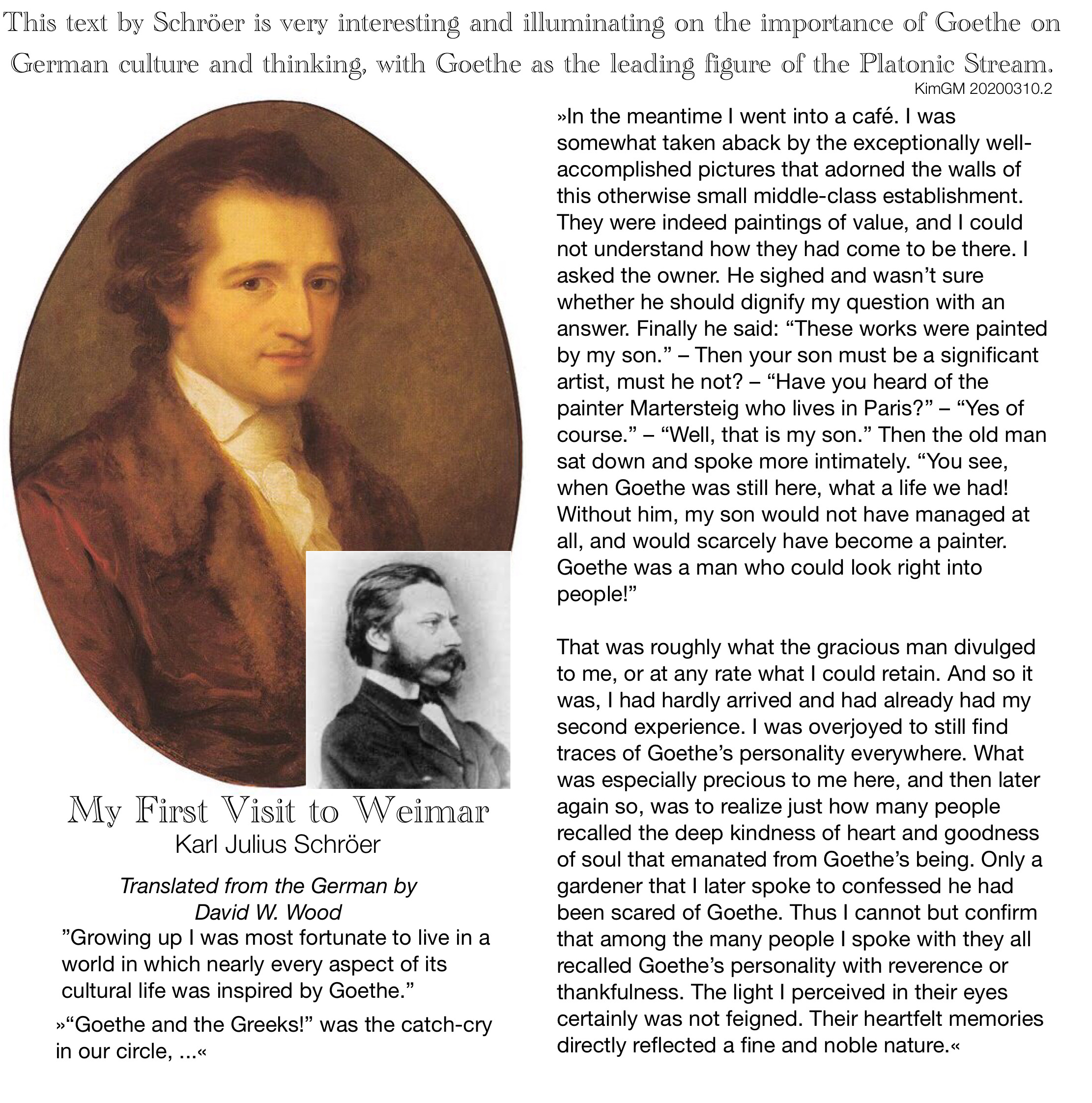
I believe Goethe was Praxiteles in his incarnation at the time of Plato. Praxiteles introduces a new style that brought the gods down to earth. I think this is Goethe's mission, bringing God down to earth. Plato and Praxiteles were friends and kind of each other's inspirers throughout their lives, and so they were in Goethe's time where Plato was incarnated as Karl Julius Schröer. Other sculptors' were Lysippus and Skopas, where I think Schiller had been Skopas.
Goethe was the center of Platonism in Germany and it reached back in time to the old Greece, and this text is interesting in this connection. Praxiteles is not just another sculptor! His model is also mentioned, Phryne and their relationship reminds about Goethe's relationship with Christiane Vulpius, lover and later wife.
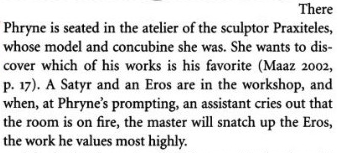
Playing with Fire: European Terracotta Models
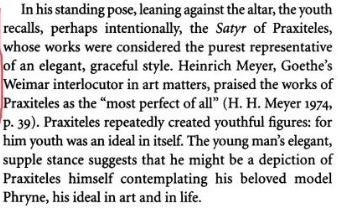
The Satyr of Praxiteles is thought to be a self-portrait. The youthful is the ideal of the soul, a high developed person has a youthful soul, like around 33. The old soul is often born old and serious and grow younger with age becoming more lighthearted.
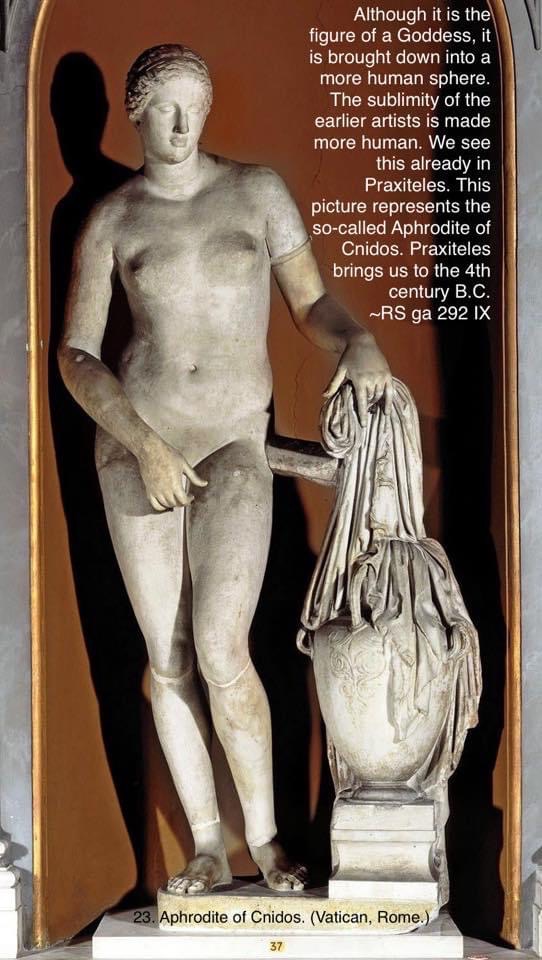
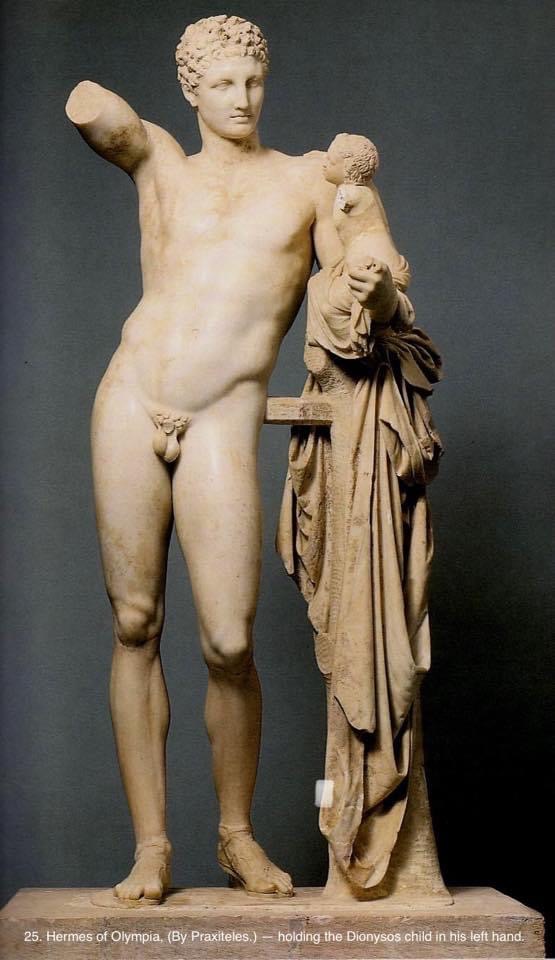
Sculpture in Ancient Greece and the RenaissanceSculpture in Ancient Greece and the Renaissance, History of Art, Lecture IX, Rudolf Steiner
From Karmic Relationships: Esoteric Studies - Volume IV, lecture X
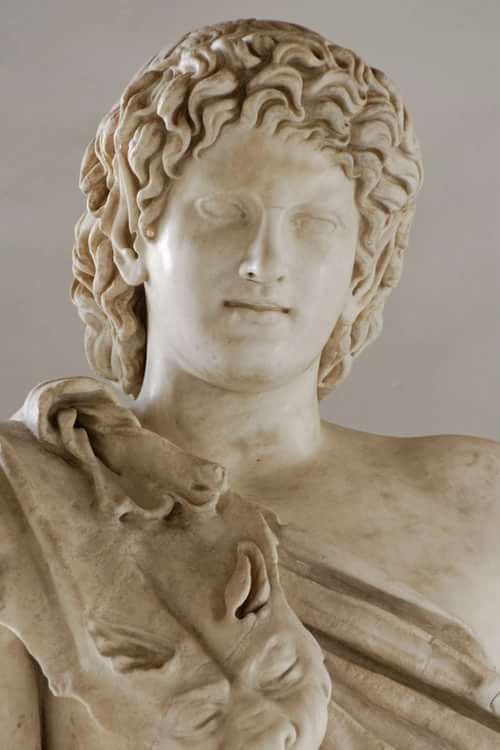 "....Now I already spoke at this place some time ago of a young artist who
grew up while Plato was still living, not exactly in Plato's School of the
Philosophers but under Plato's influence. Indeed I mentioned this matter already
many years ago. Having passed through other incarnations in the meantime this
individuality was reborn, not out of the Platonic philosophy but out of the
Platonic spirit.
"....Now I already spoke at this place some time ago of a young artist who
grew up while Plato was still living, not exactly in Plato's School of the
Philosophers but under Plato's influence. Indeed I mentioned this matter already
many years ago. Having passed through other incarnations in the meantime this
individuality was reborn, not out of the Platonic philosophy but out of the
Platonic spirit.
He was reborn as Goethe, having karmically transformed in the Jupiter region what came to him from former incarnations, and notably from the one in which he partook of the Platonic stream, so that it became that kind of wisdom which does indeed permeate all the contents of Goethe's work.
Thus we can indeed turn our gaze to a noble and pure relationship between Plato and this — I will not say “disciple — but follower of Plato. For as I said, he was not a philosopher but an artist in that Grecian incarnation. Nevertheless Plato's eye did fall upon him and perceived the infinite promise that lay within this youth..."
Jupiter in our solar system corresponds to the Old Sun, where the etheric body was added and the Second Logos was created, so Goethe was inspired by the Son. He wasn't a studen't of Plato, but a follower, this may mean that Plato is inspired by the Father, the Saturn sphere, who goes before the Son. Steiner mentions that Karl Julius Schröer, a later incarnation of Plato, didnt fulfill his mission, to prepare the (Father) Abraham period, so Steiner had to do it himself.
From The Alphabet, An Expression of the Mystery of Man
In the longing that a Man such as Goethe had for knowledge of the Greek culture, there lies something that may be expressed as follows: he longed for liberation from the abstraction of modern times, from the dry prose of Romanism. He wanted to reach the other daughter of the primeval wisdom of the world, what remained of all that stood for Greece.
— We too must experience something of this kind if we wish to understand Goethe's intense yearning for the South. In modern school biographies we find nothing of all this. Only when in every individual thing there echoes a consciousness of Man being an expression of the whole cosmos, will the way be cleared for the forces needed for Man's progress, if civilization is not to decline into utter barbarism.
See Sources on Praxiteles under Literature at the end of this page.
Steiner describes both Moses and Goethe as Manas bearers, they were immune to the Serpent, to Lucifer, they were the Manu, and together with the indication that Goethe had been an Egyptian initiate it made it a plausible thesis that Goethe incarnated as Moses, who brought God down to earth and prepared the Christ incarnation, just as Praxiteles and Goethe did. Goethe prepared the second coming of Christ through his production, he created an alternative to the physical worldview of materialistic thinking and science. He and his fellows created a cultural climate for the incarnation of Kaspar Hauser, who were the spirit of the new age.
From The Mysteries of the East and of Christianity, lecture 4.
"It should be understood that the soul living in Goethe had once belonged to an Egyptian Initiate, and had then lived in Greece as a sculptor and a disciple of philosophy; then, between this Greek incarnation and the one as Goethe, there comes an incarnation (probably only one) which I have not yet been able to find.

A missing incarnation of Goethe could quite possibly be at the School of Chartres. Steiner said that Goethe was the leader of the Platonic stream and as Plato didn't have this role in Chartres I think it's quite possible that Goethe had the role, if he didn't already had it in Greece. For some reason Steiner didn't mention Goethe in connection with Chartres directly, but I think he mentioned him under his French name. Plato incarnated early to prepare for the School of Chartres, to connect Platonism with Christianity, as Hroswitha von Gandersheim (*935 - †975). My guess is that Plato is the same as Aron.
Rabbinical Judaism calculated a lifespan of Moses corresponding to 1391 and 1271 BCE; Jerome gives 1592 BCE, and James Ussher 1571 BCE as his birth year (Wikipedia.) This corresponds symmetrically around the life of Christ approximately to the time of the School of Chartres.
Both Goethe and Moses had a deep empathy for those they felt responsible for. Moses gave the faculty of intuitive thinking what we also call Goethean thinking, as Goethe's work was teaching humanity to use the intuitive thinking. Around 2907BC the astral body is added to the etheric. This we know as the Lion incarnation of Vishnu or Moses becoming absorbed by the snake. Shiva rescues Vishnu and Moses wife Zipporah saves the life of Moses, makes him invulnerable to the Luciferic, Zipporah is the transformed astral where Moses is the transformed etheric. He was created at the old Sun, and Zipporah at the old Moon.
The intuitive thinking was first fully introduced after 1879 when the I AM of Michael raised from our astral body to our soul, first then could we fully use our consciousness soul.
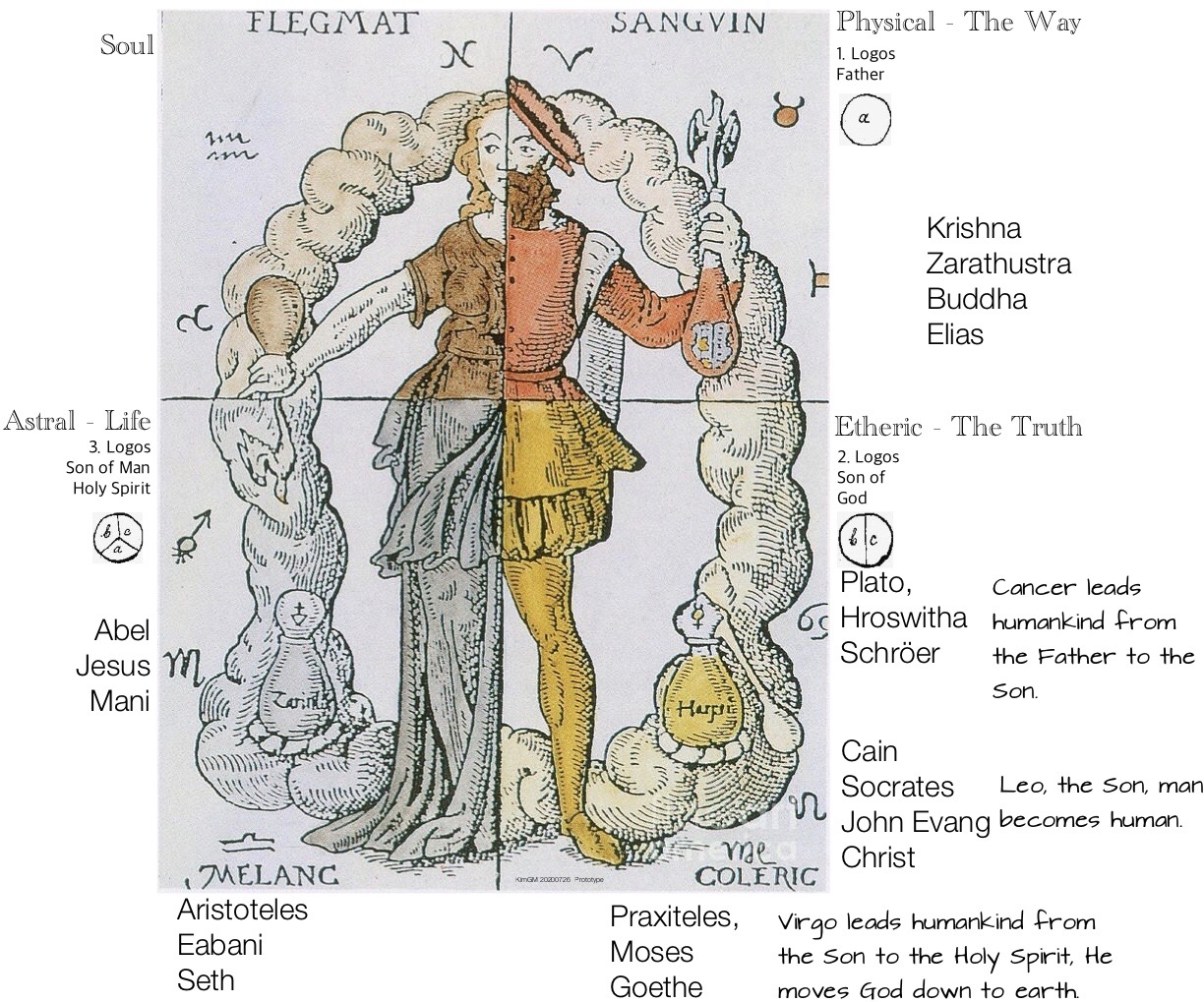
The I AM talking out of the fire was the fire sign Leo. Moses was coming from the water, from Cancer, the Crab, bringing the wisdom of the Cosmic Christ packaged in a shell of Egyptian wisdom:
At the same time we find intimated in a wonderful manner that the imperishable message which Moses was destined to bring to humanity was as one might say, enfolded and lay within an outer shell encompassed and enveloped by the old Egyptian culture and mission.
The Zodiac describes the descend of the Cosmic Christ. The first three star signs represent the Father, the First Logos, and the fixed sign is the First Logos, Taurus. The next three signs represent the Son, the Second Logos, and the fixed sign is the Second Logos, Leo. The next three signs represents the Holy Spirit, the Third Logos, and the fixed sign is the Third Logos, Scorpio the Eagle.
From Turning Points Spiritual History, Moses, Lecture IV.
Hence, the impression we have gained of Moses is that of a personality not directly dependent upon any particular period, or upon any special mission, for that wisdom which was his to impart to humanity.
 We regard him as one whose soul must have been stirred by those eternally surging waves of Divine influence, that ever find new channels through which to reach deep down into the evolution of mankind, so that man may be productive and bring forth goodly fruits.
It is as if the ever-lasting germ of wisdom implanted in the soul of Moses, found its fitting soil, and ripened, in the light of that knowledge which came to him from the Egyptian civilization.
…
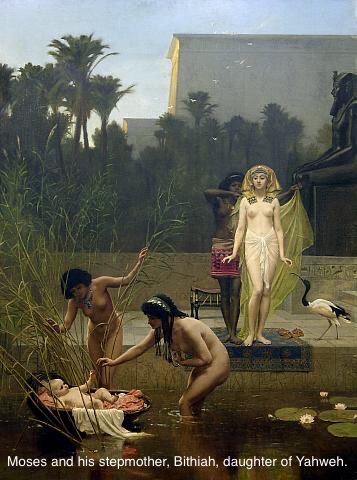
We read that the daughter of the Egyptian King Pharaoh [sent her maid to the river to fetch the Ark [Think Noah, the crossing of the Red Sea point in the same direction, a kind of repetition!], in which was the child] and that she herself named him Moses -- ‘Because,’ she said, ‘I drew him out of the water.’ (Ex. ii, 10.) Those who are aware of the true meaning of the name ‘Moses’, know that it signifies this act, as is indicated in the Bible.
From this graphic narrative we are to understand that the daughter of Pharaoh, who is here symbolical of Egyptian culture, guided the influx of external life into a soul touched with the attributes of eternity. [water=transformed etheric body, Buddhi, body of Cosmic Christ.]
At the same time we find intimated in a wonderful manner that the imperishable message which Moses was destined to bring to humanity was as one might say, enfolded and lay within an outer shell [the star sign Cancer, the Crab.] encompassed and enveloped by the old Egyptian culture and mission.
Next follow descriptions of external events which occurred during the life-development of Moses; and we realize once again from the form in which they are presented, that they have reference to actual outer happenings. All that we read concerning the vicissitudes of Moses, especially where mention is made of his grief and distress over the bondage of his people in Egypt, may be regarded as an actual account of mundane events. [Moses cared, just as Goethe cared about people.]
…
This it was possible for him to do, because it lay in the blood and in the temperament of his people to manifest an especial interest in that outstanding soul-power, the activities of which have been felt right on down to our own time, and which it was his task to instill. We refer to that dominant soul-energy which unites all those forces, previously regarded as separate and detached, in one centralized and homogeneous bond of inner soul-life -- the life of the true self -- the 'I'. [I AM]
We are next told that one of the daughters of Jethro married Moses; this means that within his soul one of these forces became especially active, so much so indeed, that owing to its influence it became for a long period a dominating power in human evolution, reducing all other soul-forces to a unified Soul-'I'. [The Alchemical Marriage]
…
The most important element in human culture, regarded from our modern stand-point, received its first impulse through Moses; hence, that sense of persistency in connection with the Moses-impulse which still exists in our soul-life and power.
…
We now realize that the enlightenment which Moses received in clairvoyant form must have been of the nature of a new consciousness proceeding from the great spirit of the cosmos, that spirit which is ever active and weaves throughout the whole material world.
Ancient peoples believed in a plurality of cosmic forces, these they conceived as operating in man’s soul in such manner that the soul’s power did not represent a unit, for the forces were manifold in nature, while the soul was regarded merely as the scene of their active expression.
It was for Moses to recognize a cosmic spirit of a very different order -- one that did not manifest as a soul-power owing its origin to divers spirit influences which, although exhibiting a certain similitude, find ultimate expression in varied form.
That spirit of the cosmos, which it was ordained that Moses should apprehend, was of wholly other character, for its revelation can alone take place in the innermost and holiest mid-point of soul-life, the 'I'. There works the spirit of the universe -- in the place where man’s soul is conscious of its very center.
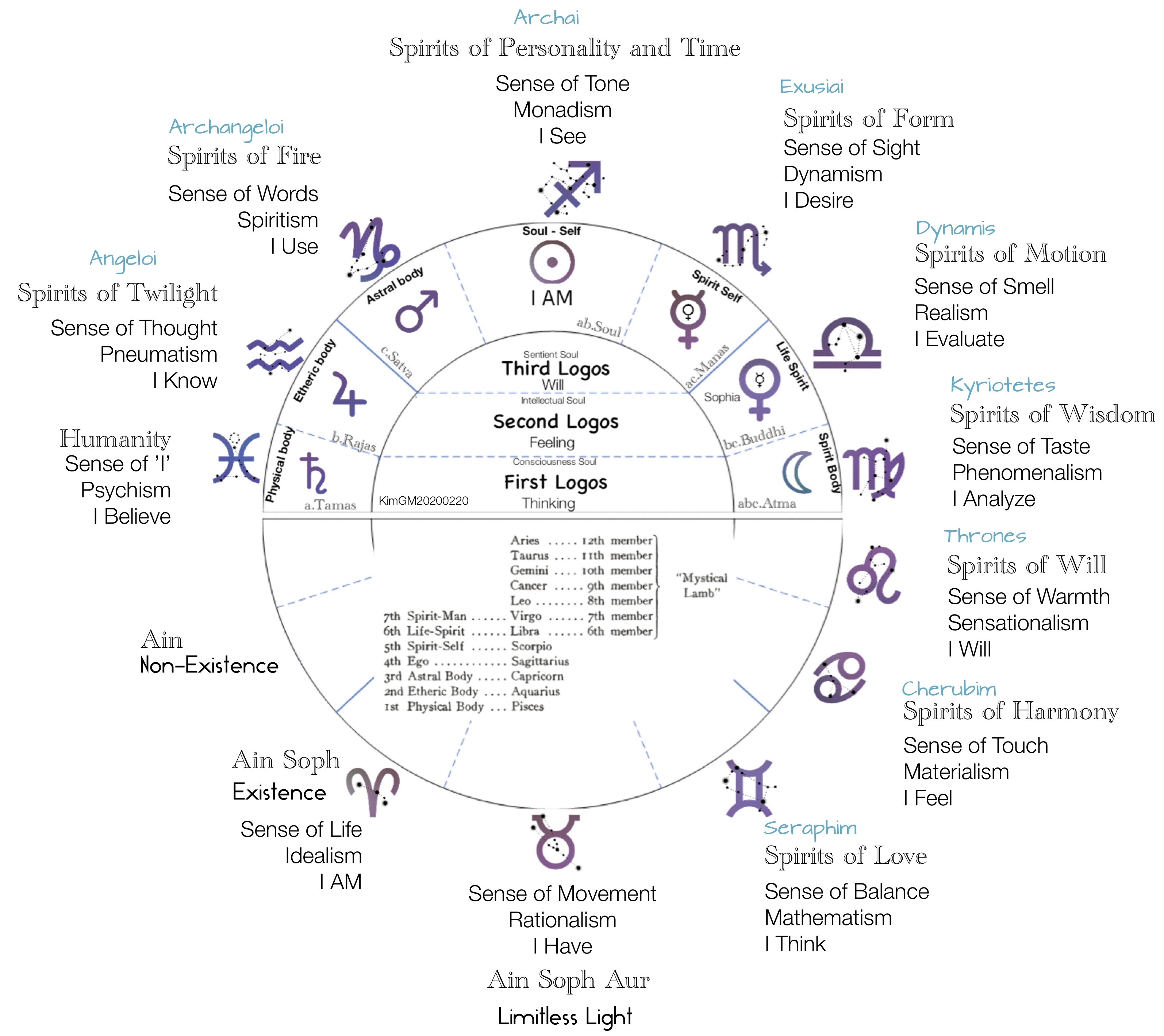
The Descend of the Cosmic Christ. See
The Cosmic Christ and the Zodiac
Each of the Twelve Bodhisattva's corresponds to the steps down.
Leo is above humanity where Virgo is the descend down into our reality.
When the human soul feels that the 'I' is linked with the weaving and the life of the spirit, in the same way as the people of old realized that their being was truly related to the cosmic forces, then can it apprehend those things which were first revealed to Moses through his clairvoyant powers.
And these revelations must be regarded as forming the cosmic basis from which came the great impulse he gave to mankind. That primal impulse enabling humanity through its reasoning faculties and understanding alone [unaided by the old clairvoyance], to associate and compare physical phenomena, and to recognize in them factors underlying all continuity in the material world.
When Moses stays by Jethro in Midian, it sounds as if we are in the spiritual world. That Jethro has seven daughters is also pointing in that direction. My guess is that he represents Lucifer. The Druce of Libanon says that they are ancestors of Jethro, and that sounds right as many other religions in the region, like the Yazidis in the Kurdish region of Northern Iraq, believe in Lucifer. The Manichean religion was of the Holy Spirit, the transformed Luciferic, and which precisely spread over the belt of Luciferic religions from Middle East to China, following in the steps of Alexander the Great.
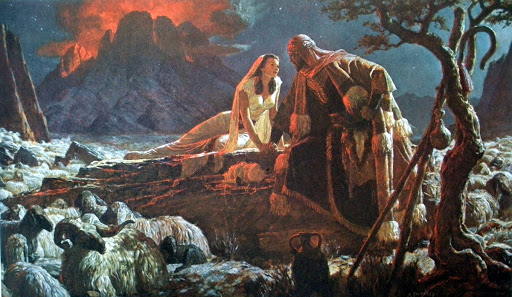
Jethro introduces a juridical system within Israel, and this is also the Luciferic, the third logos, as we later find in Rome.
The normal story is that Moses protected Jethro’s daughters from shepherds who did not allow them and their sheep access to the local well. For this Jethro gave his daughter Zipporah to Moses. The well is the purified etheric, Buddhi, water and life, the sustainer of reality. The women are the giver of the water, Buddhi, representing Sophia. The shepherds, who steal the water from the women, are the wild astral principle that hinders the purified astral principle to get unified with the etheric. From Exodus 2:15
15 ... But Moses fled from Pharaoh, and stayed in the land of Midian; and he sat down by a well. 16 Now the priest of Midian had seven daughters; and they came and drew water, and filled the troughs to water their father’s flock. 17 The shepherds came and drove them away; but Moses stood up and helped them, and watered their flock. 18 When they came to their father Reuel, he said, “How is it that you have come so soon today?” 19 They said, “An Egyptian delivered us out of the hand of the shepherds, and even drew water for us and watered the flock.” 20 He said to his daughters, “And where is he? Why have you left the man? Call him, that he may eat bread.” 21 And Moses was content to dwell with the man, and he gave Moses his daughter Zipporah. 22 She bore a son, and he called his name Gershom; for he said, “I have been a sojourner in a foreign land.”
Zipporah means beauty and bird, and it is also a symbol for the purified astral. She cleansed the house of Jethro for idols, for the Luciferic, but there is much more to her than that:
The Rabbis ascribe many traits to Zipporah, whom they considered as differing from other women, in a positive sense, in both appearance and deed. A beautiful woman, she had received a special blessing that her comeliness would last her into old age.
She is also described as a practical woman capable of taking action at the right moment. When her father identified Moses as his future son-in-law, she ran to bring him from the well, and hence became his wife. She saved his life in the night encampment when she made haste to circumcise her son. Moses was aware of Zipporah’s qualities and therefore took her for a wife; she adjusted to her role as wife of the leader of the people of Israel, successfully making the transition to royalty.
The Rabbis explain that Moses never wanted to part from Zipporah and sent her to her father’s house in Midian only for fear that the Egyptian servitude would harm her. After the Giving of the Torah, a life of sexual abstinence was imposed on Moses due to his spiritual standing; this Zipporah found very difficult.
...
The Rabbis also find an allusion to Zipporah’s beauty in her name, which means “gaze and see [zafu ve-ra’u] how comely she is”
~ by Tamar Kadari, Zipporah
in Midrash and Aggadah from the Jewish Women's Archive
When Moses left for Egypt Zipporah had to stay back in Midian, which reminds of Radha who had to stay in Vrindavan when Krishna left for the earth. They met again after the Exodus.
Zipporah and Moses had two sons, Gershom and Eliezer. Moses has promised Jethro that the firstborn should be an idol believer, but when an angel attacked Moses, Zipporah quickly circumcised the son and thereby abates the threat. She transformed the Luciferic to Manas. Gershom, means ‘a traveller, or someone in a foreign place’. Eliezer, means ‘my God is my help’.
Talmud says, in the Nedarim Treaty (32a), that the angel took the form of a snake, the symbol of the Luciferic, and swallowed him starting from the head to the hips, then rejected him and swallowed him again starting from the feet. Zipporah saved Moses from the Luciferic, she was the purified Astral that was invulnerable to Lucifer, invulnerable to the serpent.
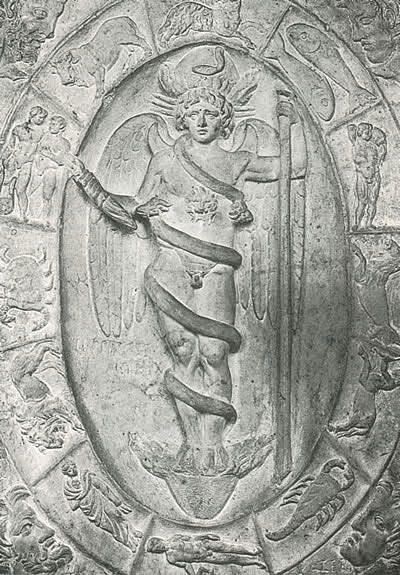
But she had to stay in Midian as he walked out on God's errand, the human body wasn't ready for a purified astral body. It is said that Moses pleaded with Jethro to follow him, but it wasn't possible yet. Jethro is converted to God by the wonders Moses God showed. He had sympathized with Amalek, who I believe represents Ahriman, but changed allegiance when he saw the way the wind blew.
It was thanks to Zipporah's kindness, courage, and sacrifice that Moses could fulfill his role, her purified astral in him, his Manas. From Turning Points Spiritual History, Moses, Lecture IV:
We are next told that one of the daughters of Jethro married Moses; this means that within his soul one of these forces became especially active, so much so indeed, that owing to its influence it became for a long period a dominating power in human evolution, reducing all other soul-forces to a unified Soul-'I'.
Moses was characterized by being immune to snakes, to the Luciferic, just as Krishna, St Paul and Goethe, it was the purified astral of Zipporah, he was a Manas Bearer. Zipporah corresponds to Radha.
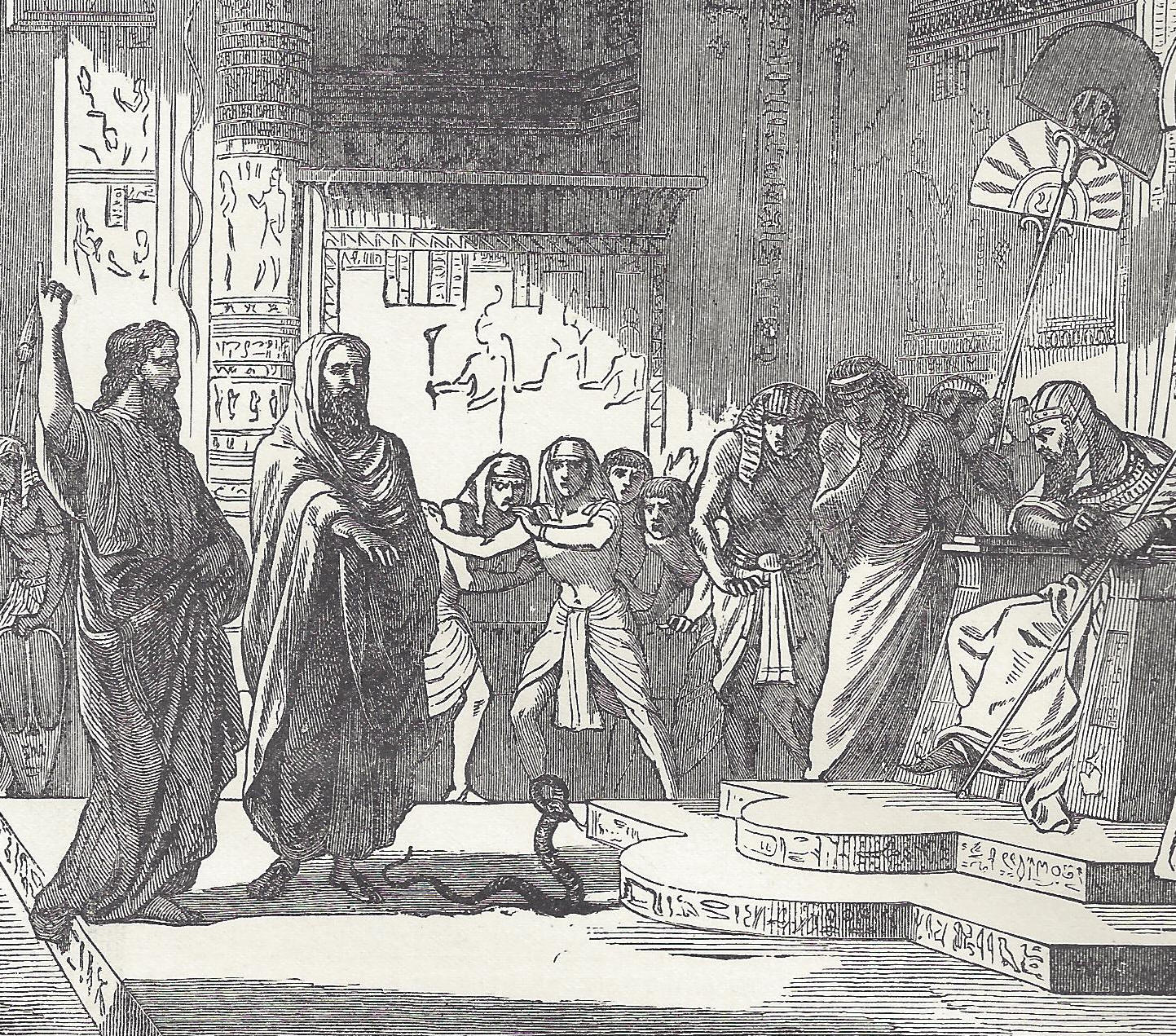
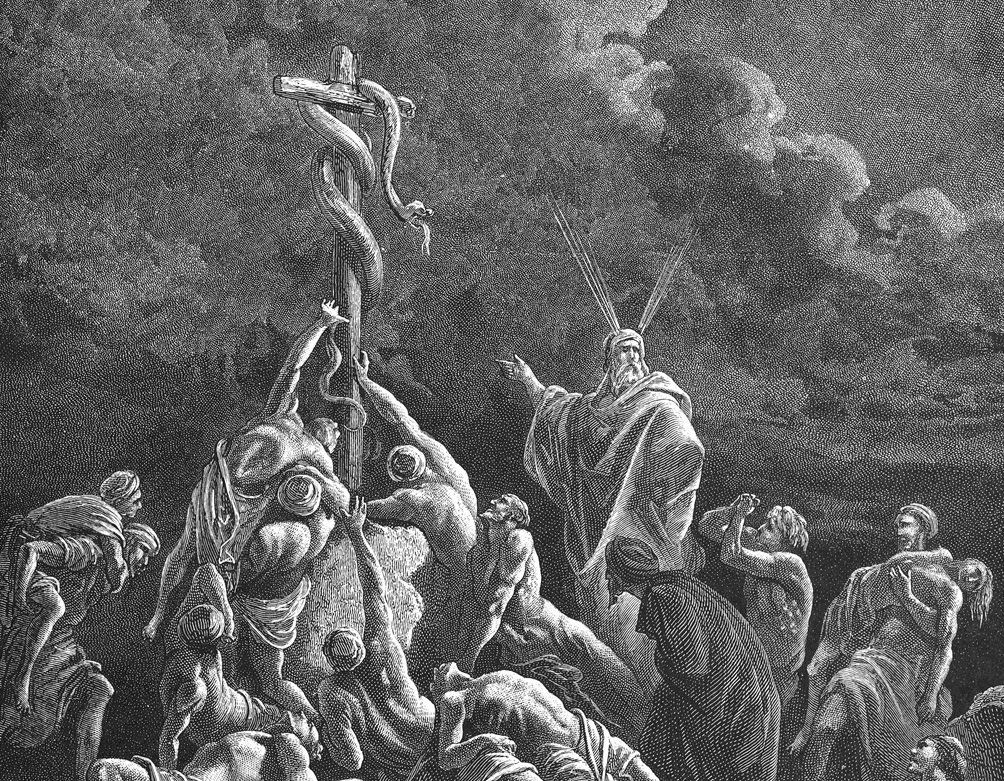
I believe Zipporah is of the Abel line, the shepherds, where Moses is of the Cain line. The Abel line cannot incarnate from the start, but they may begin incarnating when Seth starts incarnating, the Luciferic incarnation.
The difference between the Cain and the Abel line is that the consciousness is centered in the astral body/Manas for the Abel line and in the etheric body/Buddhi for the Cain line.
Abel is the feminine principle, Sophia, who descended from above, while Cain is the masculine principle, Anthropos, ascending from below, and today are meeting in Anthroposophia. See The Cosmic Christ and the Zodiac - Viśvákarma
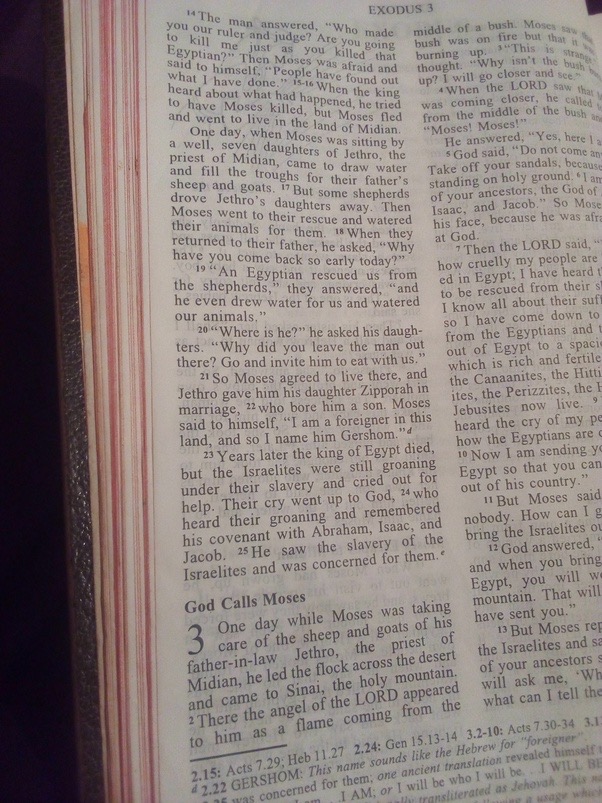
Zipporah in the Bible
Only that man is a complete human being who is capable of combining an external masculinity with a beautiful feminine character within. And it is precisely this that the greatest spirit, namely, those of a mystical nature, have always felt in the spiritual life of the past. ~Rudolf Steiner in 'Woman and Society'.
We want to realize the new not by force, but as something that is needed. Let it be seen that this is the only way to achieve things. The world must be disillusioned in order to be convinced! The woman will uplift the world. All women must unite, so that one day they would understand their task. The male will follow the female. He cannot do [anything] without her. She is the power. ~Beinsa Douno
The masculine, Anthropos, has ascended from the physical where the feminine, Sophia, has descended from Atma. Sophia is the astral and Anthropos is the etheric. Sophia descended into the body of man, and anima and animus have fought to find each other since. The Rosicrucian Alchemical Wedding is the merge of Anthropos and Sophia, creating Anthroposophia. ~Kim Graae Munch
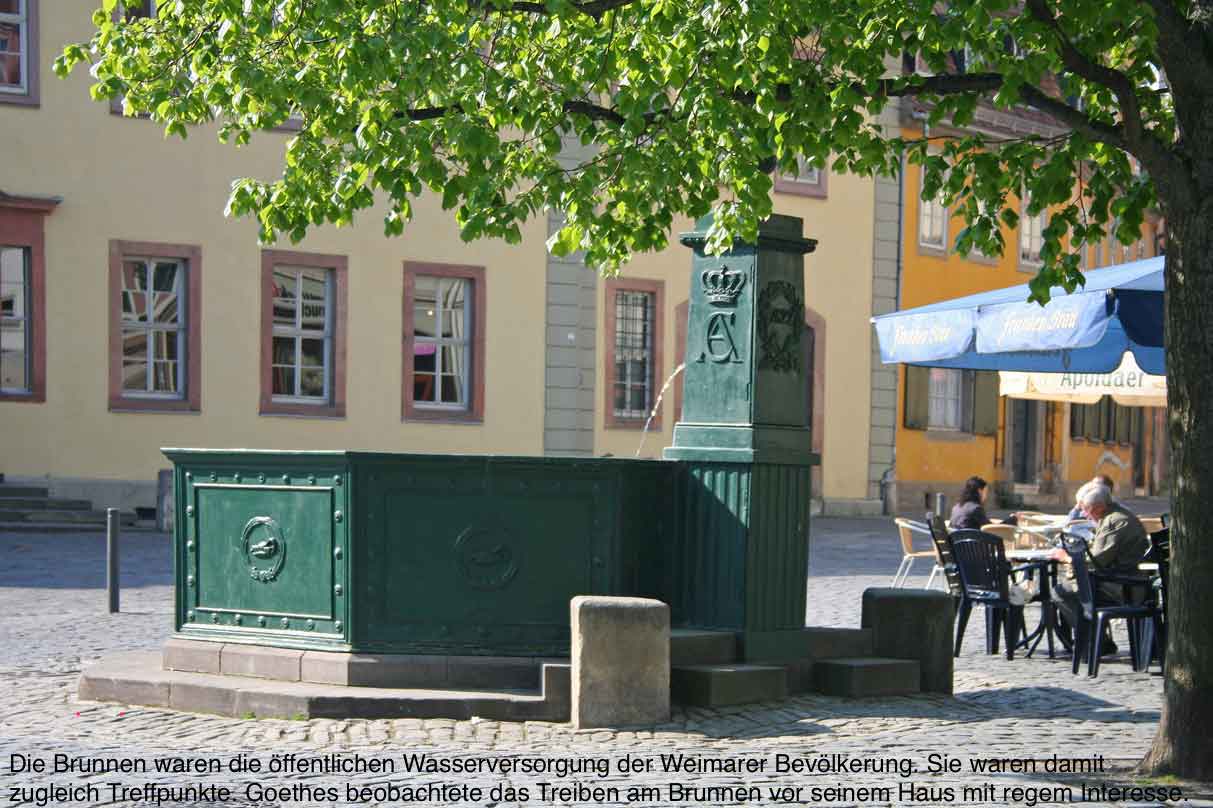
Goethe had a well just outside the windows and he enjoyed watching the life
around as it was a liked meeting place and the source of water for the
neighborhood.
Moses and Goethe are immune to the Luciferic, it means that they have a fully developed Manas/spirit self, meaning that they are Manas bearers. The following description of Krishna also describe Moses. Krishna is often depicted dancing on the heads of snakes, the symbol of the seven inner planets and of Shiva, meaning he is not vulnerable by the Luciferic. This is the astral, but he has Radha in him, the purified astral, Manas.
From The Bhagavad Gita and the Epistles of St. Paul, Lecture II
 Let us suppose that in olden times there was a man who, in the truest sense of the words, had brought Manas to expression within him, who had certainly in himself experienced Ahamkara, but had allowed this
as an individual element to retire more into the background and on account of his external activity had cultivated Manas; then according to the laws of the older, smaller, human cycles — and only quite exceptional men
could have experienced this — such a man would have had to be a great law-giver, a leader of great masses of people.
Let us suppose that in olden times there was a man who, in the truest sense of the words, had brought Manas to expression within him, who had certainly in himself experienced Ahamkara, but had allowed this
as an individual element to retire more into the background and on account of his external activity had cultivated Manas; then according to the laws of the older, smaller, human cycles — and only quite exceptional men
could have experienced this — such a man would have had to be a great law-giver, a leader of great masses of people.
And one would not have been satisfied to designate him in the same way as other men, but would have called him after his prominent characteristic, a Manas-bearer; whereas another might only be called a senses-bearer.
One would have said: That is a Manas-bearer, he is a Manu. When we come across designations pertaining to those olden times, we must take them as descriptive of the most prominent principle of a man's human organisation, that which most strongly expressed itself in him in that particular incarnation.
Suppose that in a particular man what was most specially expressed was that he felt divine inspiration within him, that he had put aside all question of ruling his actions and studies by what the external world teaches through the senses and by what reason teaches through the brain, but listened instead in all things to the Divine Word which spoke to him, and made himself a messenger for the Divine Substance that spoke out of him!
Moses had lead the Israelites out of captivity, but he can't follow them into the new future, this is the task of Joshua. His name was Hoshe'a the son of Nun, of the tribe of Ephraim, but Moses called him Yehoshu'a (Joshua in English) (Numbers 13:16) the name by which he is commonly known. The name is shortened to Yeshua in Nehemiah (Nehemiah 8:17).
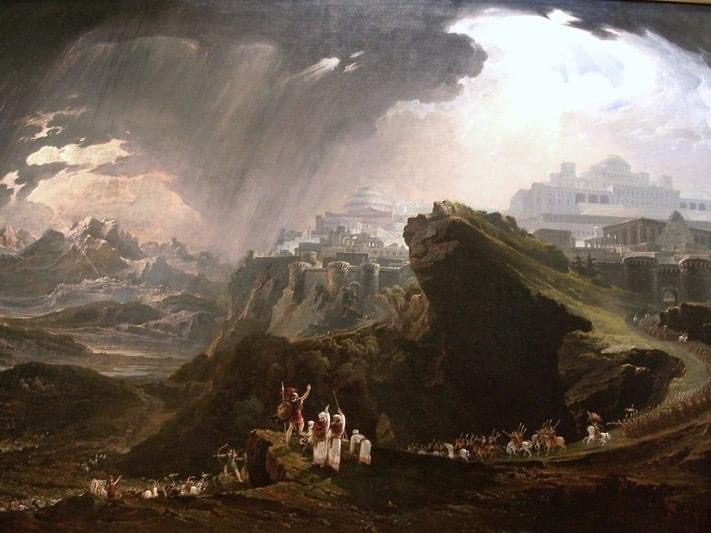
That Joshua could more than his Lord's Prayer can be seen from this: At Gibeon Joshua asked Yahweh to cause the sun and moon to stand still, so that he could finish the battle in daylight. This event is most notable because "there was no day like that before it or after it, that the Yahweh hearkened unto the voice of a man: for the Yahweh fought for Israel." (Joshua 10:14)
Lievegoed: "Ehrenfried Pfeiffer has told me that Rudolf Steiner said that Joshua was an incarnation of Christian Rosenkreutz." See Smith
Barnabas 12:8
What again saith Moses unto Jesus (Joshua) the son of Nun, when he giveth him this name, as being a prophet, that all the people might give ear to him alone, because the Father revealeth all things concerning His Son Jesus?
Moses therefore saith to Jesus the son of Nun, giving him this name, when he sent him as a spy on the land; Take a book in thy hands, and write what the Lord saith, how the Son of God shall cut up by the roots all the house of Amalek in the last days.
See Barnabas
The above tells the story of Moses being fertilized through the transformed Luciferic principle, Manas, and thereby preparing the Christ mystery. Paul had in him what was in Moses now fertilized through the Christ mystery.
From An Esoteric Cosmology, Lecture 17, Redemption and Liberation
Before the Coming of Christ, man embodied the principle of Jehovah (form) and that of Lucifer (individualisation). He was divided between obedience to the Law and the revolt of the principle of individuality.
But the principle of Christ came to establish equilibrium between the two. Christ taught man how to find the Law which was originally laid down from outside, within the centre of individual being.
This is what St. Paul meant when he said that freedom and love are the highest principles of Christianity. The ancient world was ruled by Law; Love is the governing principle of the new order of things. Thus three principles are inseparable from and essential to man's evolution — Jehovah, Lucifer, Christ.
In German, simply beautiful, GA 94.115.
In vorchristlicher Zeit waltete im Menschen das Jahveprinzip, das ihm seine Form verlieh, und das Luziferprinzip, das ihn individualisierte. Er war geteilt zwischen dem Gehorsam gegenüber dem Gesetz und der Auflehnung des Individuums.
Doch das Christusprinzip kam, um zwischen beiden den Gleichgewichtszustand herzustellen, indem es lehrte, im Inneren des Individuums selbst das Gesetz zu finden, das zuerst von außen gegeben worden war.
Das erklärt Paulus, der von der Freiheit und von der Liebe das christliche Prinzip recht eigentlich ableitet: das Gesetz hat den alten Bund regiert wie die Liebe den neuen. Wir finden also beim Menschen drei Prinzipien, die untrennbar und notwendig zu seiner Entwickelung sind: Jahve, Luzifer, Christus.
From An Esoteric Cosmology, lecture 17, GA 94
"The fact that his senses give man an objective consciousness of the world around him is due to the Luciferian Spirits. Human thought is the gift of the Gods; human consciousness is the gift of Lucifer. Lucifer lives in the astral body of man, and Lucifer's activity comes to expression at the point where the nerves give rise to feeling and perception. That is why the Serpent in Genesis says: ‘Your eyes shall be opened.’ These words must be taken literally, for it was by the Luciferian Spirits that the senses of man were opened.”
From Johann Wolfgang von Goethe - Faust Part I
Faust:
You only feel the one yearning at best,
Oh, never seek to know the other!
Two souls, alas, exist in my breast,
One separated from another:
One, with its crude love of life, just
Clings to the world, tenaciously, grips tight,
The other soars powerfully above the dust,
Into the far ancestral height.
Oh, let the spirits of the air,
Between the heavens and Earth, weaving,
Descend through the golden atmosphere,
And lead me on to new and varied being!
Yes, if a magic cloak were mine, that
Would carry me off to foreign lands,
Not for the costliest garment in my hands,
For the mantle of a king, would I resign it!
There is a love beyond love that outlasts life.
Two souls born from one.
United like two flames. Identical and yet separate.
Sometimes together, by feeling and desire welded.
Sometimes separated to learn and grow. But always finding each other.
In other times, other places. Again and again.
~Tradition from the 6th century by the Japanese patriarch Tatsuya.
There exists an ancient script in which the greatest ideal for the evolution of the “I,” the Christ Jesus, is characterised by the saying: When the two become one, when the external becomes like the inner, then man has attained the Christ nature in himself. That is the meaning of a certain passage in the so-called Egyptian Gospel. ~Rudolf Steiner
Countless phenomena of life will become clear to us if we think of human nature as the working together of two polar opposites. In the man the masculine pole works outwards and the feminine lives more inwardly, while in the woman the opposite holds true. ~Rudolf Steiner, GA 56.
Moses with Zipporah and Krishna with Radha tells the same story, that Moses/Krishna had to enter the physical world to let their heavenly love behind them in Midian/Vrindavan as the physical body wasn't ready for them to incarnate, so Moses/Krishna only had a part of them with them. Zipporah/Radha incarnates later, maybe symbolized through the Seth incarnation, who represent Abel, so she is of the Abel line where Moses/Krishna is of the Cain line. The Cain line ascends from the physical, also called Anthropos where the Abel line descends from heaven also known as Sophia. They meet here to become Anthroposophia. See The Cosmic Christ and the Zodiac - Viśvákarma.
(...) all my life, my search for you had no end.
And what made me seek, to such a measure,
was yourself, in me.
I see Goethe as an incarnation of Moses, who left the spiritual world and his loved Zipporah behind in Midian to enter the physical world. I kind of think they have looked for each other ever since and I think that this is what have inspired his later incarnations to their words on love and I think this looking for his Zipporah is the reasons for his relation to woman up through his life.
I think he may have met her in Ulrike von Levetzow, who he wanted to marry. They enjoyed each others company immensely at Marienbad, but pressure from her mother and gossip, hindered the marriage. I think that it affected her in someway, unlike Goethe who didn't care so much what people would say. Neither he nor she married after this.
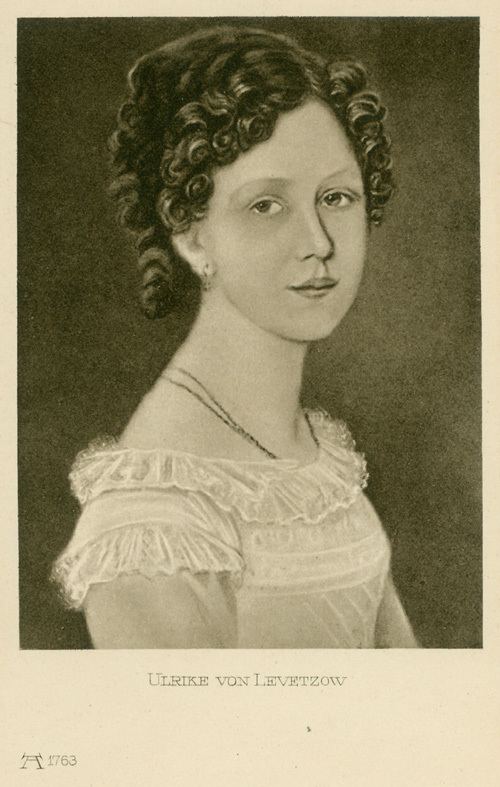
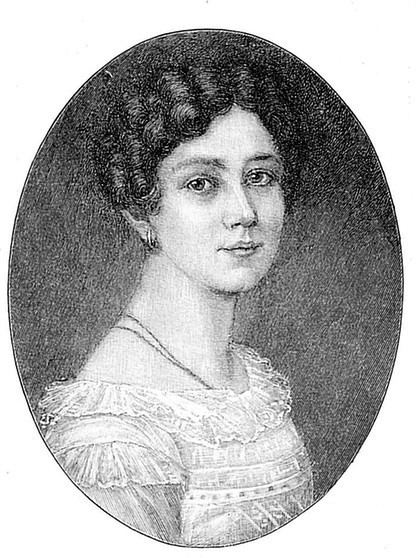
She had written in the will that the correspondence with Goethe should be burned and the ashes placed in an urn in her grave. They was so important for her that she would keep them with her, she couldn't burn them herself, it had to be after her death.
In 1821, 1822 and 1823 she [Amalie von Levetzow] and her children stayed at Marienbad, where she met daily with the 72-year-old Johann Wolfgang von Goethe. They became friends and he fell in love with Ulrike, then only seventeen. He sent her a marriage proposal via Amalie, having not mentioned it before to her or Ulrike. Karl August, Grand Duke of Saxe-Weimar-Eisenach met with Ulrike's mother to speak in Goethe's favour and - though she felt she could not refuse the Grand Duke - she stated any final decision must rest with Ulrike. She never mentioned the proposal to Ulrike, who never married. Wikipedia.
He wrote afterwards the poems which he called "Trilogie der Leidenschaft", where the famous Marienbad Elegy are part.
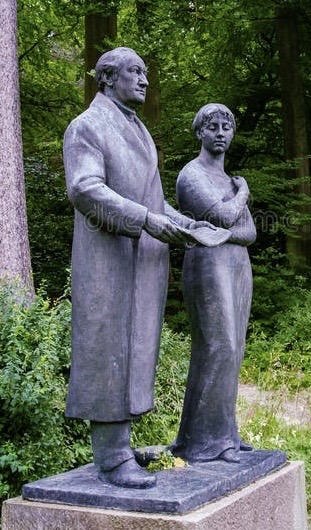
Goethe and Ulrike
Ita Wegman wrote as a mirroring of this:
The human I, the most individual part of the human being, is characterized by the fact that it does not want to remain in itself but wants to immerse itself in the other being. ~Ita Wegman
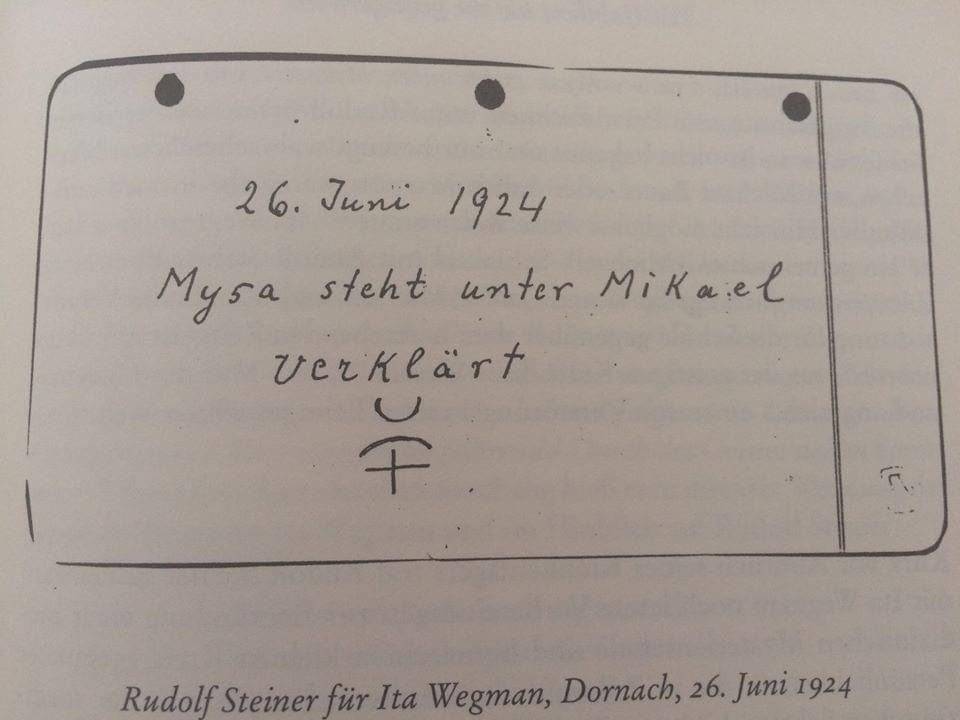
From Rudolf Steiner's notes book
Translated: "Mysa is Transfigured under Michael"
where Mysa should be Steiner’s nickname for Ita Wegman.
The symbol reminds me of the following text by Steiner (The Nature of the Physical and the Astral Worlds):
When a spiritual seer looks back to the time preceding the Christ event, a striking vision comes before him. The external form of the earth, confronting the physical senses as Maya, vanishes and something comparable to the human form appears, but only a form, a figure. To spiritual vision the outer Mayavic earth … changed into the form of man with arms outstretched in the shape of a cross, a male-female form.
This reminds us of the wonderful words of Plato, words that he drew from the Mysteries, that the world soul is crucified on the cross of the world's body.
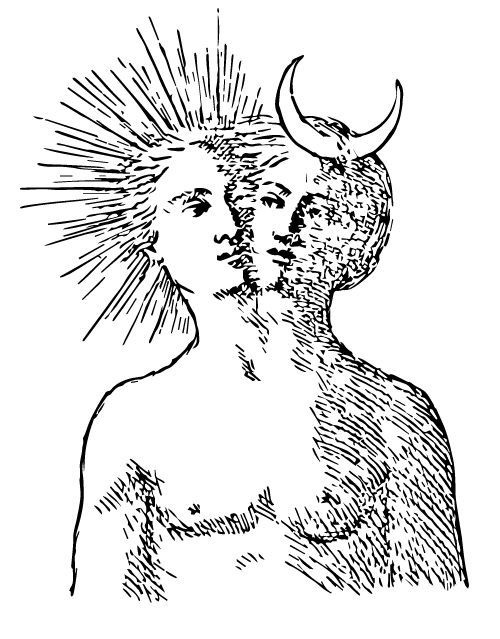
It looks like the Sun or Christ is transfiguring the earth. Who are the two on the cross?
I believe that Goethe is an avatar incarnation where Ulrike is a full incarnation, and following Peter Deunov is such a relation deemed to fail, they should both be born into their own body for love to flourish. its the astral body he recognizes in Ulrike, and it comes from the Paracelsus incarnation, if it’s her or Goethes incarnation.
Peter Deunov (Beinsa Douno) writes on Kindred Souls:
The souls have derived from God two by two. These are kindred souls. It is presumed that man will have 777 cardinal rebirths, and 12 of them will be epochal. Epochal rebirth is when two kindred souls meet on Earth. When the two that love each other meet on Earth, they say no bitter word to each other, and perform great things in Life.
In the other rebirths, when a soul is below, the other is above. The one that is above will choose somebody here, who looks like him, and through him he will manifest [Avatar.] However, that is beguilement and in that case man must have patience to wait.
The two kindred souls merge to form one whole. The kindred souls are placed in order for the two of them to work like the right and the left hemisphere of the brain. This is called polarization. The other soul might be on the other side of the world or in the Invisible world; they will connect together. Space or matter can’t obstruct. That is a law of Love.
The left hemisphere of the brain represents the etheric body and here the I AM of men are at home. The right hemisphere of the brain represents the astral body and here the I AM of women are at home. They are connected because her etheric body is a copy of his, and his astral body is a copy of hers. They differ in their I AM’s and that her I AM is conscious in her astral body and his I AM is conscious in his etheric body. What they each refine in these bodies are usable for both when they rebuild these the next time.
The archetypal pair is Radha and Krishna, and the relationship is called Shakti and Shaktiman. See Radha-Krishna.
Steiner have described how the feminine I AM descends and the masculine I AM ascends and meet in the soul in our time, how Anthropos meet Sophia becoming Anthroposophia. See The Cosmic Christ. The two streams we know as Platonic and Aristotelian incarnate in this way, one person inspires from above while the other incarnate on the earth. This is why the platonic at the School of Chartres talked admiringly about Sophia who stayed above and why the Aristotelians/Anthroposophists at the start of the twentieth century talked so much about Michael.
Peter Deunov continues:
The kindred souls, in their development, come down to Earth, when at one moment one of them becomes embodied, at another the other one does. Together they walk and help one another. The kindred souls are human souls, above which there is a perfect Spirit. This is namely the Spirit that guides them and distributes all goods. The kindred souls have an equal purpose, but have two different functions.
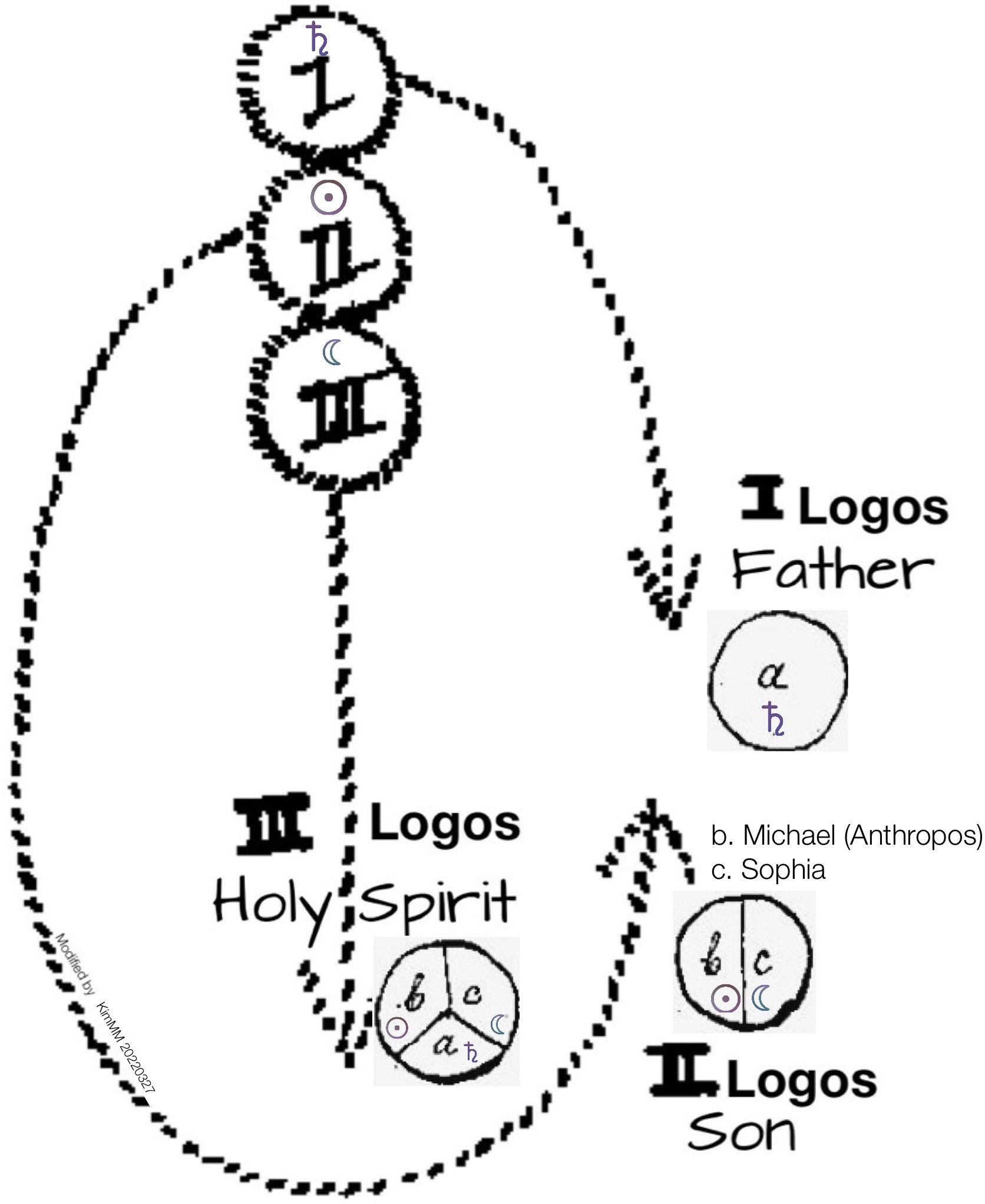 ▪️When the kindred souls merge [b, c], the unity comes, and then the outward
contradictions disappear, a merger with the Lord [a] happens as well. Or, more properly speaking, these two kindred souls do not merge, but form a system. They do not become depersonalized.
▪️When the kindred souls merge [b, c], the unity comes, and then the outward
contradictions disappear, a merger with the Lord [a] happens as well. Or, more properly speaking, these two kindred souls do not merge, but form a system. They do not become depersonalized.
▪️After that, a pair will merge with another pair, then with a third, etc; eventually, all souls will merge, and the Cosmic human will be formed. Thus, when the kindred souls merge two by two and more, they will become one whole; without becoming depersonalized, they will work together and will form a powerful force. All pairs, united together, will form a Universe, a whole.
▪️The two poles of a pair cannot be drawn together entirely. They have a certain relation between each other, as the two poles of the Earth. In the future, when two kindred souls merge, they will not be born in the same body on Earth, but in separate bodies; however, they will have a shared body, which will be uniting them. And then, they, with their separate bodies, will function like poles in that bigger body. The body that will unite them will be finer, thinner, and will invisibly envelop with its powers these two bodies.
Those things are not said to everyone. They are only for the devoted. They are spoken only to the most advanced students.

A dear friend of mine told me that Saint Paul was bitten by a snake, but he was immune to snake poison. The Snake is Lucifer, so Paul was immune to Lucifer, and it again reminds me about Moses and also about Goethe.
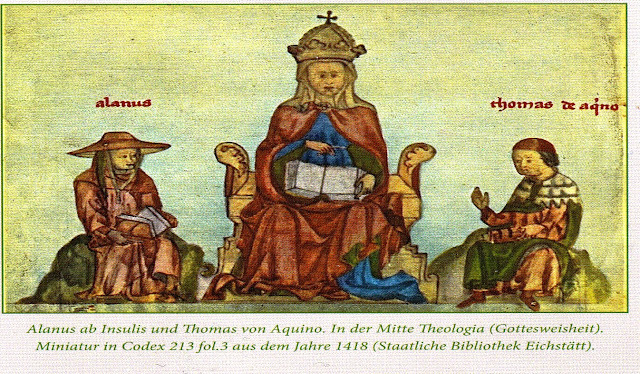
Paul was Born out of Time and Moses stopped before the holy land, it was not his time. Moses was preparing the path to Christ but should not take part in the building of a religion, it was the Job of Peter and the Jewish people. But things didn't go as hoped, so Saul received the etheric body as also Moses had, to help Peter build the Church, only Moses had the strength to lift the burden. Moses regular mission was to return in the fifth period to prepare the return of Christ, as Alanus ab Insulis, as Goethe and now. I believe he would have preferred not to take the Paul mission, his mission is love and the Paul mission may have made his following incarnations more heavy.
Sein Leben, das einmal in einem Erdendasein in Griechenland vorhanden war, dort viel zusammengekommen ist mit plastischer griechischer Kunst, aber auch mit platonischer Philosophie, namentlich mit riesigem Enthusiasmus in einem Jünglingsdasein aufgenommen hat plastische Kunst, die zu gleicher Zeit geistig geschaut werden kann, wobei das geistig Geschaute wiederum mit ungeheurem inneren Künstlertum in Künstlerisches übersetzt werden kann: Wir haben, nachdem sie auch durch andere Inkarnationen gegangen war, diese Individualität beim Ausbilden des Karmas zu verfolgen in der Jupitersphäre. Diese Individualität, die eines der wichtigsten Erdenleben hatte im alten Griechenland, ging durch die Jupitersphäre, wurde berührt von alledem, was Weisheit des Jupiter ist, bildete sich da ihr Karma und wurde wiederum geboren als Goethe. Daher dieser wunderbare Zusammenschluß von Griechentum und Weisheit bei Goethe.240.132f
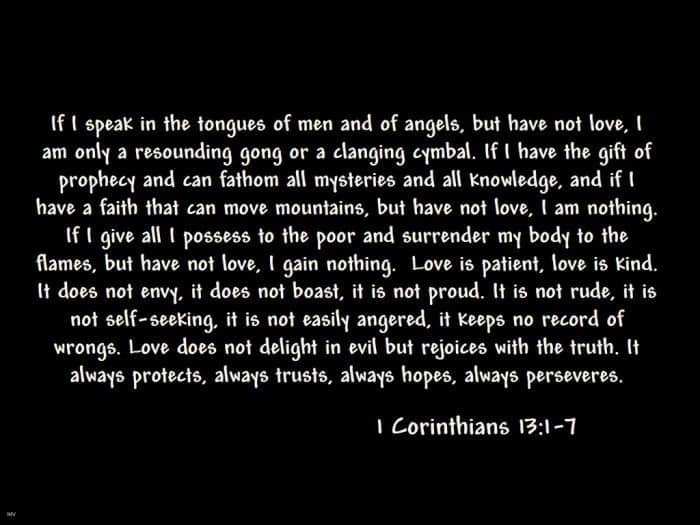
Paul had written some of the most beautiful lines on love pointing
back to Krishna and forward to Goethe.
Goethe gehört zu denjenigen Menschen, die am wenigsten luziferisch dachten. Das aber macht notwendig, sich möglichst ans konkrete Einzelne zu halten. In dem Augenblick, wo man generalisiert, wo man vereinheitlicht, naht man sich schon dem luziferischen Denken. 191.270f See Luzifer und Denken
Mensch mit langem Oberkörper. Goethe war eine sogenannte Sitzgröße. Wenn ein Mensch kurze Beine und einen übergroßen Oberkörper hat, das heißt: Wir haben bei einem solchen Menschen in der äußeren Erscheinung gegeben, daß er das, was er in einem vorigen Erdenleben durchlebt hat, auf eine harmonische Weise karmisch in dem gegenwärtigen Erdenleben zur Darstellung bringen kann. 310.26
From The Wisdom of the Soul, Lecture IV:
On the other hand, one whose every tendency tells of a rich astral life, who is full of interests that flow against the continuous current of the physical life, will bring with him into the world the gift for living concepts, because he is open to the stream coming out of the future. He will not appear on the physical plane as a man of thought, but rather, he will prove how readily he can clothe his inner experiences in words that speak powerfully to men. Such a one was Goethe.
If you think of a man as bringing over from a former incarnation a tendency toward the one current or the other, you must imagine in Goethe's soul a predisposition for the stream out of the future. When he yields himself to it, he quite naturally gathers ideas of the future as vital concepts. Once Goethe permits all this to come into conflict with what has only been acquired in this incarnation, with the visualizations of the recently acquired etheric body, the result is something like what we designated worthless in his Wandering Jew.
When I read the following text on Orpheus by Rudolf Steiner sixteen years ago I was mystified by the incarnation of Orpheus without his feminine side, I had a feeling it was an important puzzle piece, but I hadn't any other pieces to match it with. Now I understand that Eurydice is Sophia, Isis, Sif or Zipporah who can't work in him, that he has no access to Manas as the consciousness soul isn't developed. This is a tragedy, he is only half!
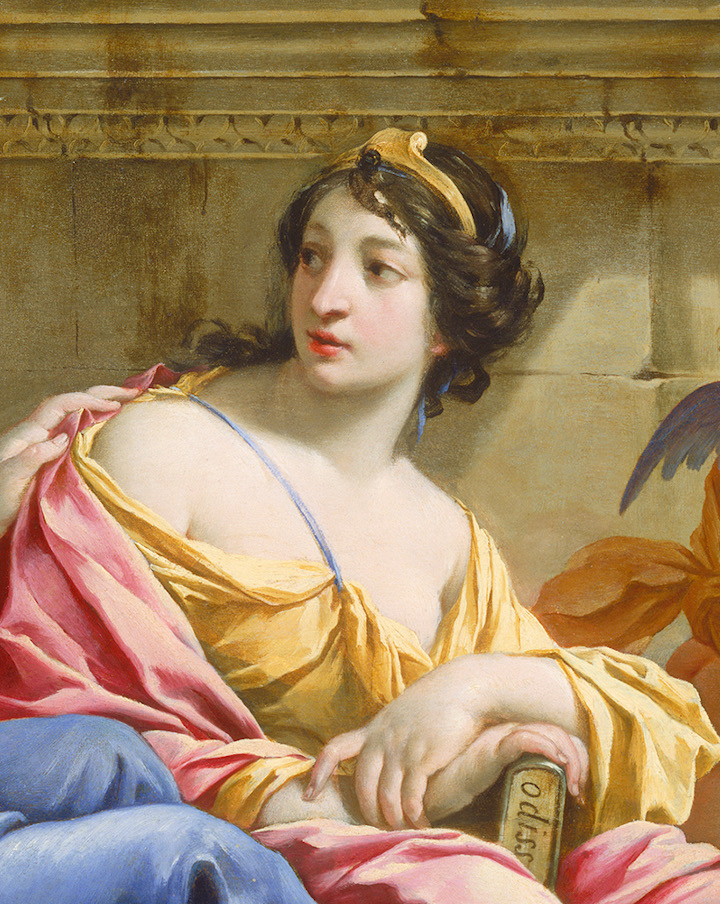 Orpheus is the Son of Appollo and Calliope, but Orpheus could also mean orphan, fatherless. Calliope was the wisest of the Muses, as well as the most assertive. She taught him verses for singing where Apollo gave him the lyre and taught him to play, symbolizing that Apollo gave him the skills and Calliope his inspiration. It was said that Hermes invented the lyre but Orpheus perfected it. It was also said that Orpheus' could charm the birds, fish and wild beasts, coax the trees and rocks into dance, and divert the course of rivers with his song and music.
The central story is about Orpheus loss of his love, Eurydice or Argiope, what Steiner says tells that he is born without his feminine side. Eurydice dies through a snake bite while she was dancing with naiads on her wedding day, following Ovid, the tale varies, except for her death by a serpent. His veneration for his missing half is shown through the worship he created for Demeter and Hecate.
At the end of his life, Orpheus dropped the worship of the gods except the sun, Apollo. One early morning he went to the oracle of Dionysus to salute his god at dawn, but was ripped to pieces by Maenads for not honoring Dionysus any longer. His head and lyre, still singing, floated down the River Hebrus. Some believe that the Orphic mystery cult regarded Orpheus as a parallel figure to or even an incarnation of Dionysus, that Dionysus in Orpheus gave over to Apollo.
After his death, Orpheus and his beloved Eurydice is reunited in the underworld, at the fields of the Blessed.
Egypt, Greece and the Hebrew people are part of the same development, with different focus, what shows through the way they tell the story. Osiris and Orpheus is the same, their dismemberment symbolizes that they gave the seed to Manas, that inspires humanity from the spiritual world, also symbolized by Orpheus singing head after his death. It is also mentioned that Orpheus traveled to Egypt. Their story corresponds to the story of Moses until his wife Zipporah saves him from the serpent demon. Moses has to go to Egypt, leaving the etheric world Midian without his wife, incarnating into the physical.
Osiris and Isis gives birth to Horus whose eyes is the Sun and Moon, he is both the feminine and masculine in one. Orpheus is said to be the father, teacher or disciple of Musaeus. Musaeus was a legendary polymath, philosopher, historian, hierophant, prophet, seer, priest, poet, and musician. In 450 BC, in a play Euripides describes Musaeus in this way: "Musaeus, too, thy holy citizen, of all men most advanced in lore." Plato groups Orpheus, Musaeus and Homer as the source of inspiration of epic poets and orators. Calliope was also said to be the muse of Homer.
Many Greek sources identify Musaeus with Moses, the Jewish lawmaker, and the description of him as a polymath also indicates he is the Manas Bearer, the Manu, just as Moses after he became one with Zipporah. The story of Moses is the description of a being, not of a single incarnation, and this goes for Osiris and Orpheus as well. See more on Orpheus in Wikipedia at Orpheus and the article on the History of the Archangel Michael.
From The Christ Impulse and the Development of the Ego-Consciousness, Lecture 1
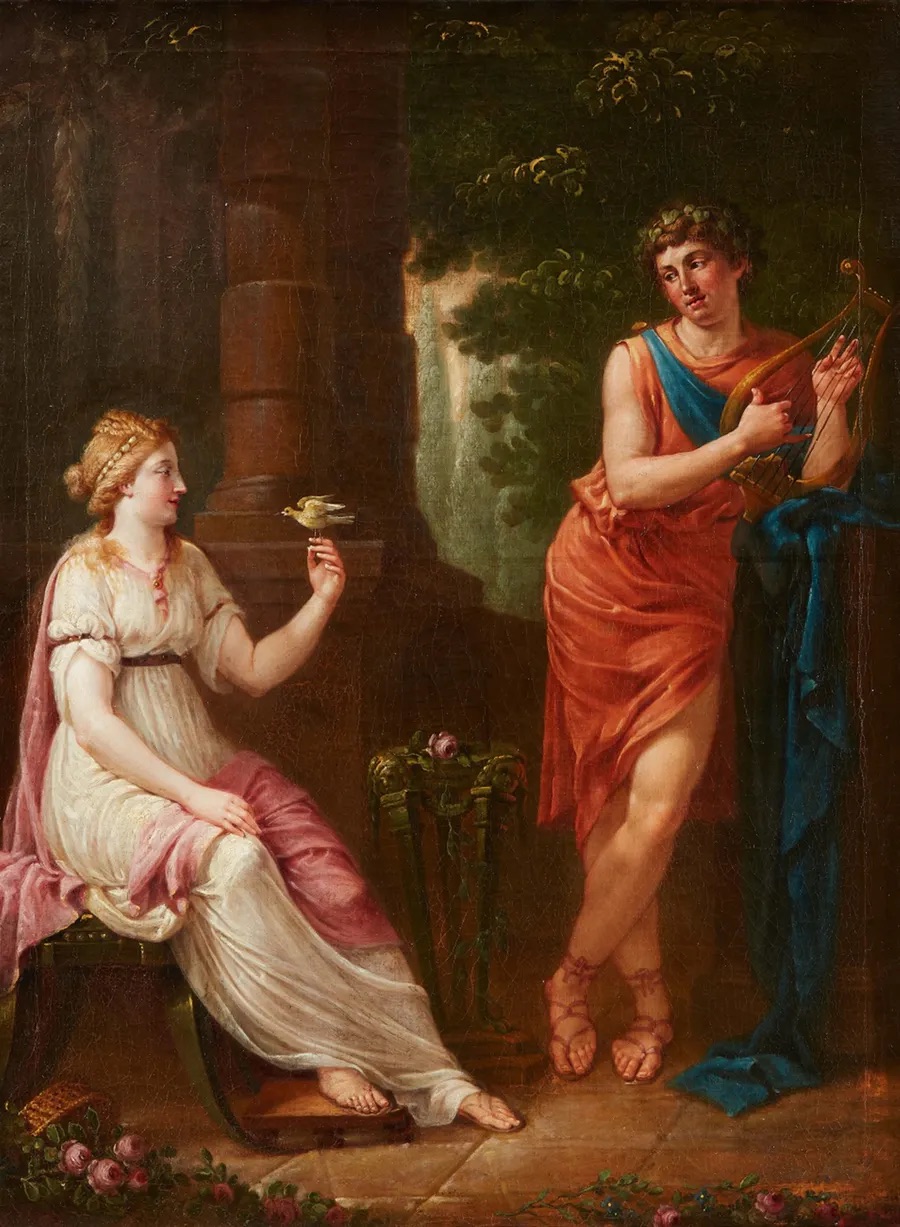 ▪️Once upon a time there was a primeval Teacher in the civilised parts of Europe — a primeval Teacher who in this sense was a primeval Bard, the pioneer of all the ancient Bards and minstrels. He taught on the physical plane by means of music, and he taught in such a way that something was thereby communicated to the sentient-soul, which was like the rising and shining of a sun.
▪️What tradition has retained concerning this great Teacher was later on gathered together by the Greeks — who were still influenced by him from the West as they were influenced in a different way from the East.
▪️This was embodied in their conception of Apollo, who was a Sun-God and at the same time the God of music. This figure of Apollo dates back, however, to that great Teacher of primeval times, who put into the human soul the faculty which appears to-day as the power of clear thinking.
The Greeks also tell of a pupil of this Great Teacher of humanity — of one who became a pupil in a very special way. How could anyone become the “pupil” of this Being?
In those bygone times, when this Being was to work in the manner just described, he was not, of course, encompassed in the physical organisation; he transcended that which walks the earth as physical man.
A man with an ordinary sentient-soul might have been receptive to the effects of the music, but he could not have aroused them in others.
A higher Individuality had come down and was like the radiance of what lived in the cosmos outside. It became necessary, however, that in the fourth Post-Atlantean epoch of civilisation, in the Graeco-Latin period, he should descend again — that he should descend to the human stage and make use of all the faculties that are in man.
Yet, although he made use, so to speak, of all the human faculties, he could not quite descend. For, in order to bring about what I have described, he required faculties transcending those possessed by a human organisation in the fourth post-Atlantean period.
The effects of this music even then included what was to be found in the spiritual soul [consciousness soul]; and it could not at that time have lived in an individuality organised only for the intellectual soul.
Hence, although incarnated in such a form, he still had to hold something back. His incarnation in the fourth epoch was such, that although he completely filled the whole human form, yet he as man, dwelling within that form, had, as it were, something within him that extended far beyond it; he knew something of a spiritual world, but he could not make use of this knowledge.
▪️He had a soul which extended beyond his body. Humanly speaking, there was something tragic in the fact that the Individuality who had acted as a great Teacher in the third epoch of civilisation, should have had to incarnate again in a form in which his soul was to a great extent outside it — and yet that he could not make any use of this superior and unusual faculty of soul. This kind of incarnation was called a “Son of Apollo”, because that, which had dwelt on earth before, was reincarnated in a very complicated and not in a direct way.
▪️A Son of Apollo bore within him as soul what Mysticism designates by the symbol of the ‘feminine’ element; he could not bear all of it within him, because it was in another world. His own feminine soul element was itself in another world to which he had no access but for which he longed, because a part of himself was there.
▪️This marvellous inner tragedy of the reincarnated Teacher of former times has been wonderfully preserved in Greek Mythology under the name of ‘Orpheus’ — the name given to the reincarnated Apollo, or “Son of Apollo.”

▪️This tragedy of the soul is represented in a marvellous way in the figures of ‘Orpheus and Eurydice’. Eurydice was soon torn from Orpheus. She dwelt in another world; but Orpheus still had the power, through his music, of teaching the beings of the nether world. He obtained permission from them to take Eurydice back with him. But he must not look around him; for that would mean inner death; — at all events it would bring about a loss of what he formerly was and which he cannot now take into himself.
Thus in this incarnation of Apollo as Orpheus, we have again a sort of descent of a Bodhisattva — if we may use this Eastern term — to Buddha-hood. We might quote a number of such Beings who stand out from age to age as the great Teachers of humanity and who always had a very special experience at the time of their deepest descent. The Buddha experiences the bliss of inspiring the whole of humanity.
▪️That Bodhisattva, whose memory is preserved externally under the name of ‘Apollo,’ had an individual experience: he was to prepare the individuality, the quality of the ‘I’. He experiences the tragedy of the ‘I’; he experiences the fact that this ‘I’ is, in the present state of man as regards this attribute of his, not entirely with him. Man is struggling up to the higher ‘I’. That was foreshadowed for the Greeks by the Buddha or Bodhisattva in Orpheus. [Orpheus is the Luciferic, preparing the true light.]
Do not kill the lust for existence but purify it because originally it was a good thing. ~Paul
Here’s one of Steiner’s descriptions of Paul and his background in Moses, taken from “Christ and the Spiritual World - The Search for the Holy Grail,” one of the most interesting books of Steiner on the Holy Spirit, another name for the Grail, that or who contained Christ.
The following is from the Second Lecture:
And if we ask why this has not happened, and who has brought it about that the force so apparent in the Sibyls has gradually declined, then we must answer: the Christ, who through the Mystery of Golgotha infused the Earth's aura with His Being; thus He destroyed the Sibylline force in the souls of men and has driven it away. ...
We must pierce the veil that shows us the spreading of Christianity on the physical plane. We must look behind the physical plane at the spiritual conflict whereby the souls of men were freed from that chaotic element which would otherwise have gone on from strength to strength.
And this fact is seen in a false light by anyone who fails to comprehend that through this supra-physical deed something of endless value was accomplished for mankind by the Christ.
But who were they who achieved at least something, indeed much, towards this comprehension? They were the writers of the Gospels, and Paul, who were endowed with a certain inspiration or revelation from the spiritual world. ...
See Sibyls, the Voice of good or evil spirits
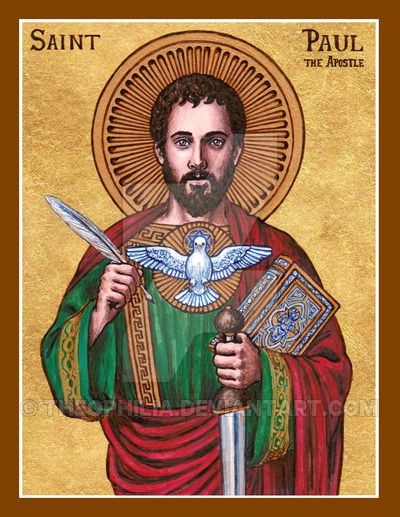
With Paul it always seems that there is much more between his words than one gets from simply reading them. It is as though the Damascus vision had come to expression through him; as though there penetrated into humanity through him a note which was opposed to the prophetic note of the Sibyls; as though through him there rang out again the note of the old Prophets [Moses] whom Michelangelo has represented so beautifully in his paintings....
But if one wants to grasp what it was that lived spiritually in Paul, in and between his words, and why one feels through his words something akin to the prophecies of the Sibyls, but with him proceeding from a good element in Earth evolution, then one comes to the phenomenon which answers the question: How far does Paul's world extend? What are its boundaries? And the remarkable answer we receive is: Paul is great throughout the world where the olive tree [a gift of the goddess Athena, the transformed Luciferic powers, Manas, or Zipporah, wife of Moses] is cultivated....
Geographically, too, the world is full of secrets. And the region of the Earth where the olive tree flourishes is different from the regions where flourish the oak or the ash. Man as a physically embodied being has a relationship with the elemental spirits.
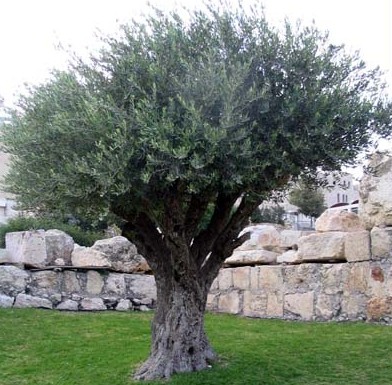
... And if we want to grasp the connection of the Earth-nature with human beings, we need to pay attention to such peculiar facts as this — the fact that Paul carries his message just as far over the Earth as the domain of the olive tree extends. The world of Paul is the world of the olive tree [the world of Athena].
The good element comes from Manas. The Sibyls are the chaotic Luciferic powers working with the elemental world, where the good element is Zipporah, the transformed luciferic or astral, Manas. Paul work through her, through Manas, without which he couldn’t have handled the Sibyls. She makes him a Manas bearer, the Manu.
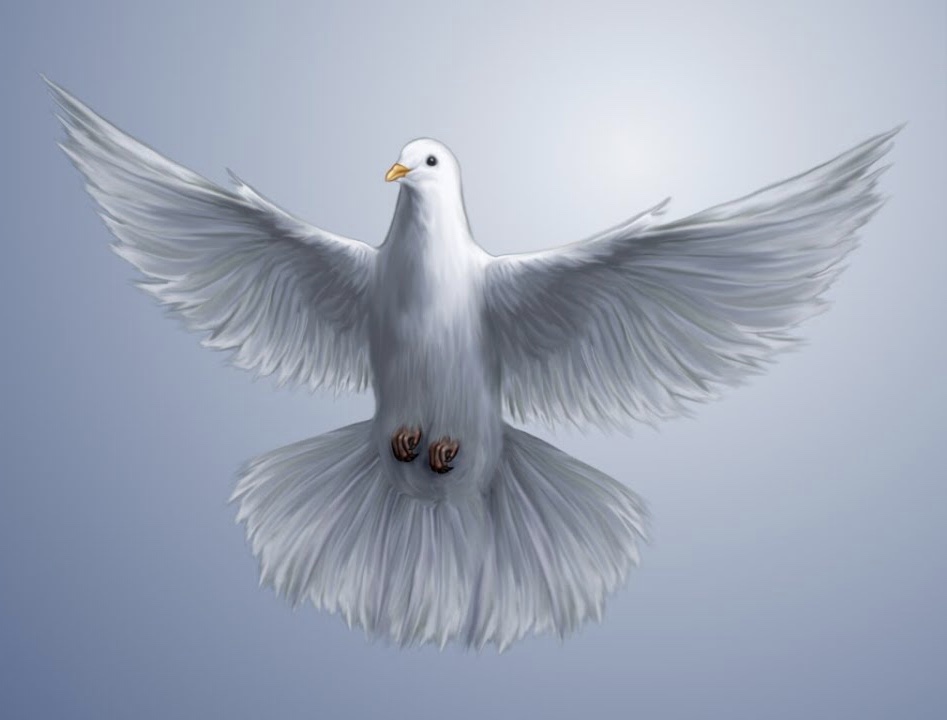
Zipporah means bird, and Manas, the Astral, Lucifer, and the Holy Spirit is connected to birds.
The following is from the Third Lecture:
Today I would like to say something about the Christ Being as such. We shall then see how in Paul the Christ Being is reflected in a certain definite way.
...in the Christ Being we have to do with a high spiritual Being — that is the term we will use for the present — for whose own evolution the Old Sun period was especially important....
We must now consider a little this Nathan Jesus child. I have already drawn your attention to the fact that in this child we have not to do with a human being, like other human beings, in the strict sense of the term.
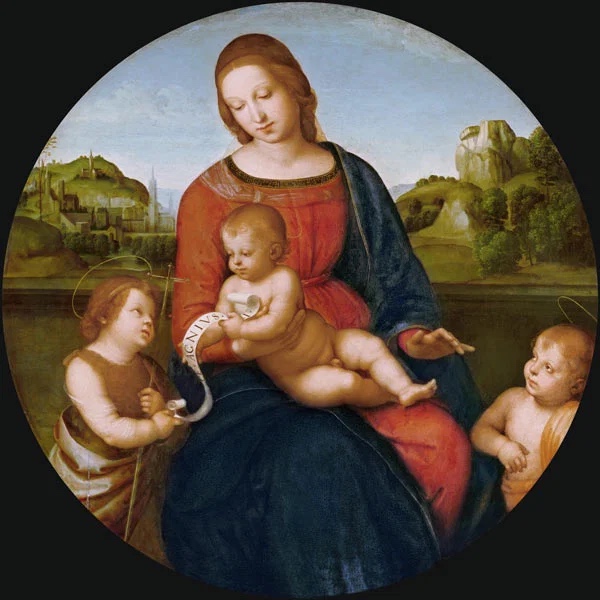
We cannot say of this Being that he had previously been incarnated on Earth in this or that individual.
We have always emphasised that of the soul-element which has come forth from spiritual worlds in order to live in single individuals on Earth, something as it were remained behind; and that what had thus remained behind appeared in the Nathan Jesus-child [the Abel being].
Hence of this child we cannot say that in him there lived an ordinary human ego which had developed in a certain way through earlier incarnations.... We must look for him not in the history of the physical Earth, but in pre-earthly spiritual realms....
The angelic Being who was permeated with the Christ had to accomplish the deed of vanquishing and driving out from the human soul that which had to be driven out if thinking, feeling and willing were to be harmonised.
And so there arises the picture — let us bring it vividly before our souls — of an angelic Being, dwelling still in the spiritual worlds, who later became the Nathan Jesus-child: he appears to us ensouled by the Christ and thereby rendered capable of special deeds — able to drive out from thinking, feeling and willing the element which would have raged within them as a dragon and brought them into chaos....
This was a significant deed, made possible only with the help of Christ in the Being of Jesus, at that time an angelic Being.
For this angelic Being had actually to connect himself with the Dragon-nature; to take on as it were the form of the Dragon in order to hold off the Dragon from the soul of man.
He had to work from within the Dragon, so that the Dragon was ennobled and brought out of chaos into a kind of harmony. The training, the taming of the Dragon — that is the further task of this Being....
Moses worked from within the dragon, and the Manas of Zipporah made it possible to ennoble the astral dragon.
It is remarkable how for the Greek mind one particular divine figure emerged from the others. The Greeks, we know, reverenced a variety of gods. These gods were the reflections or projections of the Beings who originated from the journey round the planets of the Being, permeated by the Christ, who later became the Nathan Jesus-child....
But from these pictures of the various figures of the gods there emerged one figure — the figure of Apollo. The figure of Apollo emerged in a distinctive way: what did these Greeks see in him?
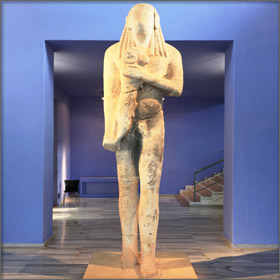
We come to know Apollo if we look at Parnassus and the Castalian spring. To the west of it there was a cleft in the earth, and over this the Greeks built a temple — why? Vapours used to rise up out of the cleft, and when the air-currents were right the vapours crept up the Mountainside like the coils of a snake, like a dragon.
And the Greeks imagined Apollo as shooting his arrows at the dragon, as it rose from the cleft in the form of turbulent vapours.
Everywhere we see a god fighting the dragon or the serpent we should think of Michael, the Archangel of the Sun, the Face of God. Examples are Krishna/Arjuna, Yahve/Moses, Thor/Vidar, Vishnu/Kalki, Indra, Horus, and here Apollo. Claudius Aelianus wrote that Egyptians called the god Apollo "Horus" in their own language. See Thor and Sif. The fight with the Bull is another symbol for Lucifer fighting the Luciferic, like Krishna’s, Mithras and Shamash/Gilgamesh fight with the Bull. Krishna dancing on the seven-headed snake is also a symbol of the invulnerability of the Luciferic, of Shiva.
Here, in the Greek Apollo, we see an earthly reflection of St. George [before Michael raises to Archangel,] shooting his arrows at the dragon. And when Apollo had overcome the dragon, the Python, a temple was built, and instead of the dragon we see how the vapours entered into the soul of the Pythia, and how the Greeks imagined that Apollo lived in these swirling dragon-vapours and prophesied to them through the oracle, through the lips of the Pythia....
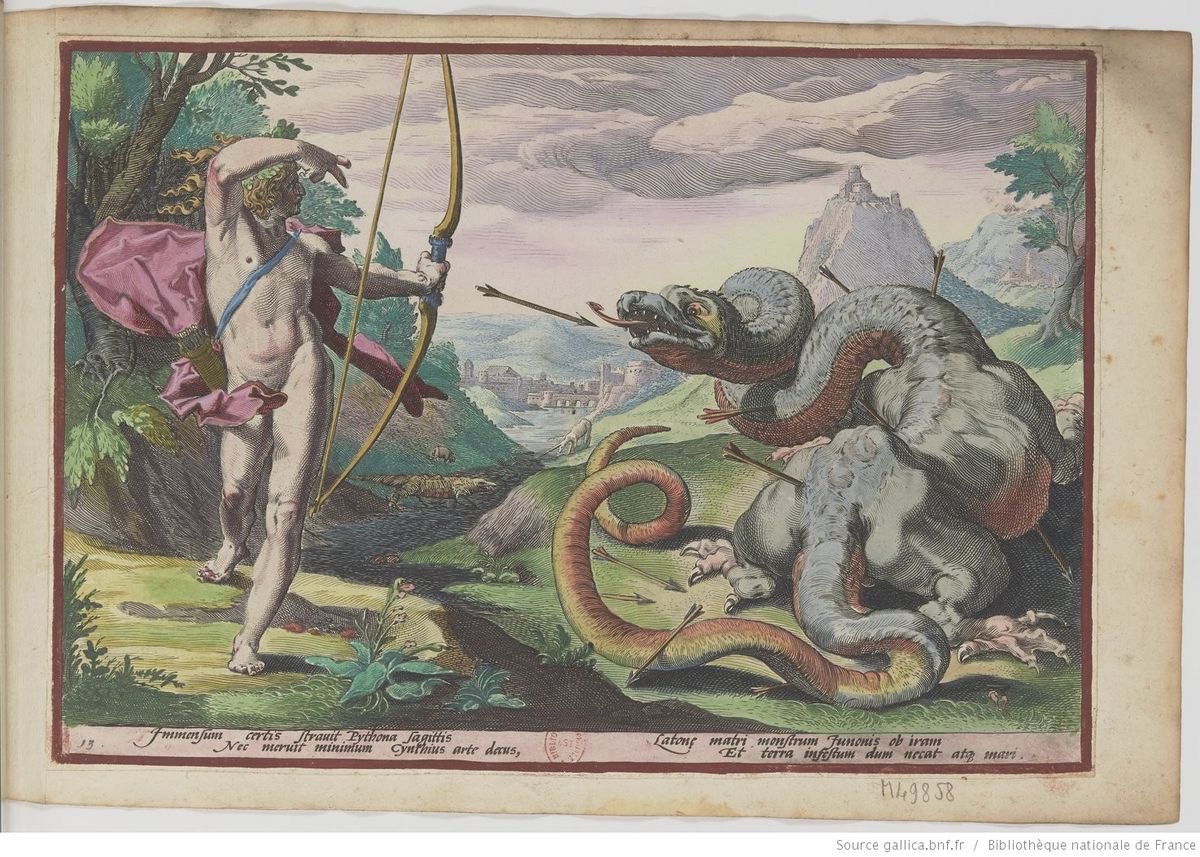
It meant that Apollo lived in the dragon’s blood and filled men with wisdom from the Castalian spring. And the place became a meeting-place for the most sacred plays and festivals.
Why was Apollo able to do this — who was he? It was only from spring to autumn that he caused wisdom to flow up from the dragon's blood.
Towards autumn he went away to his ancient home in the north, in the Hyperborean land. Farewell festivals were held at the time of his departure, and his return was welcomed in the spring. [This may connect to Thor!]
A deep wisdom resides in this idea of Apollo going north. The physical sun withdraws towards the south; in a spiritual sense it is always the opposite.
The story shows that Apollo has to do with the sun. Apollo is the angelic Being of whom we have spoken; he was a reflection, projected into the Greek mind, of the angelic Being who had in fact worked at the end of the Atlantean time and who had been permeated by the Christ.
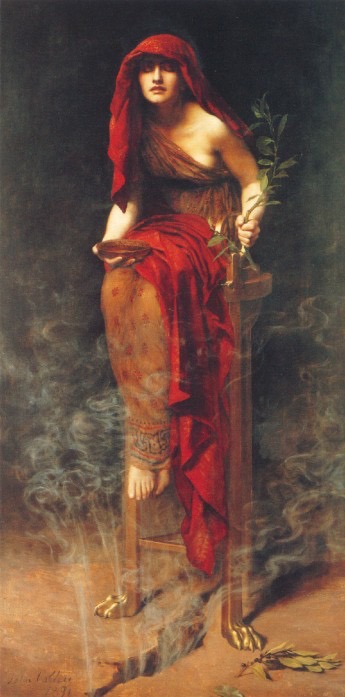
This reflection was the Apollo who spoke wisdom to the Greeks through the mouth of the Pythia. And what was the content for the Greeks of this Apollo wisdom? We might say it was everything that led them, on the most important occasions, to take this or that decision....
And Asklepios, the Healer, is for the Greeks the son of Apollo, the healing god. The weakened form of the Angel in whom Christ once dwelt is a healer on Earth, or for the Earth. For Apollo was never physically embodied, but he worked through the Earth-elements. [What connects to Yahve.]
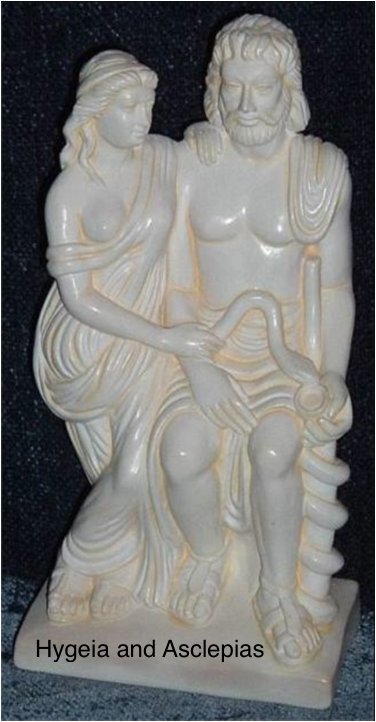
And the god of the Muses, above all the god of song and the art of music, is Apollo. Why is this? Because through the power of song and string-music he brings thinking, feeling, and willing into harmony. [And this again connects to one of Yahve's emanations, King David, who ended the descending period of Moses, and his wife Bathsheba led on to their son, King Solomon, and the descending period of Salomon.] ...
We see how the Greeks revered in the god they called, Apollo the Being of whom we have spoken; and we might say that in the Being who truly corresponded to Apollo at the end of the Atlantean time, the Christ was ensouled. Who then was Apollo — not the reflection revered by the Greeks, but Apollo himself?...
A celestial Being who from the higher worlds poured out healing forces for the soul, paralysing the Luciferic and Ahrimanic powers. ... The Healer, the celestial Healer, is Apollo.
We have seen this Being pass through three stages of evolution, and then the Healer, whom Apollo reflected, was born on Earth and men called him Jesus, which in our language means “He who heals through God”. He is the Nathan Jesus-child, the one who heals through God, Jehoschua-Jesus....
You have the connections between the Being who was born as the Nathan Jesus-child and the Christ Being, and the way in which this was prepared.
It is now possible, through that which it is permissible to reveal in true Anthroposophy, to understand this kind of growing together, belonging together, of the Christ Being and the human nature of Jesus....
The following is from the Fourth Lecture:
From the point of view relevant here I should like to associate the Zarathustrian world-picture with “Chronology”. It looks beyond the two Beings, Ahura Mazdao and Ahriman, to the workings of Time — Zervan Akarana.
Not, however, the abstract Time we think of today, but Time viewed as a living, super-personal Being. From this Being proceed the rulers of Time; first of all the Amshaspands, the spiritual Beings who are symbolised in cosmic space by the signs of the Zodiac. ...
...because the Zarathustrian outlook sees in “Time” something living and super-personal — so, while spiritualising the term, we may call this world-picture “Chronology”, whereby we are led to think at once of the god Kronos, the Regent of Time....
Then we come to the third post-Atlantean epoch.... In the courses of the stars, in the signature of their movements in cosmic space, men could now perceive how harmony and melody in cosmic happenings are brought about.
This picture of the world I would like to call Astrology. So Chronology is followed by Astrology. And everything that was disclosed by the true, authentic Chronology of Zarathustrianism, and by the true, authentic Astrology of the Egyptian and Chaldean Mysteries — all this was activated by the secret influence which had come into the world though the threefold Christ-event before the Atlantean catastrophe....
The sun works in the first place through air and water and water-vapour, and so through the vapours which (as we have seen) rise from the site of the Castalian spring and coil round the neighbouring hillsides like a dragon — the dragon killed by the Greek St. George. The sun works in all the elements, and after it has worked into them, inoculated them, its activity plays out from them on to human beings, through the servants whom we call elemental spirits. In the elements the Sun- Spirit is actively alive, and this is the activity the Greeks saw in their Apollo.
Thus for the Greeks Apollo was a sun god, but not the Helios who drove the chariot of the sun across the heavens and to some extent regulated the times of the day.

In Apollo the Greeks saw the sun's activity in the atmosphere, and this activity they addressed as Apollo when they addressed it spiritually. And so it was with many gods and spiritual beings whom we find in the West. I could mention many, but we need point only to Wotan with his wild host, rushing through the storm.
What form then did the world-picture — still echoing the threefold Christ-event — take in the fourth post-Atlantean epoch? Again I must make use of a pedantic, dried out word. Astrology was followed by Meteorology. Chronology, Astrology, Meteorology! We have only to bring the “logy” into relation with the Logos.
But while all this was breaking in over the Western world, something else streamed into the whole post-Atlantean civilisation. This too was an after-echo of the threefold Christ- event, but it came from quite another side.
And this fourth element, running as though parallel to the Meteorology of the fourth post-Atlantean epoch, is something I must again designate with a dry, pedantic word: Geology — but I beg you once more to relate the “logy” to the Logos. Geology, then — where do we encounter it?
The development of the ancient Hebrew civilisation will never reveal its particular secrets unless it is studied as Geology, in our sense of the term.
How do we first come upon the ranks of the Elohim, or upon the Jahve-god? We meet him first when he wishes to form into man something taken from the Earth itself.
He wishes to clothe with a new covering, an Earth-vesture, the part of man that has come down from earlier times, from Saturn, Sun, Moon.
Jahve is precisely the god who forms man out of the Earth — that is, out of the forces and elements of the Earth.
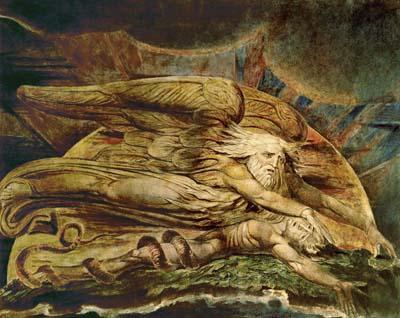
Therefore the ancient Hebrew wisdom, since it professed the Jahve-god, had to become Geology. And this teaching about man, that he is formed out of the forces of the Earth, is Geology.
Is not the geological character of the ancient Hebrew teaching shown to us at once in the name of the first man, Adam — he who was formed out of earth!
That is the significant point that we must keep before us: among other peoples — the peoples with a meteorological world-picture, let us say — the creation of man is spoken of quite differently, with the emphasis on his soul.
In the Greek tradition, for example, we see Prometheus engaged in the forming of man. Athene lends her aid and causes a spark from spiritual heights to be united with man. Prometheus forms the soul in the symbolic likeness of a butterfly.
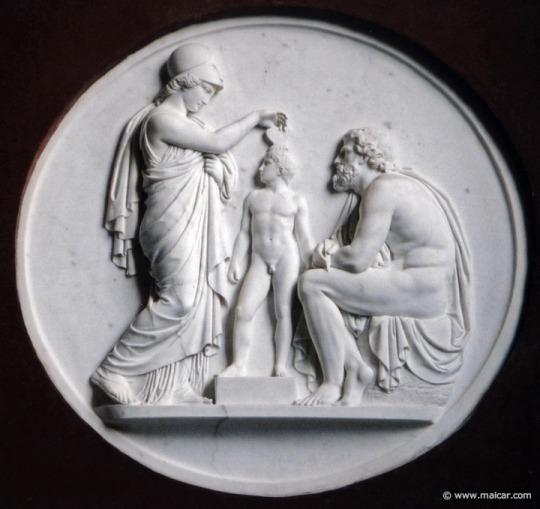
The Jahve-god forms man out of earth; and he, the Jahve-god, having become in the course of his evolution the Ruler of Earth, breathes out of his own substance a living soul into man.
So Jahve unites himself through his breath with what he has formed out of earth. And he wishes to dwell in his offspring, in his living breath, in Adam and his descendants; those beings whom Jahve considered it his task to clothe in earth.
And now to carry this further, let us try to call up before our souls everything we find handed down by the Bible from Hebrew antiquity itself.
We know, and have emphasised, that the Earth develops certain forces. Goethe and Giordano Bruno, among others, compare these forces to those of in-breathing and out- breathing in human beings.
The Earth does have forces of in-breathing and out-breathing which bring about ebb and flow, the swelling and sinking of the waters; they are inner Earth-forces, but the same as those which guide the Moon round the Earth.
In water-effects we encounter a manifestation of these Earth-forces. In this realm the Bible shows us the Deluge as another important event after the creation of Adam, the ‘man of earth’.
And now let us pass on to the time of Moses! If we look at the doings of Moses in the right light, we find them constantly related to activities of the Earth.
Moses goes to the rocks with his rod and makes water gush out.
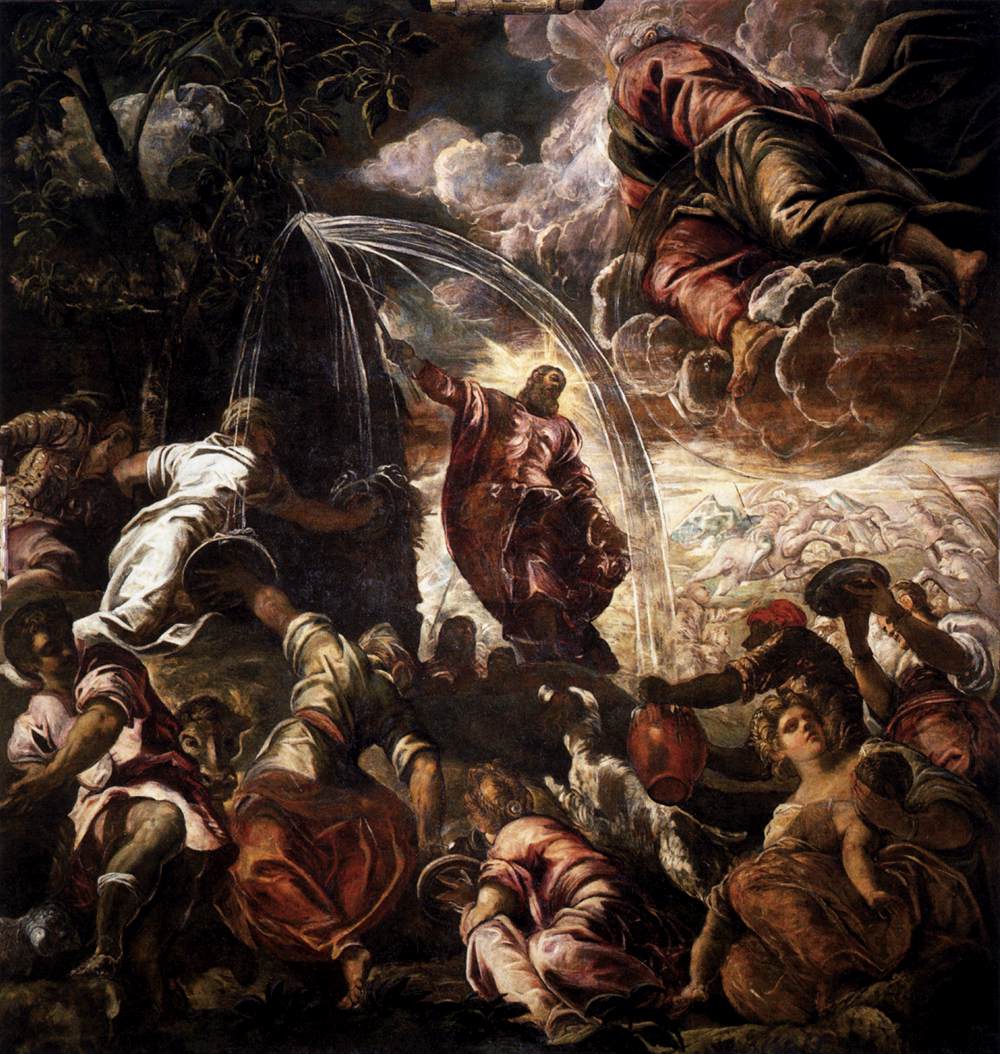
Moses goes up the mountain. Above and below, the mountain is connected with Earth activity. For we must think of this mountain as a volcano, or at least as volcanic. It is not the Sinai generally imagined; the Earth is active in it.
The column of fire in which Moses stands is akin to what happens when we burn a piece of paper in the sulphur hills of Italy and smoke comes out. So does fiery smoke, telluric activity, come out of the mountain....
We could go deeply into details and everywhere we should find that the spirit of Earth prevails in all that Moses gives out as a revelation of the Jahve-god. What Moses proclaims is Geology!...
Paul knew well that this consciousness of a connection with the Earth-spirit is a result of the pre-earthly Christ-event, for he indicates that it was the Christ who led the Jews through the desert and caused water to flow from the rock.
And if we were to go on from the Bible to some of the significant Hebrew legends, we should find them permeated with Geology, in the sense meant here.
Thus we are told how Jahve, when he was forming man out of earth, sent forth an angel to gather earths of different colours from all parts of the Earth, so that everything belonging to the Earth should be mingled in Adam’s bodily vesture....
For the Chaldeans, the Egyptians, the Zoroastrians, the Greeks, the Romans and the European peoples of central and northern Europe, the most important part of man was the part that came from the spiritual world.
For the Jews, the most important element in man was connected with the Earth and its forces. Jahve felt himself as the god whose spiritual rulership prevailed throughout the Earth.
Thus we can regard as the most important event in the fourth post- Atlantean epoch the emergence of Geology side by side with Meteorology. And a wonderful spiritual reflection of this comes to expression in ancient Hebrew prophecy....
Apollo changed the Sibylline impulse of the Pythia by sinking himself into it [the gift of Lucifer] and speaking through her.
The Prophets wanted to suppress everything Pythian in their souls and to cultivate solely that which works in the clear force of the ‘I’ [the gift of Christ]; the ‘I’ which is bound up with the Earth and belongs to it; the ‘I’ which is the spiritual counterpart of the geological element.
How the Eternal reveals itself in the ‘I’ through calm repose, when the Sibylline elements are silent, when all inner turmoil ceases, when only calm prevails and gazes into the grounds of the Eternal — that is what the Jewish Prophets wished to manifest, so that their proclamations could spring from a temper of soul which corresponds in the highest degree with Geology.
The relations of all other peoples to their gods were different from those of the Jews to their Jahve.
The other relations were predetermined: they reflected the outcome of the relations of men to the spirits of the higher Hierarchies during the Saturn, Sun and Moon periods.
The Jewish people had the task of developing a relationship which belonged specially to the Earth period.
The commandments that arise when the ‘I’ stands directly over against God and receives from God the rule, the precept, that the ‘I’ must follow out of its own inner will — this kind of commandment is met with first among the Jewish people.
And it is here, too, that we first find God entering into a covenant with his people....
For example, Elijah was one of the Prophets — but in what sense is he a Prophet? He is a servant of the God Jahve, but in his soul an echo of the threefold Christ-event lives on. In his soul is the knowledge: “As a prophet of Jahve I must above all things proclaim that in Jahve there lives the Christ who will later on fulfil the Mystery of Golgotha; the Christ who poured His enduring influence into the cosmos through His third experience at the end of the Atlantean time.”
Elijah proclaimed the Christ-filled Jahve. For the Christ was indeed living in Jahve, the Jahve-god, but as a reflection of Himself. As the moon reflects the sunlight, so did Jahve reflect the Being who then lived as Christ. Christ caused his Being to be reflected from Jahve or the Jahve-god.
But a messenger such as Elijah worked in the after-effects of the threefold Christ-event; we might say that Elijah went ahead [the Father] of the Nathan Jesus-being, who was passing spiritually from West to East in order to find his way into the course of civilisation and then to be born as one of the Jesus-children.
And now the Geology of the Jews was to be permeated by the spiritual Being whom we have learnt to see as having a particular activity in relation to the Earth. Geology was to be Christened (durchchristet).
The spirit of the Earth was to be experienced in a new way by men; they had to be enabled to free this spirit, in a certain sense, from the Earth.
But this was possible only if there came a power which could free the spirit of the Earth from the forces of the Earth.
This happened when the Earth's aura was permeated by the power of the Christ and in consequence a change came over the Earth itself.
The Christ entered into the forces which the Jahve-god had released and gave them a different character.
From all this, if we look back over it, we can understand why the laurel became a visible symbol of Apollo. For those who bring something of Spiritual Science to the study of the plant kingdom, the laurel has a strong connection with meteorological conditions. It is shaped and built out of Meteorology.
Another plant is much more closely bound up with the Earth; is so to speak an expression of Geology. If one really feels how the oil penetrates the olive tree, so that in one's own soul the elemental forces are stirred by the way in which the tree allows a new sprout to be grafted on to it and to flourish there — then one can feel how the olive tree is inwardly penetrated with the oil of Earth. One can feel the earthly element pulsing through the oil.
And now you will remember something I touched on in the second lecture — that Paul was called to build a bridge between Hebrew antiquity [Moses] and Christianity, between Geology and Christology.
As we said, Paul’s activity extends through the realm of the olive tree. And if we understand Apollo in the vapours rising from the mountain chasms, and how through the vapours he inspires the Pythia and speaks oracular words concerning human fate, then we can also feel how the elemental forces stream from the olive tree into its environment, and these are forces familiar to the soul of Paul.
We can feel it in his words. He immerses himself, as it were, in Geology in order to feel the elemental forces in the aura of the olive tree and to let its aura inspire him in that geographical realm where his work lay....
From Krishna, Radha and the Holy Spirit
Krishna, is the teacher of humankind, although we often believe he’s a trickster, as we don’t understand the path our life takes.
Steiner compares the teaching of Arjuna by Krishna with the teachings of saint Paul, and that is the same being, but with added wisdom from the Jewish path up to and including Golgotha and the Holy Spirit, but also more physical than the etheric wisdom of Krishna. See The Bhagavad Gita and the Epistles of Paul. Lecture 5 of 5.
When Saul have the Christ vision he gets blinded by the light of Krishna, it enters into him, he now have the wisdom of Krishna, when he can see again he sees with the understanding of Christ and with the guidance of the Holy Spirit, Saulus became Paulus.
A dialog from Gita Govinda about Krishna’s real purpose of being born, to establish dharma, for the soul to become an inner reality of the human being where it earlier was an outer being, hovering above. This became a reality at Golgotha, now the soul was within man and through conscience, intelligence and inspirations we can feel some of dharma's work. First at the return of Christ in the coming years will we see karma become lighter, first now are people beginning to understand love. Radha and Krishna is the teachers of love.
Radha: But some day you will leave Vrindavan?
Krishna: Yes, I have to. I will have to move towards my real purpose of being born.
Radha: What is your real purpose of being born?
Krishna: To establish `dharma’ so that right can triumph over wrong.
Radha: What was the purpose of your time spent in Vrindavan? Especially with me.
Krishna: To teach people the weapon with which they can triumph good over evil.
Radha: Which is?
Krishna: Love. Only Love can conquer everything. When you fight with Love, no one gets hurt; not even the ones you’re fighting with.
Radha: So will all your wars be fought with Love?
Krishna: I will try my best to do that. If it doesn’t work, then I may have to use other means so good can triumph over evil, but personally, I won’t lift any other weapon apart from Love and counseling; but I may encourage others to do so if all else fails.
…
Radha: (Radha is surprised) What will you “take” from them?
Krishna: In return for their partnerships, I will “take” from them, their most painful & difficult karma.
Radha: What kind of painful & difficult karma?
Krishna: Pain, sadness, loneliness, grief, poverty… anything. And I’ll replace it with love.
Krishna: I will take brunt of their most difficult karma, so they can lead a good life. I will make their life easier.
From Journey2Light
From Krishna and Radha as Teacher’s of Love
A dialog from Gita Govinda is telling that each person has two parts, an astral part, Radha and an etheric part, Krishna, that they are searching for the other part. Love is the power that make them find each other, and it’s their task to learn humankind to love, as it’s the only way to find the other part.
Krishna: “When two souls are united, the difference of the other or second vanishes; so if we are but one soul, then why do you wish for marriage?”
Radha: “Right now I see no difference between me and the others; everyone thinks you belong to them; so how does that set me apart?”
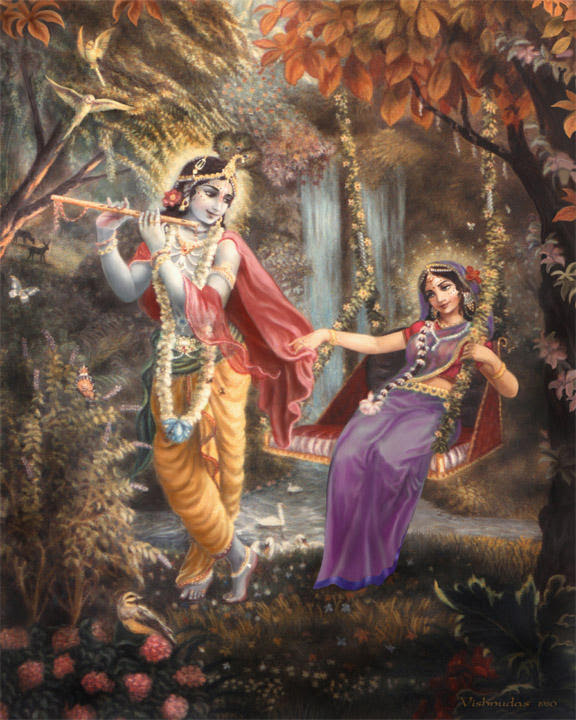 Krishna: “There are hundred Gopis who search for me
every day; who wish to be with me; but you’re the only one I search for,
and wish to be with; does that not set you apart?”
Krishna: “There are hundred Gopis who search for me
every day; who wish to be with me; but you’re the only one I search for,
and wish to be with; does that not set you apart?”
Radha: “No, it does not; because you seem eager to accept the Love of every Gopi, not just mine; I have no proof I’m apart from others.”
Krishna: “I am eager to accept the Love of not just every Gopi, but every Gwala, and every other creature that wants to shower me with love.
Can’t you see Radha, that is the purpose why I am here; to fill every living soul with Love; to teach every creature to Love. I cannot reject any Love that is offered to me; Love requires both strength and courage. It requires courage to profess Love; Love that is professed and accepted gives strength.
Courage and strength will help every living being to endure the highs and lows of life. By encouraging living beings to profess their love to me, I gift them courage; by accepting their love, I gift them strength
If every Radha has to find her Krishna, and every Krishna His Radha, they have to start somewhere, with someone.
I am that Beginning; by learning to love me, and feeling that they are loved in return, I take every Gopi and Gwala as every other creature one step forward towards their own Krishnas and Radhas.
If I were to reject their Love, then they would never have the courage to ever profess Love to anyone again, then how would they ever find and unite, with their own Krishnas and Radhas?”
Radha: “Even if I were to accept what you are saying Krishna, how does it prevent you from marrying me, if it is important to me? What is it that prevents you from marrying me?
Krishna: “Because, we are but one soul; marriage is to unite two souls; we are one soul split into two; we are simply part of the other.”
Radha: “If we are but one soul split into two, then Krishna, then you should not have a problem offering me marriage.”
Krishna: “Now you are speaking from Ego; Ego divides; you are seeing us as two separate entities; speak from Love and you’ll see we were one.”
Goethe didn't fully descend into the physical in that incarnation. It sounds like an Avatar incarnation, as Steiner has described it for Zarathustra. The dark color of the body also reminds about Krishna. As Goethe is the Manu it may also indicate that Goethe has descended deeper and deeper into the physical through his incarnations and that he first in our time descends fully into the physical, when the Aristotelian and Platonic stream unifies. Rudolf Steiner - Cosmosophy, Lecture VII
Goethe is a human being who was never really born quite right. He produced a theory of color but was never in a true sense a physicist. He occupied himself with natural science but never completely entered into its technicalities. In short, there was actually nothing in the world into which he entered fully — he never came into the world properly.
One might go even further, considering his relationships to women. These also developed only to a certain stage, never to the point to which they develop in ordinary human beings born correctly into physical life. …
Let me draw your attention, however, to a matter that calls for comment, that he arrived in the world half dead, his body absolutely black. He therefore did not enter the world robustly but in a way that was half dead.
Let us follow his life and see how he never fully arrives anywhere — how he has setbacks, even to the point of illness. Everything is like this, even the way he went about in Weimar, inapproachable in a certain respect; one could say that he never entered fully into the world.
This has its origin in the fact that he brought with him an especially large portion of the plant-like consciousness that is developed in the Midnight Hour of Existence [strong consciousness in the etheric body.] Hence, the urge he had toward developing the metamorphosis of the plant, in which he accomplished his greatest work: this wonderful view of the plant world. …
His nature is such that its essential origin is really discovered in the sphere that lies just in the middle of man's life between death and a new birth. [the etheric]"
Ita Wegman describes here how the atral body from Paracelsus replaces Goethes current astral body when his etheric body is ready. This also indicates that Goethe is an Avatar.
Ita Wegman, notes on Lessons for the Participants of Cognitive-Cultic Work 1906–1924, GA 265a
Paracelsus, who was murdered. However, his etheric and astral bodies were not lost. His astral body passed into Goethe in [1797]. In the meantime, from Paracelsus' death until [1797], the astral body was in the devachan, in order to gain strength there. This astral body of Paracelsus, which was developed to such a high degree, had to enter into a human being again, so that it could continue to intuit from this human being. In “Faust” one notices the influence of Paracelsus.
Goethe was born with a black or dark blue skin color, and that reminds of the colors of Krishna. The name Krishna originates from the Sanskrit word Kṛṣṇa, which the meaning "black", "dark", "dark blue" or “the all attractive”. The waning moon is called Krishna Paksha, relating to the meaning "darkening". With the death of Krishna started the Dark Age, Kali Yuga. Moses received the etheric body from Zarathustra and I am convinced that Zarathustra and Krishna is the same being. Jesus have the etheric body of Krishna and Saint Paul receives the etheric body of Jesus, of Krishna.
From Human Values in Education, Lecture II
In Goethe we have an individuality who entered life in a remarkable way. He was born black, or rather dark blue [hint of Krishna?]. This shows how extraordinarily difficult it was for his soul-spiritual being to enter into physical incarnation. But once this had taken place, once Goethe had overcome the resistance of this physical body, he was entirely within it. On the one hand it is hard to imagine a more healthy nature than Goethe had as a boy. He was amazingly healthy. He was so healthy that his teachers found him quite difficult; but children who give no trouble are seldom those who enjoy the best health in later life.
On the other hand, children who are rather a nuisance to their teachers are those who accomplish more in later life because they have more active, energetic natures. The understanding teacher will therefore be quite glad when the children keep a sharp eye on him. Goethe from his earliest childhood was very much inclined to do this, even in the literal sense of the word. He peeped at the fingers of someone playing the piano and then named one finger “Thumbkin,” another “Pointerkin,” and so on.
But it was not only in this sense that he kept a sharp eye on his teachers. Even in his boyhood he was bright and wide-awake; and this at times gave them trouble. Later on in Leipzig Goethe went through a severe illness [Mark of Christian Rosenkreutz,] but here we must bear in mind that certain hard experiences and some sowing of wild oats were necessary in order to bring about a lowering of his health to the point at which he could be attacked by the illness which he suffered at Leipzig.
After this illness we see that Goethe throughout this whole life is a man of robust health, but one who possesses at the same time an extraordinary sensitivity. He reacts strongly to impressions of all kinds, but does not allow them to take hold of him and enter deeply into his organism. He does not suffer from heart trouble when he is deeply moved by some experience, but he feels any such experience intensely; and this sensitivity of soul goes with him throughout life. He suffers, but his suffering does not find expression in physical illness. This shows that his bodily health was exceptionally sound.
Moreover, Goethe felt called upon to exercise restraint in his way of looking at things. He did not sink into a sort of hazy mysticism and say, as is so often said: “O, it is not a question of paying heed to the external physical form; that is of small importance. We must turn our gaze to what is spiritual!” On the contrary, to a man with Goethe's healthy outlook the spiritual and the physical are one. And he alone can understand such a personality who is able to behold the spiritual through the image of the physical.
Goethe was tall when he sat, and short when he stood. When he stood you could see that he had short legs. [The German has the word Sitzgrösse for this condition.] This is an especially important characteristic for the observer who is able to regard man as a whole. Why had Goethe short legs? Short legs are the cause of a certain kind of walk. Goethe took short steps because the upper part of his body was heavy — heavy and long — and he placed his foot firmly on the ground. As teachers we must observe such things, so that we can study them in the children.
Why is it that a person has short legs and a particularly big upper part of the body? It is the outward sign that such a person is able to bring to harmonious expression in the present earth life what he experienced in a previous life on earth. In this respect also Goethe was extraordinarily harmonious, for right into extreme old age he was able to develop everything that lay in his karma. Indeed he lived to be so old because he was able to bring to fruition the potential gifts with which karma had endowed him.
After Goethe had left the physical body, this body was still so beautiful that all who saw him in death were fulfilled with wonder. One has the impression that Goethe had experienced to the full his karmic potentialities; now nothing more is left, and he must begin afresh when again he enters into an earthly body under completely new conditions.
All this is expressed in the particular formation of such a body as Goethe's, for the cause of what man brings with him as predisposition from an earlier incarnation is revealed for the most part in the formation of the head. Now Goethe from his youth up had a wonderfully beautiful Apollo head, from which only harmonious forces streamed down into his physical body. This body, however, burdened by the weight of its upper part and with too short legs was the cause of his special kind of walk which lasted throughout his life. The whole man was a wonderfully harmonious expression of karmic predisposition and karmic fulfilment. Every detail of Goethe's life illustrates this.
Such a personality, standing so harmoniously in life and becoming so old, must inevitably have outstanding experiences in his middle years. Goethe was born in 1749 and he died in 1832, so he lived to be 83 years old. He reached middle age, therefore, at about his 41st year in 1790. If we take these years between 1790 and 1800 we have the middle decade of his life. In this decade, before 1800, Goethe did indeed experience the most important events of his life. Before this time he was not able to bring his philosophical and scientific ideas, important as they were, to any very definite formulation. The Metamorphosis of the Plants was first published in 1790; everything connected with it belongs to this decade 1790-1800. In 1790 Goethe was so far from completing his Faust that he brought it out as a Fragment; he had no idea then that he would ever finish it. It was in this decade that under the influence of his friendship with Schiller he conceived the bold idea of continuing his Faust. The great scenes, the Prologue in Heaven among others, belong to this period. So in Goethe we have to do with an exceptionally harmonious life; with a life moreover that runs its quiet course, undisturbed by inner conflict, devoted freely and contemplatively to the outer world.
Goethe is born under a full moon, with the Sun in Virgo representing the Earth, the Archangel of the Earth, and the Moon in Pisces representing Michael, the two powers forming humanity, the outer and inner hand of the potter. The full moon is an opposition between the two powers, it forces them to find each other. It’s also said that the awake consciousness casts its light into the darkest corner of its subconsciousness, the earthly Virgo should understand the heavenly Pisces fully.
Goethe has the ascendant in Scorpio ♏︎ and has Pluto ♇ in the first house Scorpio, and Pluto and Scorpio are about transformation. Pluto is near the cusp of Saggitarius ♐︎ and it gives a milder and broader view.
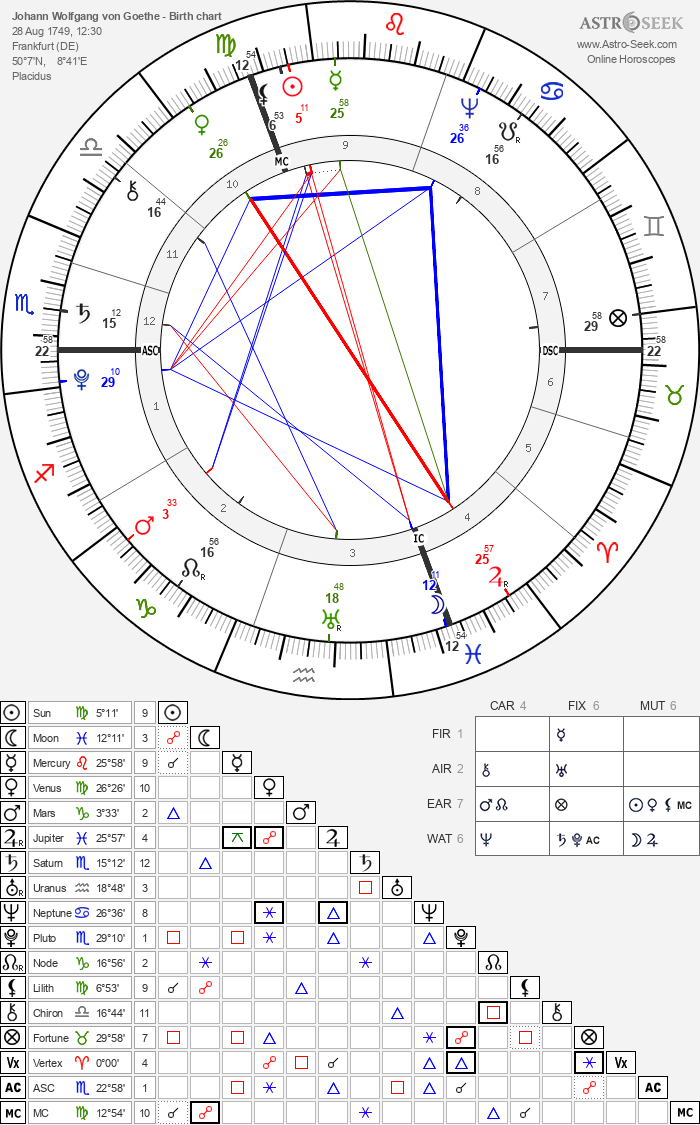
The horoscopes of Goethe and Steiner have the same energies and themes, both are born under a full moon but where Goethe was about inner development, with Pluto ♇ in the first house is Steiner about outer development as teacher with Pluto in the seventh house. See Steiner’s Horoscope.
Virgo represents the Archangel of the Earth, and the Moon in Pisces represents Michael, the two powers forming humanity, the outer and inner hand of the potter. The two texts by Steiner and Beinsa Douno are from my text on How to Tame Technology:
First Steiner on the Virgo-Pisces axis:
It will be the task of good, healing science to find certain cosmic forces which can reach the earth through the co-operation of two cosmic streams, those of Pisces [Michael] and Virgo [Sophia]. The great secret to be discovered will be how the influence which works from the direction of Pisces as a power of the sun unites itself with the influence working from the direction of Virgo. It will make for good when it is learnt how the morning and evening forces from the two sides of the cosmos can be brought into the service of humanity.
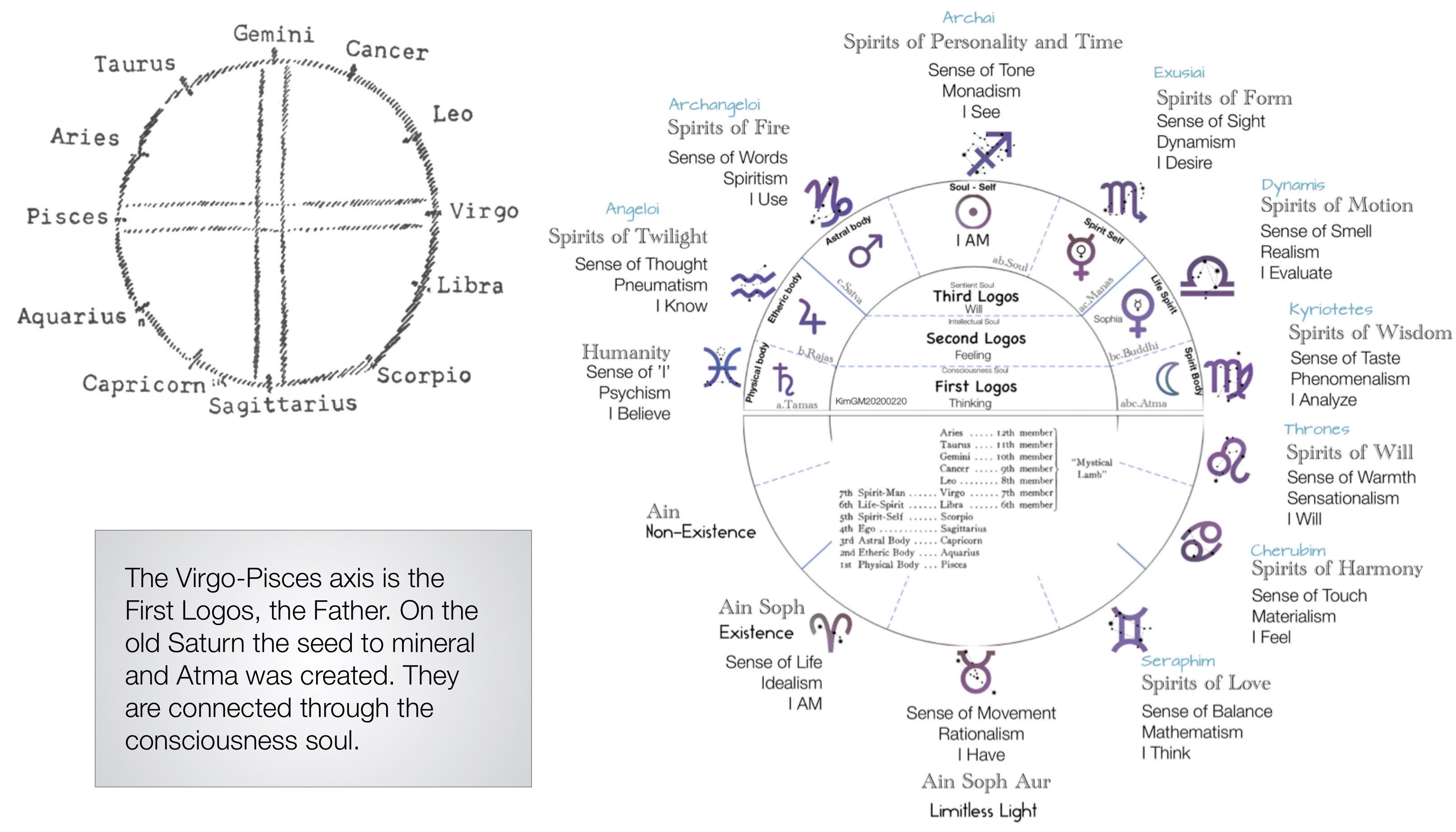
And then Beinsa Douno on the Christian Axis:
Each religion is founded on two constellations – the opposite signs in the circle of Zodiac. It is said that the Christian religion was founded on the signs of Pisces and Virgo, so the axis Pisces – Virgo is the Christian axis. …
We find the symbols of Pisces and Virgo everywhere in the New Testament, but we also find them in all other religions, because the symbol of Virgo exists since time immemorial.
In all religions we find the symbol of the virgin: Isis in Egypt, Devinata, who gave birth to Krishna in India, she bore a lotus in the water. This is an eternal image in Nature. The Virgin represents pure nature, untouched and holy, which produces, which creates the eternal Son of humanity, the higher Self, or – as we call Him – Christ. The symbol of Pisces is found also in all religions. …
Christ always worked, spoke, thought and healed with this axis. Then we will see how many miracles could be done with the help of this axis if man builds his life on it. The Pisces are mentioned everywhere in the Testament, as well as the bread. … The fishes and the bread were the two things, with which the disciples of Jesus Christ worked, because He taught them the secrets hidden in the bread and the fishes. …
So, Pisces is related to Jupiter and Virgo to Mercury. Virgo symbolizes purity and Pisces mercy, benevolence, love and generosity. You must know that the Christian epoch, represented by both signs attempted to develop in the souls of the people the virtues of the Virgo-Pisces axis which means of both principles – the masculine as Mercury and the feminine – Pisces. That is why both principles are blended in the Christian religion: mercy, benevolence, goodness, purity and chastity.
Goethe created the sublimation of the Fifth Day of God, from 1033 - 2033, and Steiner prepares it for the Sixth Day of God starting 2033, where the Return of Christ will create the new.
From Rudolf Steiner in The Story of My Life (Anthroposophical Publishing Co., 1928), pp. 124-125.
My setting forth of Goethe's ideas consisted in the struggle, lasting for years, gradually to achieve a better understanding of him with the help of his own ideas. When I look back upon this endeavour I have to say to myself that I owe to this in large measure the evolution of my spiritual experience of knowledge.
This evolution proceeded far more slowly than would have been the case if the Goethe task had not been set by destiny on the pathway of my life. I should then have followed my spiritual experiences and have set these forth as they came to light. I should have broken through into the spiritual world more quickly; but I should have had no inducement to sink down by actual striving into my own inner self.

Steiner is also born under a full moon but with the Sun in Pisces and the Moon in Virgo, which is the opposite of Goethe's position. It's also interesting that the Virgo-Pisces axis is the axis of God. There are many other shared energies between the two horoscopes, including the Scorpio ascendant. Steiner has Pluto ♇ in the seventh house, his task is to transform humanity, while Goethe has it in the first house, he should transform himself. This is also shown through their sun sign, Goethe represents the Earth (Virgo), whereas Steiner represents Michael (Pisces) on Earth.
From Rudolf Steiner in 'The Karma of Untruthfulness', Lecture 1 volume 1.
A number of years ago we chose as our motto these words by Goethe: ‘Wisdom lies solely in truth’.
Our choice was not dictated by the superficial whims that often govern such decisions these days. We chose this motto bearing in mind that the human being needs to be prepared in his entire soul, in his whole nature, if he intends to absorb spiritual science into his soul in the right way, making it the real driving force of his life.
The wide preparation he needs if he wants to penetrate in the proper way into spiritual science today is encapsulated in this motto: ‘Wisdom lies solely in truth’.
Of course the word ‘truth’ must be seen as something serious and dignified in every connection.
Even superficially we find that the level of culture we have reached today — highly praised though it is — both in Europe and the world at large, shows how little souls are moved by what is expressed in this motto.''
From Goethe's Secret Revelation, part two, The Riddle in Faust
"In the Villa Borghese he wrote at this time the ‘Witches Kitchen’ scene, as one who had lost touch with all such things, but also as one who recalled to memory the spirit of the earth. When he had previously written about the earth spirit, he represented it in such a way that Faust turned away from it, as from a ‘hideous worm.’ But the fact of turning away from it, even without understanding why, remains in the soul and works on further, as it did in Goethe. But those who become impatient and refuse to wait until after long years the seed grows, are unable to see the way clearly. And when in Italy Goethe knew that a turning away from the terrible countenance would have its effect upon his soul, and now these words arise:
|
‘Sublime Spirit, thou gavest me, gavest me all For which I begged. It was not without reason That thou didst turn thy face in fire to me And for a kingdom gavest me the glorious nature With strength to feel it and to enjoy it. Not A coldly astonished gaze didst thou grant to me But didst permit me to look into her profound bosom As into that of a friend. Past me didst thou lead the ranks of the living And didst teach me to know, in the quiet bushes, In air, and in water, my brother. And when the storm roared and rattled in the woods And there fell the neighbouring branches of the giant fir Squashing the undergrowth and in their fall Sounding like thunder in the hollow of the hills, Thou didst lead me to a safe Grotto, where Thou didst show me myself and opened my heart To deep and secret wonders.’ |
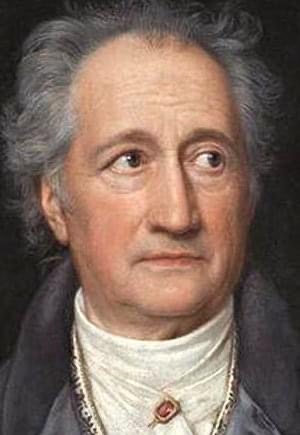
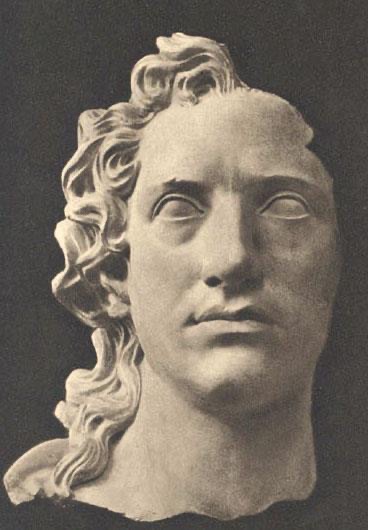
Before Goethe, there stands the possibility of the human soul, through its own development expanding to a spiritual universe. Through a patient sacrificial resigned search, the fruits stand before his soul which as germs were planted when he came into touch with the earth spirit. We can see through this monologue in ‘Wald und Höhle’ (wood and grotto) what a forward jerk this was towards the ripening of the fruits in his soul, for it shows us that the seed already sown was not sown in vain. And as a warning to have patience, to wait until such seeds had ripened in his soul, that fragment of ‘Faust’ meets us which appeared with this setting in 1790.
And now we see how Goethe finds the way step by step after being led to his ‘safe grotto where the secret deep wonders of his own heart were opened to him,’ he obtains that comprehensive survey which bids him no longer abide with his own sorrow, but teaches him to rise above his sorrow, to send his foreseeing spirit out into the Macrocosmos, watch the fighting of the good and evil spirits and see men on their battle ground. And in ‘Faust’ in 1808 he sent out beforehand the ‘Prologue in Heaven:’
|
Raphael: ‘The sun-orb sings, in emulation, 'Mid brother-spheres, his ancient round: His path predestined through Creation He ends with step of thunder-sound.’ |
We next see how the macrocosmic Mights oppose the forces of the great world. We see too from out the experiences of Goethe's soul, what a remarkable light falls on the two dragons with which at one time in his youth he came in touch.
‘Faust’ is such a universal poem because it contains so many warnings. It also gives us that golden saying: ‘Wait in confidence for the development of thy inner forces, even if that means waiting a very long time!’ These words also sound as a warning which stand as an attribute before Faust, when Goethe looks back to those ‘fluctuating figures which in early days had once shown a troubled countenance’ but which now are flooded with light. Now he had waited so long that the friends who had taken such a vivid interest in Faust as he had appeared to them in the first form, had died, and those who had not died were very far away. Goethe had been obliged to wait for the development of the seed already sown in him.
Now these striking words meet us:
|
‘My sorrow speaks to an unknown crowd, Their applause e'en makes my heart feel heavy, And those who once delighted in my song If they still live, in other lands are scattered.’ |
No longer did it matter to those who in youth had felt with him. He had had to wait, as the last lines of this dedication so beautifully express it — ‘What was once a reality to me, has gone into the unreal: but what has remained for me and appears to outer vision as unreal, that to me is now true, and it is only now that I can give it as truth.’ So we see how this poem, even if only looked at in such an external manner as we have to-day, leads us into the depths of the human soul."
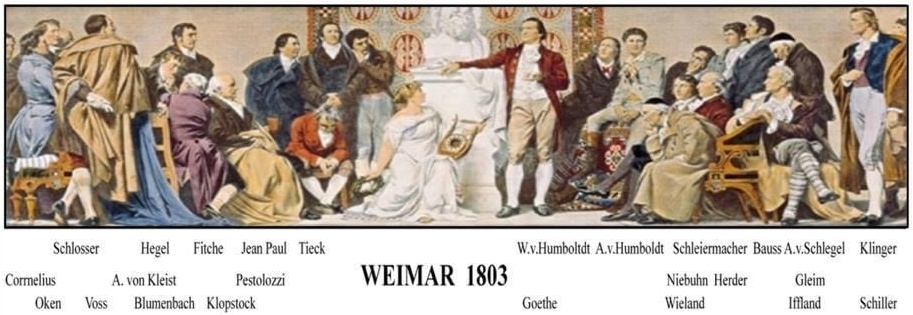
From Excursus on the Gospel According to St. Mark, lecture VII
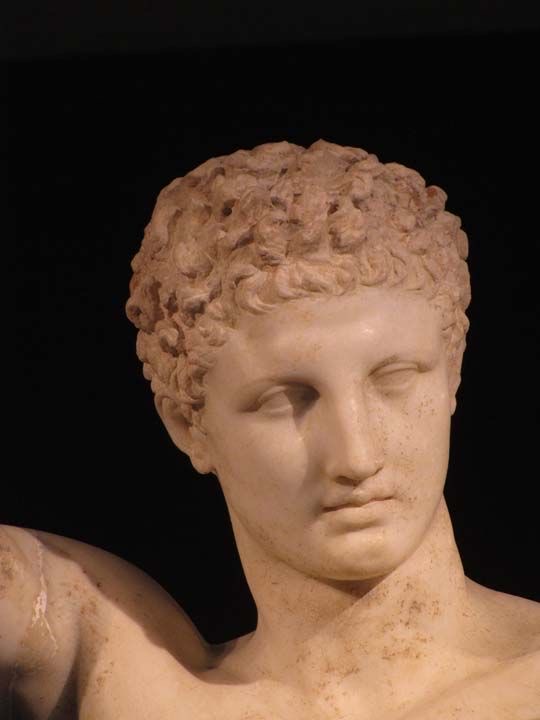 If we understand the evolution of our own time aright we may describe Goethe
as the last great mind who united in himself the fullness of science, of
Christianity, and of the culture of the Renaissance; and we might expect that
his soul would reveal a beautiful union of these — intellectualism enriched as
it had been by Arabism and Christianity.
If we understand the evolution of our own time aright we may describe Goethe
as the last great mind who united in himself the fullness of science, of
Christianity, and of the culture of the Renaissance; and we might expect that
his soul would reveal a beautiful union of these — intellectualism enriched as
it had been by Arabism and Christianity.
If we study Goethe as we have been accustomed to do for some years past, it is easily seen that these elements did indeed meet within his soul. But in accordance with what has just been announced concerning the repeated cycle of six, and again six centuries, we might expect that nothing of the Mercury element could have appeared as yet in Goethe's soul — that could only appear as something new after his time.
Now, it is interesting to note that Goethe's pupil, Schopenhauer, reveals this Mercury influence. You can learn from some of my publications that Eastern wisdom entered into Schopenhauer's philosophy, especially in the form of Buddhism.
Mercury was regarded as the symbol of Buddhism, and following on the age of Goethe we have a revival of the Buddha Impulse (in which Buddha stands for Mercury and Mercury for Buddha) in the same way as the Moon is symbolic of Arabism.
We can now give a name to this neighboring stream that entered the direct Christ Impulse as a new tributary at the beginning of a new six-hundred-year epoch. We have to see in this neighboring stream a revival of Buddhism — only with the restrictions I explained in my public lectures on Buddha.
Kaspar Hauser is born into the cultural surroundings based on Goethe et.al. Ten year after Hauser's death start the war between Michael and the dark powers.
From The Mysteries of the East and of Christianity, lecture 4.
We often find that persons who have not gone far enough into the matter will ask how a man such as Goethe can on the one hand bear within him certain secrets of the human soul, and on the other hand be so often torn by passion, as he is found to be by those who read his life-story in a rather superficial way. In fact, there was in Goethe something that can be called, in a crude sense, a double nature. To a superficial view the two sides can hardly be brought into harmony.
On the one hand there is the great, high-minded soul who could bring forth certain portions of the second part of Faust, and gave expression to many deep secrets of human nature in the Fairy-Story of the Green Snake and the Beautiful Lily; and one would like to forget everything one knows from biographies of Goethe and pay homage only to the soul who was capable of such achievements.
On the other side, there appears in Goethe, tormenting him and often causing him pangs of conscience, his other nature, “human, all-too-human”, in many respects. In earlier times the two natures of man were not so widely separate in their development; they could not diverge in this way.

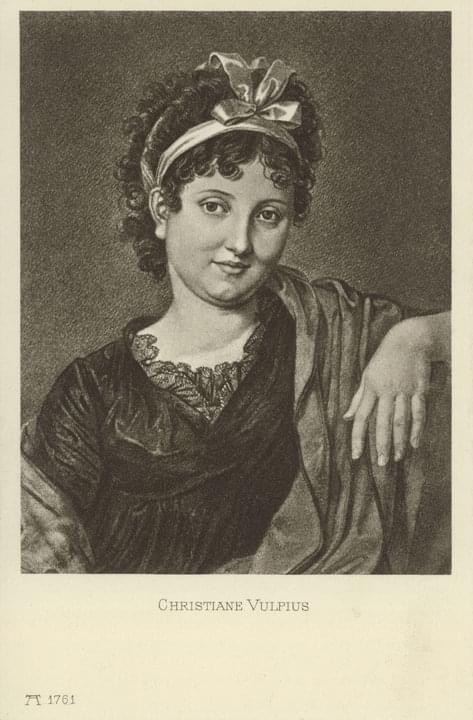
Christiane Vulpius, Lover and Wife.
A person with a biography comparable with Goethe's could not rise to such heights as are revealed in certain passages of the second part of Faust or in the Fairy-Story of the Green Snake and the Beautiful Lily, and at the same time be so divided in his soul. That was not possible in earlier times.
It has become possible only in later days, because there now exists in human nature something we have already spoken of — the part of the soul that has become unconscious, and the part of the organism that has died.
The part that has remained alive can be so elevated and purified that the impulse which leads on to the Fairy-Story of the Green Snake and the Beautiful Lily; can be nurtured there, while the other part may remain exposed to the attacks of the outer world.
And because the forces described are able to make their abode there, circumstances may arise in which there is very little agreement with the higher 'I' of the person.
Much about
Goethe reminds me of Krishna. A dear friend of me mentioned that Goethe
was
born black or dark blue, and that was the color of Krishna, what his name
implied.
It should be understood that the soul living in Goethe had once belonged to an Egyptian Initiate, and had then lived in Greece as a sculptor and a disciple of philosophy; then, between this Greek incarnation and the one as Goethe, there comes an incarnation (probably only one) which I have not yet been able to find.
If we keep this in mind, we can see how a soul who in former incarnations could rule the entire man can be led downwards, and then has to relinquish a part of the total human nature, which then lies open to the influence of evil forces.
That is what is mysterious and so hard to understand in a nature such as Goethe's; but by the same token it brings to light many hidden aspects of the human soul in modern times.
Everything brought about by the duality of human nature lays hold, in the first place, of the Intellectual Soul, and the Intellectual Soul divides into those “two souls”, whereof one can sink fairly deeply into matter and the other can rise into the spiritual.
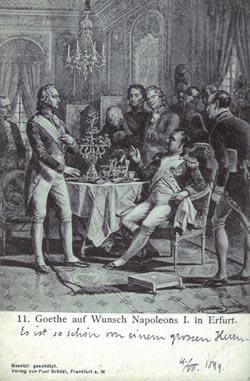
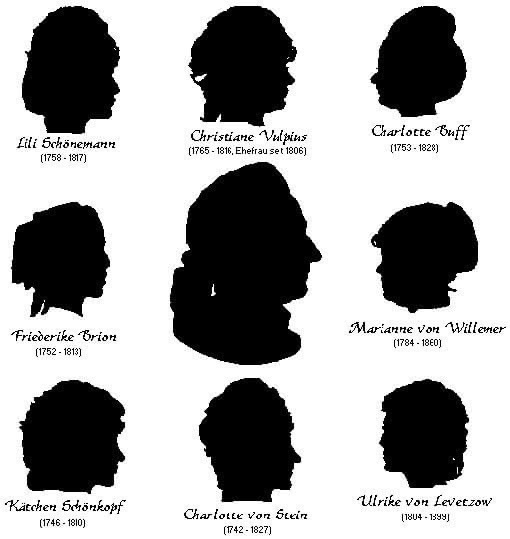
Here Rudolf Steiner describe how Goethe through sickness to the death had changed his connection to the spiritual world. All old souls experience a great shock, a sickness or accident where they are near death, removing them from the physical. In old days the ritualistic baptism in water meant that they were hold under water until near death, it created this split between the etheric and physical body. This is necessary for going through the initiation without going through death. In the initiation the etheric body is recreated, born again, now without karma, and that is not possible with a strong connection between physical body and etheric body. This split also makes it less likely to create new karma, and less likely for the ego to become famous, but more for the 'I' of the soul.
This text is full of gold nuggets, not only on Goethe, but it's also a little complicated, so it's good to contemplate on from time to time.
From “The Karma of Vocation” – On Goethe
”With Goethe, this force of soul became even stronger, and yet he lived to an advanced age. What enabled him to live so long? You will recall that I reminded you yesterday of a fact that intervened significantly in Goethe’s life..
After he had spent some years in Leipzig as a student, he became seriously ill and stood face to face with death. He virtually looked death in the face. This illness is, to be sure, a natural phenomenon in the organism. However, we never learn to understand a man who creates out of the elemental forces of the world — indeed, we never learn really to understand any man — unless we take into consideration such events in the course of his karma.
What really happened to Goethe when he became ill in Leipzig? We may describe it as a complete loosening of the etheric body in which the life forces of the soul had been active until then.
It was loosened to such an extent that, after this illness, he no longer had that closely knit connection between the etheric and the physical bodies that he had formerly possessed.
The etheric body, however, is the supersensible member in us that really makes it possible to form concepts, to think.
Abstract concepts such as we have in ordinary life, the only concepts that are approved by most persons who are materialistically disposed, come about through the fact that the etheric body is, as it were, closely united with the physical by a strong magnetic union.
It is also through this fact that we possess a strong impulse to project our will into the physical world, that is, provided the astral body is strongly developed. In the case of Robespierre, Mirabeau and Danton, we have an etheric body strongly united with the physical but also a powerfully developed astral body.
This works, in turn, upon the etheric body, which establishes these human individualities strongly in the physical world.
Goethe was also organized like this, but another force now worked in him and brought about a complication. The result was that the etheric body was loosened and remained so through the illness that had brought him to the point of death.
When the etheric body is no longer so intimately united with the physical body, however, it no longer thrusts its forces into the physical but retains them. This explains the transformation Goethe passed through when he returned to Frankfurt.
There, during his acquaintance with Fräulein von Klettenberg, the mystic, and with various medical friends who were devoted to studies in alchemy, and through the writings of Swedenborg, he really developed a systematic spiritual world conception.
It was still somewhat chaotic, but nevertheless a
systematic spiritual world conception, and he was profoundly inclined to occupy
himself with supersensible things.
…
Here we see how a natural event seems to enter with
immense significance into the life of a human being.
Undoubtedly, it points to a deeper interrelationship than the one the biographers generally wish to reveal. The significance of an illness to a man cannot be explained on the basis of hereditary tendencies but rather points to the connection between a man and the world in such a way that this relationship must be conceived spiritually. You will note also how Goethe’s life was thus complicated; such experiences determine how we take things in and what we are ourselves.”
From Ancient Cultural Impulses Spiritualized in Goethe
From the beginning Goethe also understood that Christianity is a living thing. How he longed for a possible expression for the Christianizing of the modern world conception. It did not lie in his time to find it, but in the new age spiritual science is already working to attain it. Let us take his poem, “The Mysteries” (Die Geheimnisse), in which Brother Mark is guided to the Temple where the Rose Cross is on the door, and let us look at the whole picture.
We shall see that the Christian mood is in this fragment, “The Mysteries,” the mood born of the feeling that the symbol of the Cross becomes a picture of life through the living roses entwining it! Then, too Goethe lets his Faust end with a Christian conception; he spoke of it to Eckermann in his old age. A time will come when in a much more active, intense sense, one will connect with Christianity the thoughts that ring through the conclusion of Faust, although Goethe, who was inwardly modest in such things, was far from doing so himself.
He was, in reality, on the way that he made his Brother Mark take — to the Cross encircled with roses. In this lies ultimately all that is to flow from such wisdom as was striven for by the Knights Templar. (Their striving was too rapid and unsuitable to physical evolution.)
From The Mission of Christian Rosenkreutz, IV. Intimate Workings of Karma
Goethe's poem Die Geheimnisse has been recited to us many times. Out of a deep, intuitive perception, Goethe speaks in that poem of the College of the Twelve and has been able to convey to us the mood of heart and feeling in which they lived. The Thirteenth is not “Brother Mark,” but the child of whom I have been telling you and who almost immediately after his birth was taken into the care of the Twelve and brought up by them until the age of early manhood. The child developed in a strange and remarkable way. The Twelve were not in any sense fanatics; they were full of inner composure, enlightenment and peacefulness of heart.
Sein Glaube an die Seelenwanderung spricht vorallem aus seinen Briefen an Charlotte von Stein, die er von dieser Idee jedoch nicht zu überzeugen vermochte. An sie schrieb er auch die bekannten Zeilen: Ach, du warst in abgelebten Zeiten / Meine Schwester oder meine Frau [im Juli 1776, zitiert nach Bock.], sowie den Gesang der Geister über den Wassern.** Goethe glaubte, daß nicht alle, sondern nur auserwählte, würdige Seelen reinkarnieren werden.
1815 äußerte Goethe im Gespräch mit dem Kölner Kunsthistoriker Sulpice Boisserée die Gewißheit, schon einmal unter Kaiser Hadrian gelebt zu haben. → Wieland.
Des Menschen Seele
gleicht dem Wasser:
vom Himmel kommt es
zum Himmel steigt es,
und wieder nieder
zur Erde muß es,
ewig wechselnd (zitiert nach Bock)
From The Spiritual-Scientific Basis of Goethe's Work
In another tale, The New Paris, he gives in a veiled manner the history of his own inner enlightenment. Many will remain incredulous if we say that, in this dream, Goethe represents himself just at the boundary between the third and fourth sub-race of our fifth root-race. For him, the myth of Paris and Helen is a symbolic representation of this boundary. And as he — in a dream — conjures up before his eyes in a new form the myth of Paris, he feels he is casting a searching glance into the development of humanity. What such an insight into the past means to the inner eye, he tells us in the Prophecies of Bakis, which are also full of occult references:
The past likewise will Bakis reveal to thee; for even the past oft lies, oh blind world, like a riddle before thee. Who knows the past knows also the future: both are joined in To-day in one complete whole.
Much, too, might be quoted to show the underlying elements of spiritual science in the fairy tale, The New Melusine, a Pandora-fragment, and many other writings. In his novel, Wilhelm Meister's Traveling Years, Goethe has given us quite a masterly picture of a Clairvoyant in Makarie. Makarie's power of intuition rises to the level of a complete penetration of the inner mysteries of the planetary system:
She stands with regard to our solar system in a relationship which one hardly dares to express. In the spirit, of the soul, of the imagination, she fosters it, not only gazes at it, but at the same time forms part of it; she sees herself drawn on into those heavenly circles, but in quite a peculiar way; she has wandered since her childhood round the sun, and, in fact, as has now been discovered, in a spiral, circling ever further and further from the center towards the outer regions.
If one may assume that beings insofar as they are embodied strive towards the center, but insofar as they are spirits strive towards the periphery, then our friend belongs to the most spiritual; She seems to have been born only to detach herself from the earthly and to force her way into the nearest and furthest realms of existence.
This quality, glorious as it is, was laid upon her from her earliest years as a difficult task. She remembers her inner self penetrated, as it were, through and through by shining beings, illuminated by a light which not even the brightest sunlight could rival.
She often saw two suns, one, that is, within, and one without in the heavens, two moons, of which the outer retained its size through all its phases; the inner ever more and more decreased.
These words of Goethe's prove clearly how intimate he is with these matters, and whoever reads through the whole passage will recognize that Goethe so expresses himself, albeit with reserve, that he who looks beneath the surface may feel quite certain of the spiritual-scientific foundation in his being.
Goethe always looked upon his mission as a poet in relation to his striving toward the hidden laws of Life. He was often forced to notice how friends failed to understand this side of his nature. He describes thus, in the Campaign in France in 1792, how his contemplation of Nature was always misunderstood:
... the passionate earnestness with which I addicted myself to this (the study of natural philosophy) seemed inconceivable to all, nobody observing how it sprang from my innermost being itself; they considered this laudable pursuit as a whimsical mistake; in their opinion, I could do something better, and leave my abilities to work in their old direction. They felt the more entitled to do this as my way of thinking did not agree with theirs, expressing rather, in most points, exactly the contrary.
No more isolated being can be imagined than I was then, and for a long time afterwards. The Hylozoism, or whatever it may be called, to which I was attached, and the deep foundation of which I left untouched in all its sacred dignity, made me unsusceptible, nay, intolerant, toward that way of thinking which set up as an article of belief the existence of matter as a dead thing, in whatever way it may be supposed to be stirred up and put in motion.
From Anthro Wiki and Wikipedia.
Makaria (from Greek Μακαρία Makaria "bliss") is a figure from Goethe's novel "Wilhelm Meisters Wanderjahre". As "an elderly, wonderful lady" she appears here as Lenardo and Hersilie's aunt.
Her living role model was the Duchess Charlotte Amalie Ernestine Wilhelmine Philippine of Saxony-Meiningen (* 11. September 1751 in Frankfurt am Main; † 25. April 1827 in Genua), who, like her husband Ernst II. Ludwig von Sachsen-Gotha-Altenburg (1745-1804), worked as a patron of astronomy ... In Goethe's novel, she appears as a wondrous seer whose spiritual gaze is open to the entire solar system and beyond. Opposite her is the metal feeler, whose awareness is open to the depths of the earth and who speaks of the secrets of metals.

 The Art of Praxiteles: The mature years.
Fifth Chapter: Praxiteles at his Peak (around 364-360);
22. The Cnidian Aphrodite;
23. The Coan Aphrodite;
24. The statues of the Twelve Gods in the sanctuary of the Savior Artemis in Megara;
25. The Aphrodite who is about to wreath herself;
26. The statue of Chaerippe
Both the following references Steiner, Goethe and Praxiteles:
1.
Greek Sculpture and the Four Elements, A Psycho-Historical Investigation, J. L. Benson, [full text, not including figures]
Amherst, Massachusetts: University of Massachusetts, Amherst Libraries, 2000.
 "This is one part of the first comprehensive study of the development of Greek sculpture
and painting with the aim of enriching the usual stylistic-sociological approaches through a serious, disciplined consideration of the basic Greek scientific orientation to the world.
"This is one part of the first comprehensive study of the development of Greek sculpture
and painting with the aim of enriching the usual stylistic-sociological approaches through a serious, disciplined consideration of the basic Greek scientific orientation to the world.
This world view, known as the Four Elements Theory, came to specific formulation at the same time as the perfected contrapposto of Polykleitos and a concern with the four root colors in painting (Polygnotos). All these factors are found to be intimately intertwined, for, at this stage of human culture, the spheres of science and art were not so drastically differentiated as in our era.
2.
Greek Color Theory and the Four Elements, A Cosmological Interpretation, J. L. Benson, [full text, not including figures]
Amherst, Massachusetts: University of Massachusetts, Amherst Libraries, 2000.
"In the ongoing development of color theory over the centuries only one creative mind really set itself against the last-mentioned view and thereby rejuvenated the problem, so to speak, in the original Greek sense: J. W. von Goethe.
 His inspiration to do
so, however, did not come from a knowledge of Greek color history but from very
contemporary considerations. But in due course he did acquire that knowledge in as
much detail as was possible in the late 18th and early 19th centuries and was well aware
of his historical position in regard to it. Indeed, his predilection for the “Greek way” was so marked that the concept “Goethe and the Greeks” has evoked much literature in its
own right.
His inspiration to do
so, however, did not come from a knowledge of Greek color history but from very
contemporary considerations. But in due course he did acquire that knowledge in as
much detail as was possible in the late 18th and early 19th centuries and was well aware
of his historical position in regard to it. Indeed, his predilection for the “Greek way” was so marked that the concept “Goethe and the Greeks” has evoked much literature in its
own right.
What I believe has never been systematically investigated is the degree to which Goethe’s own organic-anthropocentric standpoint created a color theory that appears to incorporate and to expand much for which the basic attitudes of Empedokles, Hippokrates and Plato laid the basis. This will be a secondary theme that emerged from my primary motivation."