
By Kim Munch Michelsen.
I have tried to collect some personal descriptions of Steiner, to create an inner picture to see the being behind his incarnation, as I have done with Alanus ab Insulis, Novalis, Goethe, Moses, Kaspar Hauser, Arjuna, Padmasambhava, and Saint Paul. It's way too easy to create a bleak and lifeless picture in one's mind when seeing the usual photos and reading his texts because we project our own limited understanding over what we read.
A First Impression by Édouard Schuré, a truly inspired French author from outside of Anthroposophy, who is most known for his book "The Great Initiates":
I shall never forget the extraordinary impression made upon me by this man when he entered the room. As I looked at that thin, powerful face, at the black mysterious eyes flashing light as if from unfathomable depths, it was borne in upon me that for the first time in my life I was face to face with one of those supreme seers who have direct vision of the great Beyond. Intuitively and poetically, I had described such seers in The Great Initiates, but I had never hoped to meet one in this world. The impression was instantaneous, irresistible—of the unexpected as well as of the already known. Even before he opened his lips, an inner voice said to me: Here is a true master, one who will play an all-important part in your life. ~Édouard Schuré "The Personality of Rudolf Steiner"?
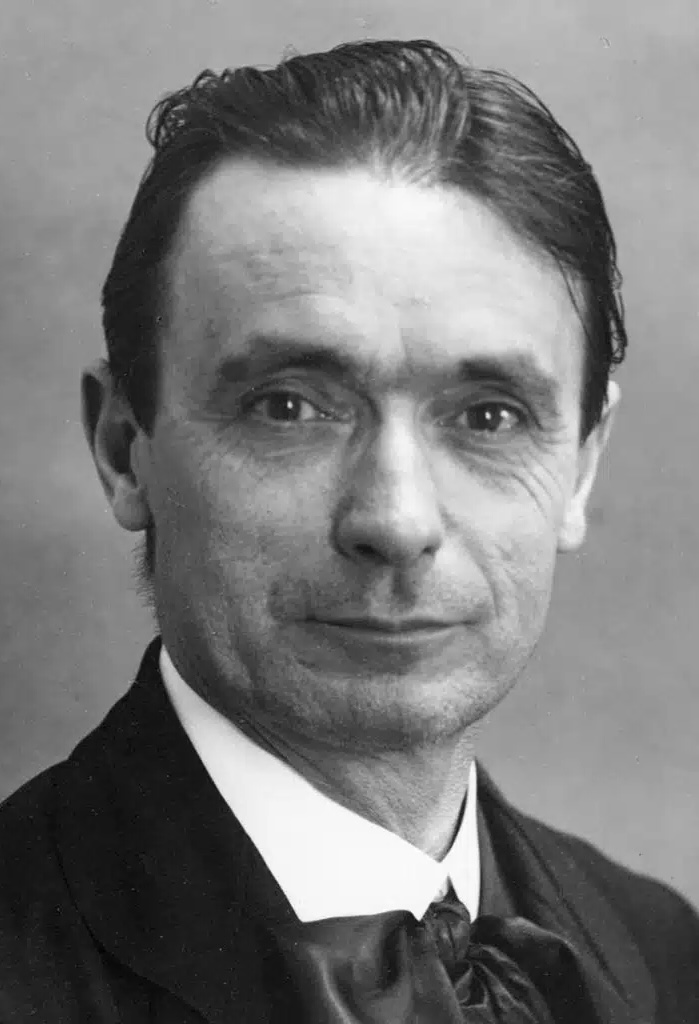
A very beautiful description of Steiner and very much like my own impression. The accompanying picture I believe is important for the understanding of who he was, most pictures don't do him justice.
Winter, 1920. In the spurs of the Swiss Jura Mountains lies the little village of Dornach. On top of a hill, hemmed in on three sides by high mountain ridges, lies the Goetheanum, facing west. The pale, glittering slates on the double-doomed roof are barely visible against the background of snow that covers most of the landscape.
 Beside the Goetheanum stands a large wooden barn. One half of it is used as a carpentry workshop, as the Goetheanum, which was opened during the previous fall, is not yet completed. In the other half, which is furnished as a lecture hall and theater, Rudolf Steiner delivers his lectures.
Hundreds of listeners sit on the simple wooden chairs. The front of the auditorium is separated from the stage by curtains of blue linen. they form the backdrop for a small wooden platform, draped with material of the same color, on which Rudolf Steiner stands.
When he speaks, absolute silence reigns in the auditorium. The eyes of everyone focus constantly on the dark figure in front. Rudolf Steiner is of medium height, slender, almost frail. This strikes the listener immediately as a remarkable contrast to his heavy, powerful voice and speech. The sound of his voice has a quality that one will never forget. There is something deeply moving in it, as if the speaker shares in the suffering of all mankind.
Sometimes the voice sounds warm and enveloping. Then the listening mind feels as if it were taken up and transported into other worlds, inaccessible to ordinary consciousness.
At other times the voice sounds stronger. One senses a force in it that only higher powers can bestow. Words are spoken that resound over the earth like warning clarion calls.
Then again, one is moved by a gentle heartiness, a tenderness, which frees something deep down in the listener, giving a feeling of awakening to an inner world, where a hidden light begins to shine.
But always it is as if every word spoken received a life of its own. These words are not abstract symbols for the communicating thoughts. They are born as living beings, and they continue to live in the hearts of the listeners.
Rudolf Steiner speaks freely, without notes, improvising as it were. In this way he delivers more than a hundred, and sometimes more than two hundred, lectures a year. Almost all are different and range over the most diverse of topics.
The shorthand records, uncorrected, show an unbelievable richness in the treatment of the language. The lectures are built up according to the highest standards of artistic taste and reason.
Upon rereading them one frequently discovers a regularity in them that is reminiscent of organic growth. Even as a plant grows, germinating at first, unfolding one leaf after another, blooming in splendor, and then contracting again into the fruit and the seed, the contents of each of these lectures likewise grow and flourish. We always find a strong inner consistency and a free, living development.
Rudolf Steiner accompanies the spoken word with harmonious gestures of his arms and hands. It is not arbitrary gesticulation, nor a passionate play for gestures. Rather, it is the natural extension of what lives in the soul of the language and finds expression from the chest through the arms and the hands.
An extraordinary vigor is characteristic of his entire manner of lecturing. Even when a great calm, a deep inner silence, predominates in what is being said, one still notices a delicate, continual mobility in the gestures and in the face.
The posture of Rudolf Steiner, almost sixty years old, is remarkably youthful; his movements are supple and resilient. His figure is like that of a young and vigorous plant, standing freely between the heavens and the earth, its leaves supported by the air into which they expand.
His face bears an expression that is most profoundly human and at the same time most highly spiritual. His free, high, slightly receding forehead is broad and of firm build, with tiny wrinkles, and with deep grooves above the nose. His black hair, higher on the right side and lower on the left, is combed backward in simple fashion. the tan color of his skin seems to light up against the frame of dark hair. One feels that behind such a forehead only the clearest, noblest, highest thoughts can dwell.
The eyes recede deeply under the shadow of the heavy brows. One might say that these eyes are dark brown, but that would tell very little of their true nature. How can we describe them?
Sometimes they appear unfathomable. One looks into them as into an abyss, standing dazzled at the brink. At other times it is a depth like a dark night, when no stars are visible, yet their presence is felt.
But most of the time the eyes are radient with a warm light. A golden glow lives in their dark brown color. An infinite goodness speaks out of them: A love for all creatures. They can also be searching and inquiring, as if wanting to penetrate into the very core of things. Then again they are twinkling with a mood of cheerfulness, or of friendly humor.
 There is a constant alternation between looking outward into nature, into the world, and looking inward into those regions where the mystery of life are revealed to the mind.
A mystery of love and wisdom, of tenderness and strength, speaks out of those eyes. These are the eyes of a man who has discovered this mystery within himself and has devoted his life to proclaiming it for the good of humanity.
The face as a whole derives a very pronounced character from the strikingly strong lines of the nose and mouth. The nose is almost straight and merges with the deep grooves and the many tiny wrinkles on both sides of the face.
The mouth has a long, firmly shaped upper lip, slightly advanced with respect to the tight lower lip. Together with the broad but delicately molded chin, the mouth conveys an impression of great but thoughtfully controlled strength, of a determined will born out of the spirit. How widely varies the expression of this face!
Sometimes one feels oneself to be standing in front of someone in the full strength of life, a mature person full of energy and practical sense, then it is an old man, a sage, filled with quiet love for all that lives and suffers; then again a youth, inspired, glowing with holy fire.
Sometimes it happened that people who met Rudolf Steiner for the first time would feel a certain disappointment. They had expected a "world reformer," a prophet with corresponding appearance and mien. Instead they found themselves vis á vis this remarkable man with a quality of life that was constantly being reborn, who seemed to them now an artist, then a scientist, then again a priest, but who remained above all human, without pretense or simulation.
This man lived out of the depth of the spirit. He wanted to see the spirit triumph, but not in the realms beyond the earth and humanity.
He wanted to proclaim the spirit as that universal power which creates forms on the earth and likewise in the human mind. This universal spirit power has become manifest, in a way that anyone can understand, in the life and work of Rudolf Steiner. It has come into evidence too in the finest qualities of humanness in his person.
Rudolf Steiner! For thousands his name expresses the content of their lives. For thousands the encounter with him meant a new birth. How many years will have to pass before the mystery of this man will have been fully fathomed?

From a letter written by Andrei Belyi to fellow Russian Symbolist Poet Aleksander Blok. Here we have an example of how he talks through personalities of earlier incarnations. I have later a horoscope of Steiner, and Scorpio Ascendant, Pluto on the cusp of the 7th house in Taurus, MC in Leo, and Sun in Pisces is quite a combination that matches his impression nicely.
The day is stormy, muggy: through the windows is the huge, lacey Cologne Cathedral. We go out, take a cab – drive along the bank of the Rhine… We search for the entrance, we ring: a little shell of an old woman – an “auntie,” pale, emaciated, but with kind eyes – comes out. We hesitate – we hand over the letter. Another woman, approaching her middle years, comes toward us and says in perfect Russian: “Are you here to see the Doctor? You are here from that Moscow circle, which … “ etc. She turns out to be a Russian, Mariya Yakovlevna, and Marie von Sivers, the Doctor’s secretary, who had been inseparable from him for many years. “Wait.” – We wait. Sivers returns and says: “Although you are not members of the Lodge, the Doctor will make an exception, and he invites you to a session of the Lodge in two hours. The Doctor will grant you an audience afterwards – today or tomorrow.”
In two hours we return: the rooms are filled with people; they show us into an oblong hall of a dark blue color: everywhere on the doors and windows are dark blue curtains: in the front there is a dais; in the recess of the wall is a huge cross; on it, a garland of red roses; on the table a huge bouquet of the same kind of roses; above, a gold sign and the initials of a motto. The hall is full of “aunties” and gentleman; very significant faces appear for a moment and then disappear, the majority of them are “aunties.”
We squeeze in and sit down near the side door. We wait. The curtain in the doorway moves apart, but behind the curtain the room is empty: Steiner is about to come in. A terrible unrest, anxiety grips me for some reason - as if someone is looking through me; I turn toward the door and for a minute I have a fleeting glimpse of the edge of the cheek of some face – but the edge of the cheek is transparent, illuminated, and I know it is Steiner, but the edge of the cheek of the face has already disappeared (later Assya, who had been staring at the door the whole time told me that for a moment Steiner, whom she also saw transparent and illuminated, (in the literal sense), appeared at the door: he looked at us – at the same time that I sensed the inexplicable unrest – and he had disappeared, so that I caught sight of only the edge of his cheek.
Steiner’s first appearance was, for both of us, an illuminating phenomenon, in the literal, not the figurative sense; but the illuminating phenomenon disappeared.
In about 3 minutes, Steiner (no longer an illuminating phenomenon), small, reserved, sharply refined, ascended to the platform and began to speak: what he said – could fill up ten pages writing about that, (but you still can’t write everything). Steiner speaks crossly, reservedly, in a bass voice; at times he begins to shout, at times his voice sings like velvet, but he speaks in such a way that every word twists itself into your soul, leaving an indelible mark. Everyone whom I have ever heard is a puppy compared to Steiner, in the purely external ability to speak beautifully; at times Steiner flings the palms of his hands at his listeners, and from the gesture of the palms, you almost feel a physical slap in the face. On his face, a face breaks apart, and from there, another looks out, in order to set free a third face, the second one having broken apart in its turn.
In the course of the lecture, (Raphael’s Schule von Athen) ten Steiners pass before me, one proceeding from the other, one not resembling the other, yet they were penetrated with some kind of Unity. In the course of the lecture, he was a Spaniard, Sebastian Brant, (the German humanist & satirical poet) a Catholic Cardinal, a grammar school teacher, and a northern folk hero.
The strength and power of his glance were such that I have never seen on anyone. Surrounding him – illuminating rays; on his chest swims an illuminated cloud, changing colors: Assya and I saw the change in color at one and the same instant. His aura is unbelievable, and always almost visible, but at points of tension in his talk, it becomes blinding (I don’t know if you see the aura – already more than a year ago, I began to see it at times). In his face there is often an immeasurable human suffering, a mixture of tenderness and insane courage. Such was the first impression.” First Impressions
From Caroline von Heydebrands “Rudolf Steiner in the Waldorf School”, p. 57 (From German using DeepL.):
It was often embarrassing for us when we brought difficult children we couldn't cope with before Dr. Steiner. I experienced it myself when I brought him a boy who I thought was the most untalented and stupid boy I had ever come across. I had often thought that the boy would have to go to the remedial class, although I would not have liked to give him away.
I took him to Dr. Steiner, and it was amazing to experience what you could always observe when he was in the classroom, namely how the children woke up in his presence and became really clever. When Dr. Steiner asked them questions, the children's eyes would light up.
And the dull eyes of this boy lit up too. He looked up at Dr. Steiner with amusement and impartiality and knew the answer to every question Dr. Steiner asked him.
Dr. Steiner turned to me at the end of the examination and simply said: 'That seems to me to be a very bright boy. I took the child back to me with joy and a slight embarrassment.”
The following passage from Friedrich Rittelmeyer's memoirs provides clear information about the uniqueness of Rudolf Steiner's mission:
"Once later I was compelled to ask: Where are the 'initiates' of humanity now, when such a work as yours is at stake?
Then he said: «Now it is important that the higher truths are grasped by people's thinking. If you were to meet these initiates today, you might not find in them what you are looking for. They had their task more in earlier incarnations. Now people's thinking must be spiritualised» ~F. Rittelmeyer (Meine Lebensbegegnung mit Rudolf Steiner, Stuttgart 1983, page 103 f.)
In these words we recognise the fundamental difference between Rudolf Steiner and all other great teachers of humanity, a difference that becomes all the more obvious when we consider the following conversation:
"Maria Röschl once asked Rudolf Steiner whether there were initiates in his time who were able to see as high and as far [into the spiritual world] as he did. His answer, she later told me, was: "Yes, but none who were able to clothe what they saw in the form of thoughts that would enable others to comprehend it in their own thinking, because that would require carrying what they perceived spiritually into the brain, and that would be a sacrifice that no one else [except Rudolf Steiner] would be able to make" ~Ernst Lehrs, Gelebte Erwartung, Stuttgart 1979, page 321.
This is an interesting text giving an intuition about who he was, there is a tendency for anthroposophists to underestimate the importance of Steiner, as also Ita Wegman, his closest associate, later emphasized again and again to her colleagues.
From Memories of Rudolf Steiner and Marie Steiner-von Sivers by Anna Samweber:
In the kitchen stands a table which I call my 'holy table'. Come and look at it. (Anna Samweber led the way and in her cheerful, positive way pointed to the old massive table made from dark hardwood). From my story you will understand why it is the 'holy table' for me.
The Doctor was lecturing about the Michael Mystery and mission in the Berlin branch at the Potsdamerstrasse, where I had a small flat at the time. I was deeply touched and moved by the lecture, and afterwards Rudolf Steiner had to answer many questions by members. It was well after midnight by the time everybody had left.
Then he came to me and sat at this table saying: 'Sam, you wanted to ask me something, too.' I had always tried not to burden the Doctor with my personal ques-tions, so I said: 'No, Herr Doctor.' But he replied: 'Yes, Sam, please ask me your question!' 'Well, then, Herr Doctor,' I answered hesitatingly, 'during your lecture the question came to me: Who are you? Who were you? Who will you be?'
The Doctor responded immediately and drew in front of me a curve on the table:
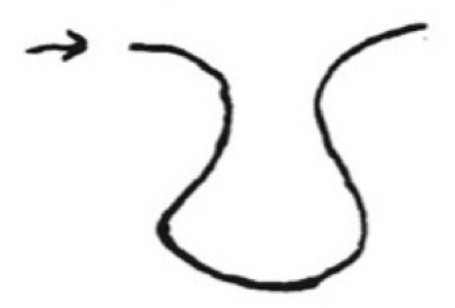
That is how his individuality ran like a red thread through the whole earth development and had been there before its begin-ning. He went on with these words: 'If you ponder on this with love and enthusiasm, you will find, even in this life, who I am.' I asked further: 'Shall we meet again?' And he replied:
'If you ponder on who I am with love and enthusiasm, we shall meet again.'
The conversation at this table continued and I remember that he said on this occasion: 'When Christ walked on the earth and a person walked past Him, looked into His eyes and recognized Him, he became a Christian in his next life.' So, now you know why this is my 'holy table'.
Steiner's expressed goal was to prepare our time, what he coined the New Age. The Dark Age of Kali Yuga ended and the new Age of Dvapara Yuga started in the current years, where the prophets of old incarnated to start the new age under the leadership of Michael, under whom humanity would become one.
For that to become possible it was necessary to spread the knowledge about reincarnation and karma that practically was unknown at the start of the last century. Without that understanding, the spiritually inclined, who incarnated today, would feel absolutely homeless in the materialistic world.
He created Anthroposophy, Waldorf Schools, Biodynamic farming, Eurythmy, and Anthroposophical medicine, all to give an alternative to materialistic thinking building on the European Rosicrucian spiritual tradition. He tried to create the Grail Center, where Kaspar Hauser failed, to kickstart the New Age, and he succeeded in creating the building but the adverse powers burned it to the ground, ending his secondary mission in this incarnation. He then said it would take a hundred years before it would be built.
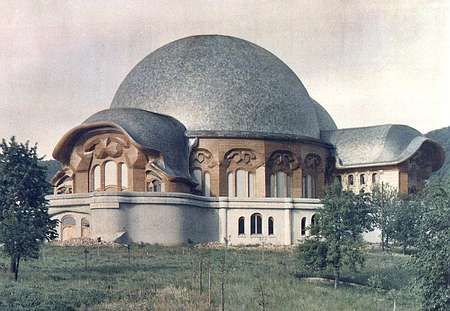
The first Goetheanum, Steiner’s attempt to create the Grail Center
How the German poet Christian Morgenstern experienced Rudolf Steiner. It explains why his lectures were so sought all over Europe. Where he had been all kinds of spiritual groups began to form. Spirituality grew exponentially, and it means very slowly in the start, in 1950-60 there were small but lively pioneering communities, but first around 1968 began it to spread outside the pioneering communities, and today it has spread all over the Earth, while all ideologies are dead.
He spoke.
And as he spoke, in him appeared
The zodiac, Cherubim and Seraphim,
The solar star, the movement of the planets
From place to place
All this flowed from his voice,
In lightning contemplation, like a universal dream,
All heaven was prayed to descend
With his word. ~Christian Morgenstern
Steiner describes both as a mystic and an occultist. The mystic is connected to the etheric body who came into our development at the old Sun, where the occultist is connected to the astral body that came into our development at the old Moon. The etheric is the oldest and most developed, whereas the astral is younger and not as developed, but kind of more sophisticated. The two are in equilibrium, so he is immune to the Luciferic as also Goethe, Paulus, Moses, and Krishna are. He is a Manas bearer, the Manu.
Novalis is an expression of the Father as I also think Beinsa Douno is. Goethe is an expression of the Son, and Steiner is an expression of the Holy Spirit. It was no coincidence that Steiner built on Goethe, he continued Goethe's mission as the person, Karl Julius Schröer, who had the task wasn’t able to.
Steiner describes the Nathan Jesus as having his I in the astral body. This makes him different, he speaks in dream language as only his mother understands. He is the one who stayed back, the Abel being, who represented the astral body, developed on the old Moon. Cain is the etheric body developed on the old sun. Steiner says that Cain is the masculine and Abel the feminine.
Adam is the Father, who has the I AM in the Consciousness soul representing the physical/Atma, Cain is the son of God having the I AM in the intellectual soul representing the etheric/Buddhi and Abel is the son of Man having his I AM in the Sentient soul representing the astral/Manas.
The following indented text is from The Personality of Rudolf Steiner by Edouard Schuré.
“The true mystic is a man who enters into full possession of his inner life, and who, having become cognisant of his sub-consciousness, finds in it, through concentrated meditation and steady discipline, new faculties and enlightenment.
These new faculties and this enlightenment instruct him as to the innermost nature of his soul and his relations with that impalpable element which underlies all, with that eternal and supreme reality which religion calls God, and poetry the Divine.
The occultist, akin to the
mystic, but differing from him as a younger from
an elder brother, is a man endowed with intuition and with synthesis, who seeks
to penetrate the hidden depths and foundations of Nature by the methods of
science and philosophy; that is to say, by observation and reason, methods
invariable in principle, but modified in application by being adapted to the
descending kingdoms of Spirit or the ascending kingdoms of Nature, according to
the vast hierarchy of beings and the alchemy of the creative Word.
…
Rudolf Steiner is both a mystic and an occultist. These two natures appear in
him in perfect harmony. One could not say which of the two predominates over the
other. In intermingling and blending, they have become one homogeneous force.
Hence a special development in which outward events play but a secondary part.

I love Edouard Shurés many writings, and this is good too, but I think he is painting a too dark picture of the master. It lacks love, all masters have plentiful of love, I think Beinsa Douno is more like the master than this description. The initiate had walked the path, he have tried all the sins possible and become tired of them. He have compassion for all humans as he understand what they fight with, he have been there himself. They have humor, as humor is the result of love, of understanding. People without humor and compassion are not initiates.
The description of the master is a father figure we usually connect with the old testament, with Yahweh, but even the old testament's father figure was full of love. We should think of Krishna when thinking of Yahweh, the teacher of love, and Yahve is the Son, not the Father.
The master is described as looking at the collective and not at the individual, but that is something that ended with Christ entering the inner world of man at Golgotha, and especially with the raising of Michael and the Return of Christ, where we open the consciousness soul, is love all-permeating. The initiate have compassion for every single being.
The description of the mystic running around in the mountains sounds more like a fairy tale created to hide what really took place.
The following is from The Personality of Rudolf Steiner by Edouard Schuré.
The Master of Rudolf Steiner was one of those men of power who live unknown to the world, under cover of some civil state, to carry out a mission unsuspected by any but their fellows in the Brotherhood of self-sacrificing Masters. They take no ostensible part in human events. To remain unknown is the condition of their power, but their action is only the more efficacious. For they inspire, prepare, and direct those who will act in the sight of all.
In the present instance the Master had no difficulty in completing the first and spontaneous initiation of his disciple. He had only, so to speak, to point out to him his own nature, to arm him with his needful weapons.
 Clearly did he show him the connection between the official and the secret sciences; between the religious and the spiritual forces which are now contending for the guidance of humanity; the antiquity of the occult tradition which holds the hidden threads of history, which mingles them, separates, and reunites them in the course of ages.
Swiftly he made him clear the successive stages of inner discipline, in order to attain conscious and intelligent clairvoyance, In a few months the disciple learned from oral teaching the depth and incomparable splendour of the esoteric synthesis.
Rudolf Steiner had already sketched for himself his intellectual mission: “To re-unite Science and Religion. To bring back God into Science, and Nature into Religion. Thus to re fertilize both Art and Life.”
But how to set about this vast and daring undertaking? How conquer, or rather, how tame and transform the great enemy, the Materialistic science of the day, which is like a terrible dragon covered with its carapace and couched on its huge treasure? How master this dragon of modern science and yoke it to the car of spiritual truth? And, above all, how conquer the bull of public opinion?
Rudolf Steiner's Master was not in the least like himself. He had not that extreme and feminine sensibility which, though not excluding energy, makes every contact an emotion and instantly turns the suffering of others into a personal pain. He was masculine in spirit, a born ruler of men, looking only at the species, and for whom individuals hardly existed. He spared not himself, and he did not spare others. His will was like a ball which, once shot from the cannon's mouth, goes straight to its mark, sweeping off everything in its way. To the anxious questioning of his disciple he replied, in substance:
“If thou wouldst fight the enemy, begin by understanding him, Thou wilt conquer the dragon only by penetrating his skin. As to the bull, thou must seize him by the horns. It is in the extremity of distress that thou wilt find thy weapons and thy brothers in the fight. I have shown thee who thou art, now go — and be thyself!”
Rudolf Steiner knew the language of the Masters well enough to understand the rough path that he was thus commanded to tread; but he also understood, that this was the only way to attain the end. He obeyed and set forth.
The following text is taken from Steiner’s “The Story of My Life,” see “Rudolf Steiner An Esoteric Profile” by Yvonne Weniger. I have not added any additional explanations, as its a contemplation in itself. His biography in German: “Mein Lebensgang." Maybe worth to contemplate Kaspar Hauser too.
I have made it clear that even in my childhood, I lived in the spiritual world as in that which was self evident to me, but that I had to strive earnestly for everything which pertained to a knowledge of the outer world. For this reason, I am a man slow in development as to all aspects of the physical world.
In clear vision, the spiritual individuality of everyone revealed itself to me. Dead men I followed farther on their way in the spiritual world. No one would pay any attention to my perceptions of the spiritual world.
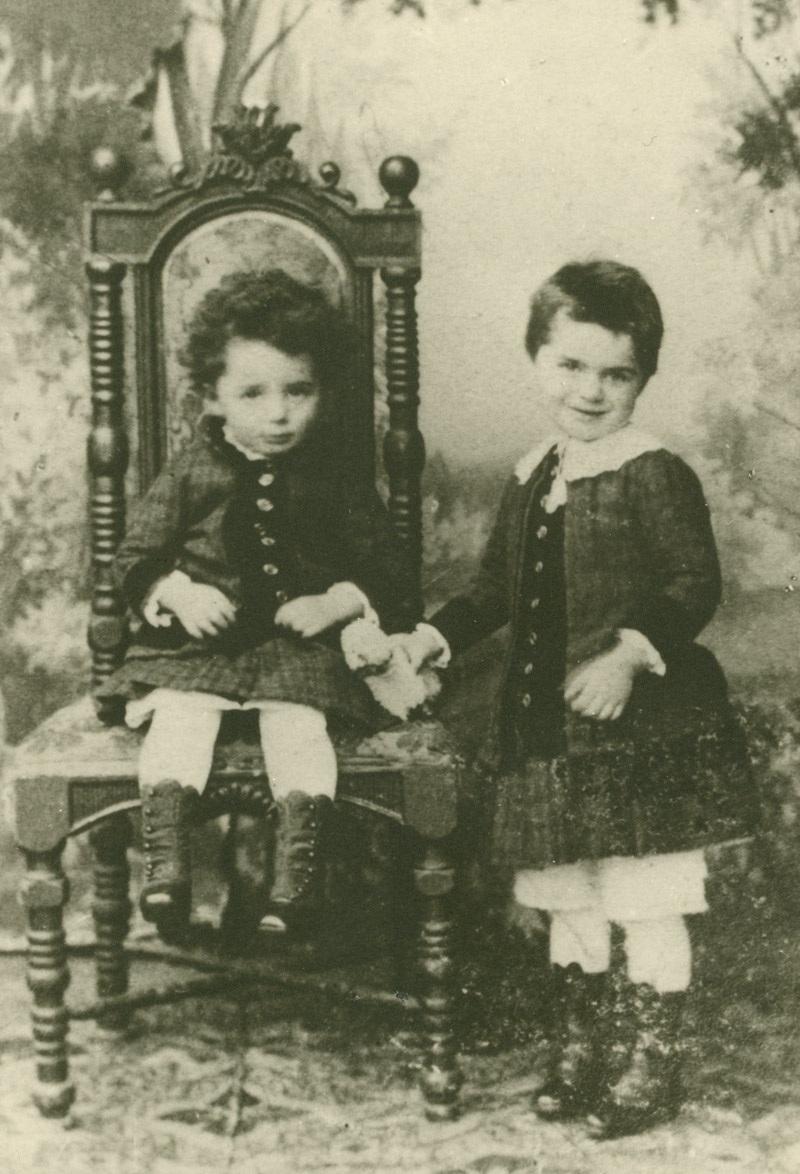 My activity as a tutor, which afforded me at that time the sole means of livelihood, kept me from one sidedness. I may state positively that I never allowed my insight into the spiritual world to become a disturbing factor when I was engaged in the endeavor to understand science, as it was then developed.
My childhood playtime came between age 23-28 years. For a number of years I went during the summer to Upper Austria with the family of children whom I tutored. In the life I led before coming to this family, I had little opportunity for sharing the play of children. I had to learn how to play at age 23, and this I did with great enjoyment.”
We loved each other [25 years old], and both of us were fully aware of this, but neither of us could overcome the fear of saying that we loved each other. I was happy and felt my girlfriend like something of the sun in my life. Fate drew us apart. A memory, however which has through all my later life, arisen again and again from the depths of my soul.
He was ”cut to the heart” when he received criticism from a person he was devoted to regarding a paper he had published. Both of these episodes show the tender, sensitive nature that he possessed.
Thus as a young man of 27 years I was filled with the questions and riddles concerning the outer life of humanity, while the nature of the soul and its relationship to the spiritual world had taken on, in a self-contained conception, a more and more definite form with me. [Theosophical Society]
I saw in the existence of art the entrance of the world of spirit within the world of sense. The true artist yields himself more or less consciously to the spirit.
I realized I must busy myself in a more serious manner with the situation of public affairs in Austria. I became, in 1888, the editor of the ‘German Weekly’. I was the farthest possible removed from all partisan conceptions of life. What interested me was the evolution of culture in the progress of humanity. The preparation of each week’s issue was a difficult struggle for me.
An essential part of the general ideas in which I then expressed my views consisted in the fact that the sense world did not pass with me as true reality. When anyone spoke to me of the limits of knowledge, I saw there in the admission that he did not experience spirituality within himself, the true reality, and for this reason could not rediscover this in the perceptual world. I desired to make clear that true reality is to be sought, not by such a breaking through from without, but by sinking down into the inner life of man. [in Germany at 27 working on Goethe’s writings.]
Thinking has the same significance in relation to the idea as the eye has for light, the ear for sound. It is the organ of perception. If anyone enters into the interior of his own soul without taking ideas with him, he thus arrives at the inner region of mere feeling. I objected with all positiveness to mere feelings as a way into the spiritual. My purpose was not to describe human experiences (mystical) but to show how a spiritual world is revealed in man through spiritual organs.
In my own soul I lived in a world that bordered on the outer world, but it was always necessary for me to step across a boundary, if I wished to have anything to do with the outer world, as if through a door, in order to engage in this intercourse. This made it seem to me that each time that I entered into the outer world I was making a visit. Yet this did not hinder me from giving myself up to the most vital participation with one whom I was visiting, indeed, I felt entirely at home while on such a visit.
So it was at that time for me. In all that pertained to my spiritual perceptions, I had to work entirely alone. I lived in the spiritual world. No one in my circle of acquaintances followed me there. My intercourse consisted of excursions into the worlds of others, in Weimar, where I had such extensive relationships. This was then the nature of my loneliness. Loneliness was my experience also in relation to many other personalities with whom I felt myself united by bonds of friendship but who none the less energetically opposed my spiritual life.
I had sought to prove in my book that no unknown lies behind the sense world, but that within it lies the spiritual, and concerning the world of human ideas, I sought to show that they have their existence in the spiritual world. The reality of the sense world is hidden from human consciousness only so long as the soul perceives by means of the senses alone. I desired to create a spiritual natural science.
My task was to form ideas which could express the human souls’ experience of the spiritual world.
A contentment of soul and profound inner satisfaction were mine at Weimer by reason of the artistic element brought into the city by the art school and the theater, and the musical people associated with these.
At age 36 an attentiveness not previously present to that which appeals to sense perception now awakened in me. Details became important. I had the feeling that the sense world had something to reveal which it alone could reveal. The enhancement and deepening of the powers of sense-observation meant that I was given an entirely new world.
I came to know in my mental experience the nature of meditation and its importance for insight into the spiritual world. There arose something within me which demanded meditation as a necessity of existence for my mental live, just as an organism at a certain stage in its evolution needs to breathe by means of lungs. So from all directions my life was focused on this question. “How can a way be found whereby that which is inwardly perceived as true may be set forth in such forms of expression as can be understood by this age?” Must one remain speechless?
My external personal life became one of absolute satisfaction by reason of the fact the Eunicke family moved to Berlin and I could live with them under the best of care after having experienced for a short time the utter misery of living in a home of my own. My friendship with Frau Anna Eunicke was soon thereafter transformed into a civil marriage. (Berlin, 1899)
Of my private life I do not wish to introduce anything into this biography except what concerns my process of development. Private relationships do not belong to the public. It is not concerned in these. Indeed, my spiritual development is, in reality, utterly independent of all private relationships. I am conscious of the fact that this would have been quite the same had the shaping of my private life been entirely different.
What I possess of spiritual knowledge is entirely the result of my own researches. Whenever any knowledge has come to me, only then I set beside it whatever of the ancient knowledge that has already been made public from any side, in order to point out the harmony in mood and at the same time, the advance which is possible to contemporary research. So after a certain point in time, it was quite clear to me that in coming before the public with spiritual knowledge I should be doing the right thing.
In 1902, after meeting Marie von Sievers (MVS) at one of my lectures, she and I entered upon leadership of the Theosophical Society (TS) in Germany. Socially, I enjoyed being in the circle of the TS but their mind in reference to the spiritual remained alien to me. I became concerned about the growth of the spiritualism in the TS in 1906. They asserted a Hindu boy (Krishnamurti) was the person in whom the Christ would appear in a new earthly life. MVS and myself were forced to withdraw and form an Anthroposophical Society independently.
Marie von Sievers and I fostered the artistic element in the Anthroposophical Society. Architecture, plastic arts, painting, recitation and drama. In various passages I have spoken of the importance of art to a person who enters in experience into the spiritual world. MVS and I came face to face with the treasures of museums throughout the whole of Europe. This feeling for the ripeness of forms of knowledge is an essential thing in investigating the spiritual world. In order to have this feeling one must have experienced a perception as it rises at first in the mind.
The cultivation of the art of recitation and declamation, MVS and myself, grew to be an activity by means of which to impart the truth from the spiritual world. In the Theosophical Society artistic interests were scarcely fostered. By reason of the fact that we were able to unfold art along with spiritual knowledge, we grew more and more into the truth of the modern experience of the spirit. Art has indeed grown out of the primeval dreamlike experience of Spirit.
At this point in my life story it is necessary to say, first of all, how the two things, my published books and this privately printed matter- combine into that which I elaborated as anthroposophy.
But I would remark with all positiveness that at the period of my life here under consideration, I was still one of those who assume uprightness, and not crooked ways, in the people with whom they have to do. Even spiritual perception did not alter at all this faith in men. This must not be misused for the purpose of investigating the intentions of ones’ fellow, when this investigation is not desired by the man in question himself. In other cases, the investigation of the inner nature of other souls remains a thing forbidden to the knower of the spirit, just as an unauthorized opening of a letter is something forbidden.
He died on March 30, 1925, at age 64. His second wife Maria wrote the eulogy that follows:
His life, consecrated wholly to the sacrificial service of humanity, was requited with unspeakable hostility; his way of knowledge was transformed into a path of thorns. But he walked the whole way, and mastered it for all humanity. He broke through the limits of knowledge; they are no longer there. Before us lies this road of knowledge in the crystal clarity of thoughts of which this book itself constitutes an example.
He raised human understanding up to the spirit; permeated this understanding and united it with the spiritual being of the cosmos. In this he achieved the greatest human deed. The greatest deed of the Gods he taught us to understand; the greatest human deed he achieved. How could he escape being hated with all the demonic power of which Hell is capable?
But he repaid with love the misunderstanding brought against him.
More on Steiner’s life in “Significant Events in the Life of Rudolf Steiner”.
Timeline for Rudolf Steiner: Biographical Timeline.
The human I, the most individual part of the human being, is characterized by the fact that it does not want to remain in itself but wants to immerse itself in the other being. ~Ita Wegman
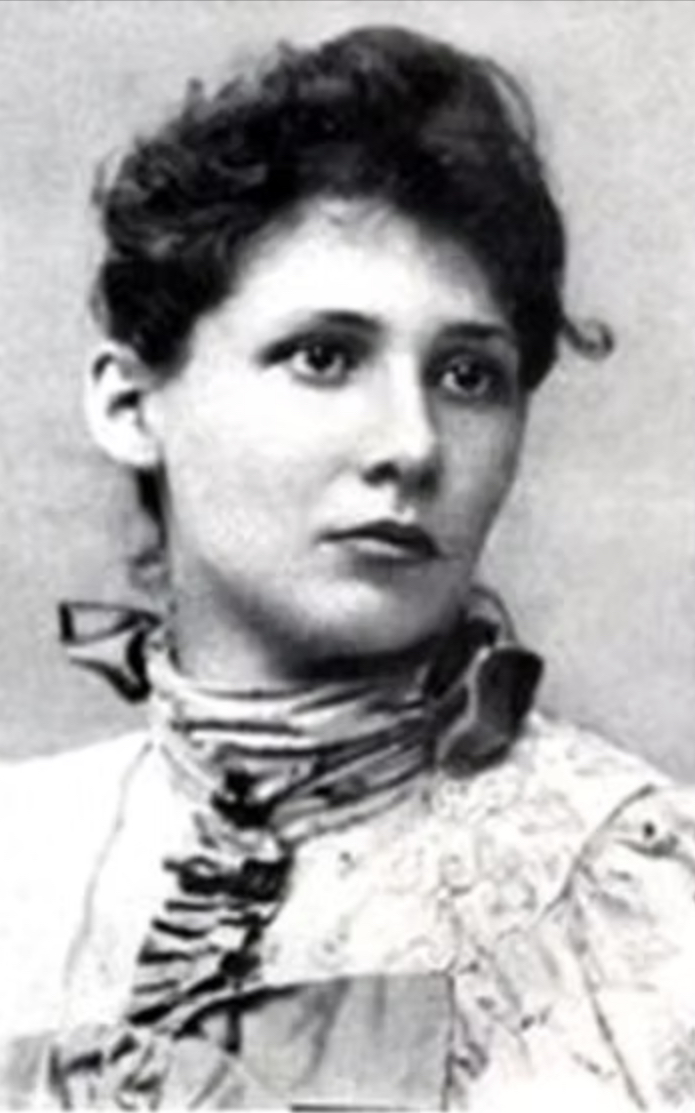 Ita Wegman was a dear friend, coworker, and student of Steiner. She was born Maria Ita Wegman on February 22, 1876, in Karawang, West Java. Around the turn of the century, she returned to Europe and she completed her education as a physical education teacher in The Netherlands and learned Swedish massage in Berlin. She met Rudolf Steiner for the first time in 1902, 26 years old. She began medical school at the University of Zurich five years later. She became a medical doctor in 1911. Together, Wegman and Steiner wrote what was to be Steiner's last book, Extending Practical Medicine. The book was partly written while Wegman cared for Steiner, who was terminally ill at that time. See short biography. [My note: I made this text Feb 22, 2025 without knowing her birthdate.]
Memory Pictures of Ita Wegman on her Death Day by Norbet Glas, the founder of the Lucas Clinic next to the Wegman Clinic in Arlesheim:
The request to write about Dr. Wegman has moved me deeply and given me such cause for thought. I have come to the conclusion that there must be very few people whose personality is so difficult to describe as hers. For example, to write a personal account of Dr. Wegman, one must have the gift to create a real and vivid life picture in any description of her.
For such she always was: full of a natural, unquenchable source of life — a complete human being, with all the truly human qualities. And such people are admired by many, loved by many, but also misunderstood and even hated by many. Who, then, is right?
Like an answer to this question a memory-picture arises of Dr. Wegman in a room with Rudolf Steiner. Her figure was erect; she was wearing a brightly colored dress. With shining eyes she watched a little group of doctor-friends who had gathered together there. I observe Rudolf Steiner keenly. Never had I seen him like this. He looked at her with an infinitely loving expression. He seemed to me like a father who, with admiration and respect was watching his grown up daughter, and at the same time was very proud of her. With this picture in mind, one knows for certain, that as long as confidence in Rudolf Steiner remains, one must think of Dr. Wegman too, with admiration and thankfulness. See Reverse Ritual
The following picture from Steiner’s notebook is part of the Anthroposophic lore:
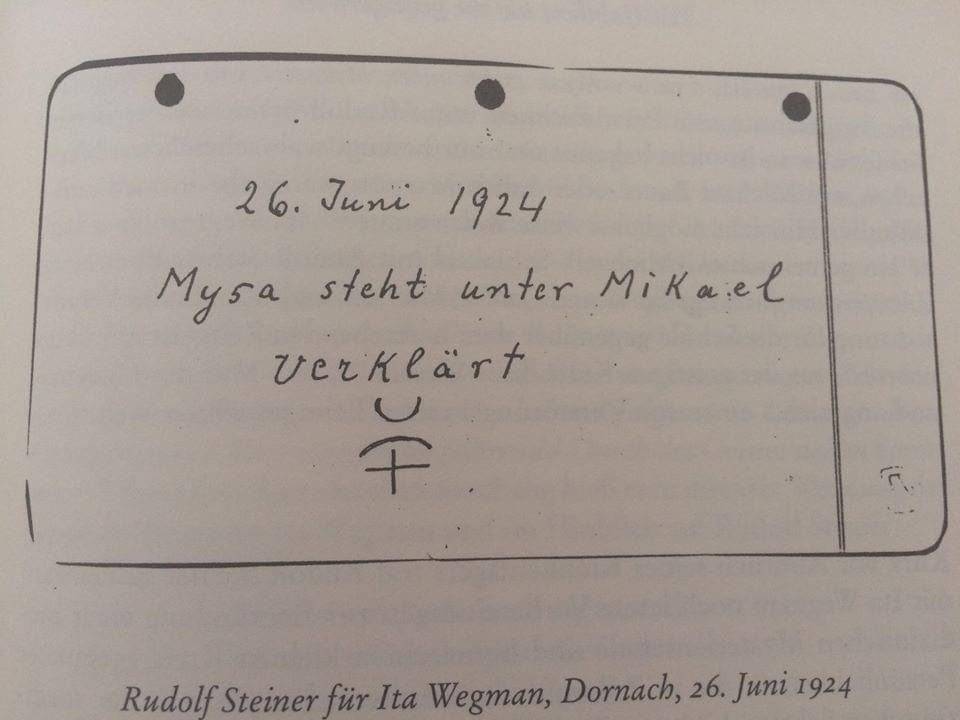
From Rudolf Steiner's notes book
Translated: "Mysa is Transfigured under Michael"
where Mysa should be Steiner’s nickname for Ita Wegman.
The symbol reminds me of the following text by Steiner (The Nature of the Physical and the Astral Worlds):
When a spiritual seer looks back to the time preceding the Christ event, a striking vision comes before him. The external form of the earth, confronting the physical senses as Maya, vanishes and something comparable to the human form appears, but only a form, a figure. To spiritual vision the outer Mayavic earth … changed into the form of man with arms outstretched in the shape of a cross, a male-female form. This reminds us of the wonderful words of Plato, words that he drew from the Mysteries, that the world soul is crucified on the cross of the world's body.
With the crucifixion he and she entered the center of the Earth and the cross and with the Return of Christ they stepped down again and the Earth became alive.
Ita Wegman was optimistic about the future of Anthroposophy despite the difficulties, but pessimistic about the organization:
Alle alten Formen, auch die allerletzte Form für die Anthroposophie, sind gründlich kaputt gemacht, und mir kommt es jetzt so vor, als ob man nicht mehr eine Form für das Leben der Anthroposophie zu suchen hat, sondern dass jeder Mensch selber die Form ist, mit der sich Anthroposophie vereinen will. Wo dieses geschehen ist, werden Menschen sich finden und sich vereinen, um ein Glied zu werden des wahren Geistvereins. ~Ita Wegman, Brief an Maria Röschl, am 22. Februar 1935
Ich selber kann nicht sagen, dass ich mich unglücklich fühle; obgleich ich auf das Schlimmste gefasst bin (...), habe ich doch ein Gefühl, als ob die geistige Welt sich wieder der Anthroposophie annimmt und dass man ruhig sein kann trotz allem Schweren, dass die geistige Führung uns dahin bringen wird, wohin wir kommen müssen. ~Ita Wegman, Brief vom 25. November 1935
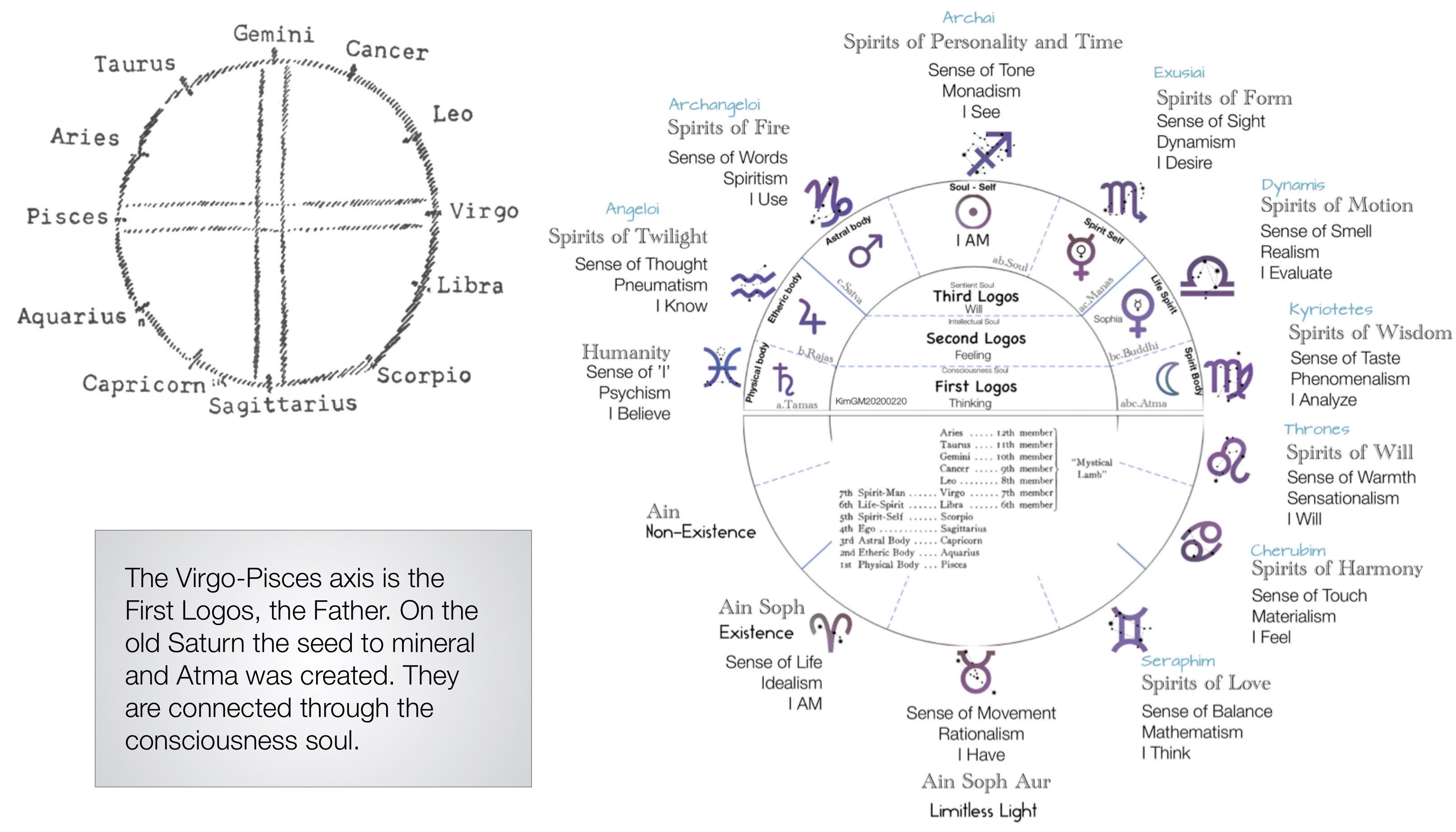
Steiner's horoscope is interesting in many ways, especially the sun-moon opposition between Pisces and Virgo, which is the opposite of Goethe's position. It's also interesting that the Virgo-Pisces axis is the axis of God. There are many other shared energies between the two horoscopes, including the Scorpio ascendant. Steiner has Pluto ♇ in the seventh house, his task is to transform humanity, while Goethe has it in the first house, he should transform himself. This is also shown through their sun sign, Goethe represents the Earth (Virgo), whereas Steiner represents Michael (Pisces) on Earth. See Goethes Horoscope.
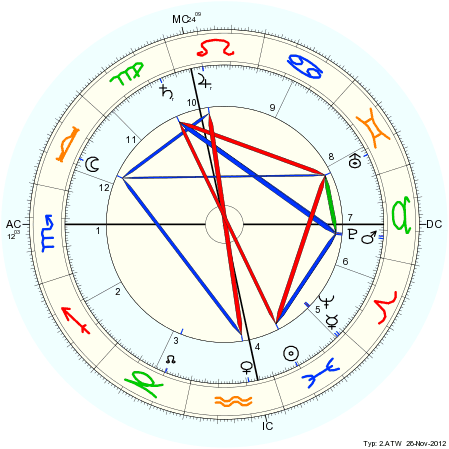
There are two different birthdates given for Steiner, where one has Moon in Virgo and the other has it in Libra. I was surprised that the full moon wasn't precise on the 25th, so I thought that there could have been a problem with the time. If, on the other hand, the 27th is the right date, then the difference means that he has not yet reached his full potential after he kind of restarted in his Kaspar Hauser incarnation. Anthropos was yet not strong enough to represent Michael fully.
See more on the controversy later in the text.
First Steiner on the Virgo-Pisces axis, from my text on How to Tame Technology:
It will be the task of good, healing science to find certain cosmic forces which can reach the earth through the co-operation of two cosmic streams, those of Pisces [Michael] and Virgo [Sophia]. The great secret to be discovered will be how the influence which works from the direction of Pisces as a power of the sun unites itself with the influence working from the direction of Virgo. It will make for good when it is learnt how the morning and evening forces from the two sides of the cosmos can be brought into the service of humanity.
And from Beinsa Douno:
Each religion is founded on two constellations – the opposite signs in the circle of Zodiac. It is said that the Christian religion was founded on the signs of Pisces and Virgo, so the axis Pisces – Virgo is the Christian axis. …
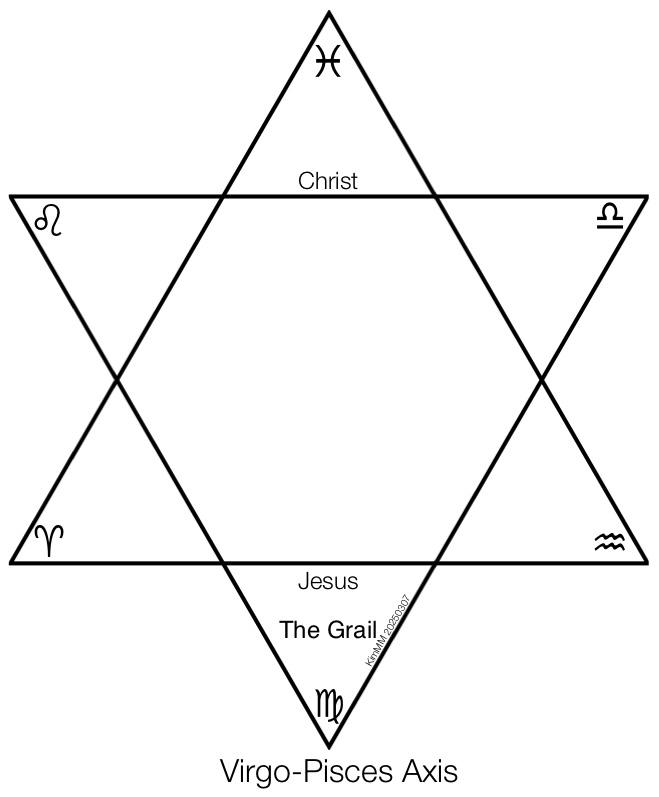
We find the symbols of Pisces and Virgo everywhere in the New Testament, but we also find them in all other religions, because the symbol of Virgo exists since time immemorial.
In all religions we find the symbol of the virgin: Isis in Egypt, Devinata, who gave birth to Krishna in India, she bore a lotus in the water. This is an eternal image in Nature. The Virgin represents pure nature, untouched and holy, which produces, which creates the eternal Son of humanity, the higher Self, or – as we call Him – Christ. The symbol of Pisces is found also in all religions. …
Christ always worked, spoke, thought and healed with this axis. Then we will see how many miracles could be done with the help of this axis if man builds his life on it. The Pisces are mentioned everywhere in the Testament, as well as the bread. … The fishes and the bread were the two things, with which the disciples of Jesus Christ worked, because He taught them the secrets hidden in the bread and the fishes. …
So, Pisces is related to Jupiter and Virgo to Mercury. Virgo symbolizes purity and Pisces mercy, benevolence, love and generosity. You must know that the Christian epoch, represented by both signs attempted to develop in the souls of the people the virtues of the Virgo-Pisces axis which means of both principles – the masculine as Mercury and the feminine – Pisces. That is why both principles are blended in the Christian religion: mercy, benevolence, goodness, purity and chastity.
There is a controversy about Steiner’s birth date, some sources say it’s the 25th other’s it’s the 27th, and Steiner seems to have used both. His “The Story of My Life” mentions the 27th: “In Kraljevec bin ich am 27. Februar 1861 geboren.” from Mein Lebensgang" and a letter he wrote says the 25th:
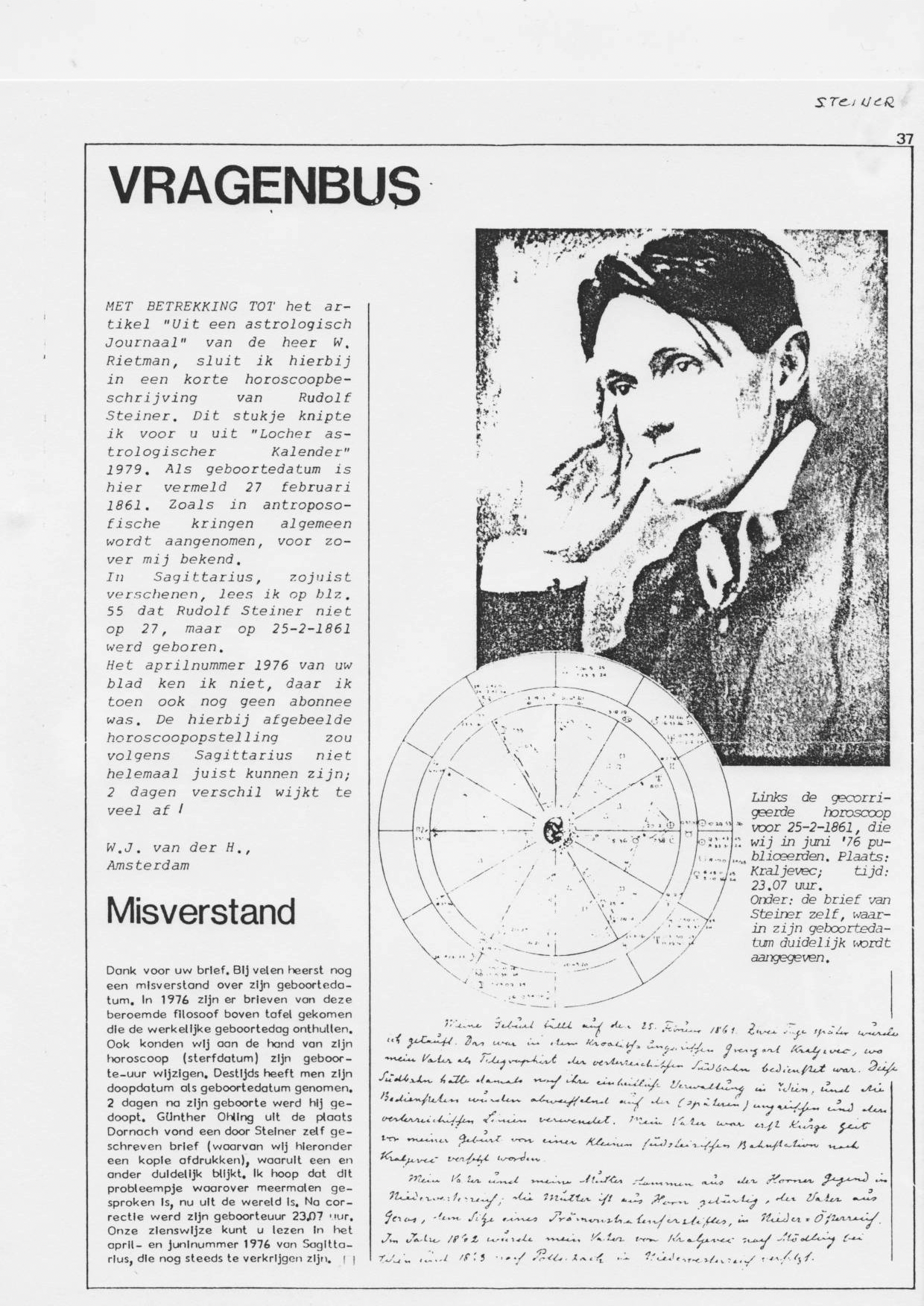
Here is a text proposing the 25th: Rudolf Steiner's Birth Date.
Here is an astrology text by Henrik Woorts advocating the 27th: “The birthday discussion, a never-ending story?” The following uses the 25th:
Rudolf Steiner by Astro-Seek
Rudolf Steiner by AstroTheme
Rudolf Steiner by Astro.com
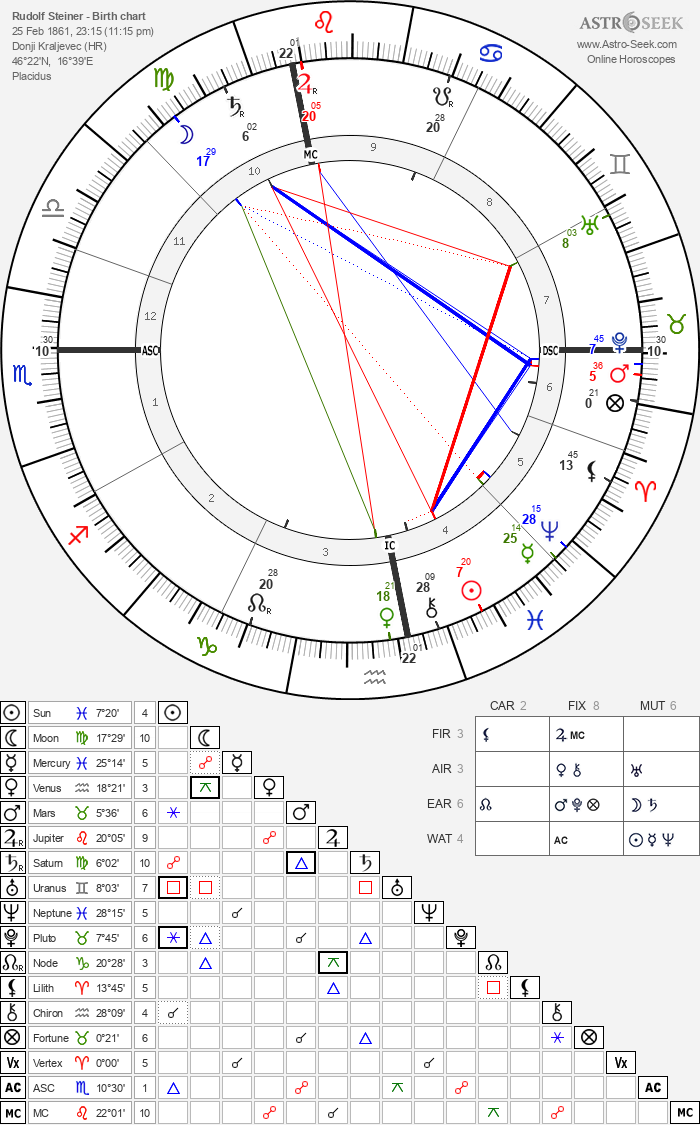
Chart with alternative birth date 27 feb, from Astro.com:
No other spiritual teacher has centered their teachings around Christ as Steiner has, and he has shown Christ as the creator of humanity up through time, from the very beginning, often under the name Michael, the face of Yahve or Christ.

