By Kim Graae Munch.

When I read the following text on Orpheus by Rudolf Steiner sixteen years ago I was mystified by the incarnation of Orpheus without his feminine side, I had a feeling it was an important puzzle piece, but I hadn't any other pieces to match it with. Now I understand that Eurydice is Sophia, Isis, Sif or Zipporah who can't work in him, that he has no access to Manas as the consciousness soul isn't developed. This is a tragedy, he is only half!

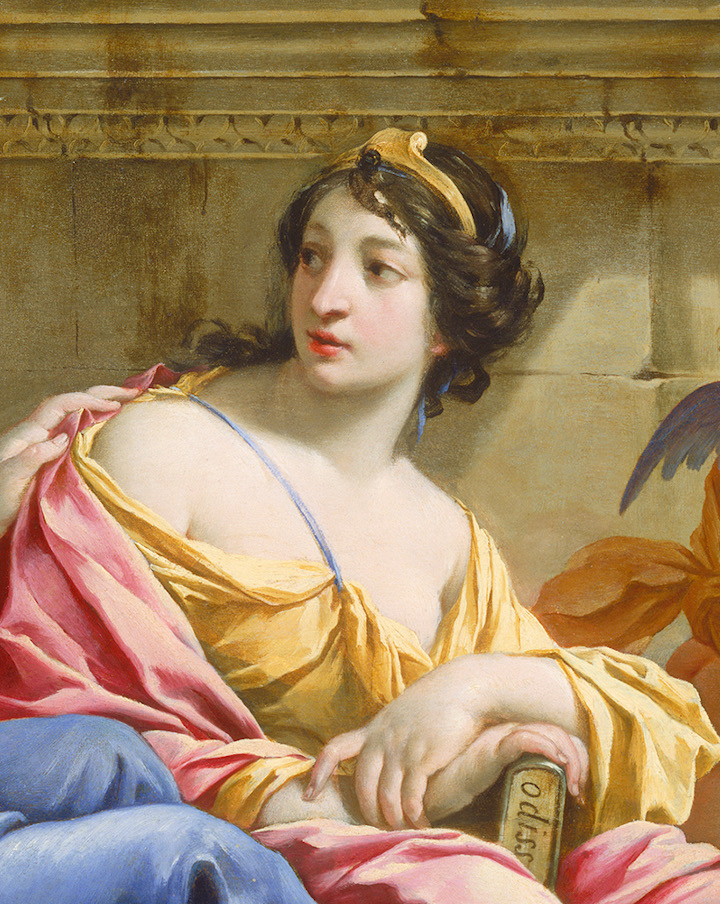 Orpheus is the Son of Appollo and Calliope, but Orpheus could also mean orphan, fatherless. Calliope was the wisest of the Muses, as well as the most assertive. She taught him verses for singing where Apollo gave him the lyre and taught him to play, symbolizing that Apollo gave him the skills and Calliope his inspiration. It was said that Hermes invented the lyre but Orpheus perfected it. It was also said that Orpheus' could charm the birds, fish and wild beasts, coax the trees and rocks into dance, and divert the course of rivers with his song and music.
The central story is about Orpheus loss of his love, Eurydice or Argiope, what Steiner says tells that he is born without his feminine side. Eurydice dies through a snake bite while she was dancing with naiads on her wedding day, following Ovid, the tale varies, except for her death by a serpent. His veneration for his missing half is shown through the worship he created for Demeter and Hecate.
At the end of his life, Orpheus dropped the worship of the gods except the sun, Apollo. One early morning he went to the oracle of Dionysus to salute his god at dawn, but was ripped to pieces by Maenads for not honoring Dionysus any longer. His head and lyre, still singing, floated down the River Hebrus. Some believe that the Orphic mystery cult regarded Orpheus as a parallel figure to or even an incarnation of Dionysus, that Dionysus in Orpheus gave over to Apollo.
After his death, Orpheus and his beloved Eurydice is reunited in the underworld, at the fields of the Blessed.
Egypt, Greece and the Hebrew people are part of the same development, with different focus, what shows through the way they tell the story. Osiris and Orpheus is the same, their dismemberment symbolizes that they gave the seed to Manas, that inspires humanity from the spiritual world, also symbolized by Orpheus singing head after his death. It is also mentioned that Orpheus traveled to Egypt. Their story corresponds to the story of Moses until his wife Zipporah saves him from the serpent demon. Moses has to go to Egypt, leaving the etheric world Midian without his wife, incarnating into the physical.
Osiris and Isis gives birth to Horus whose eyes is the Sun and Moon, he is both the feminine and masculine in one. Orpheus is said to be the father, teacher or disciple of Musaeus. Musaeus was a legendary polymath, philosopher, historian, hierophant, prophet, seer, priest, poet, and musician. In 450 BC, in a play Euripides describes Musaeus in this way: "Musaeus, too, thy holy citizen, of all men most advanced in lore." Plato groups Orpheus, Musaeus and Homer as the source of inspiration of epic poets and orators. Calliope was also said to be the muse of Homer.
Many Greek sources identify Musaeus with Moses, the Jewish lawmaker, and the description of him as a polymath also indicates he is the Manas Bearer, the Manu, just as Moses after he became one with Zipporah. The story of Moses is the description of a being, not of a single incarnation, and this goes for Osiris and Orpheus as well. See more on Moses and Zipporah here: Goethe and his incarnations, Wikipedia on Orpheus and the History of the Archangel Michael.
From Rudolf Steiner - The Christ Impulse and the Development of the Ego-Consciousness, Lecture 1
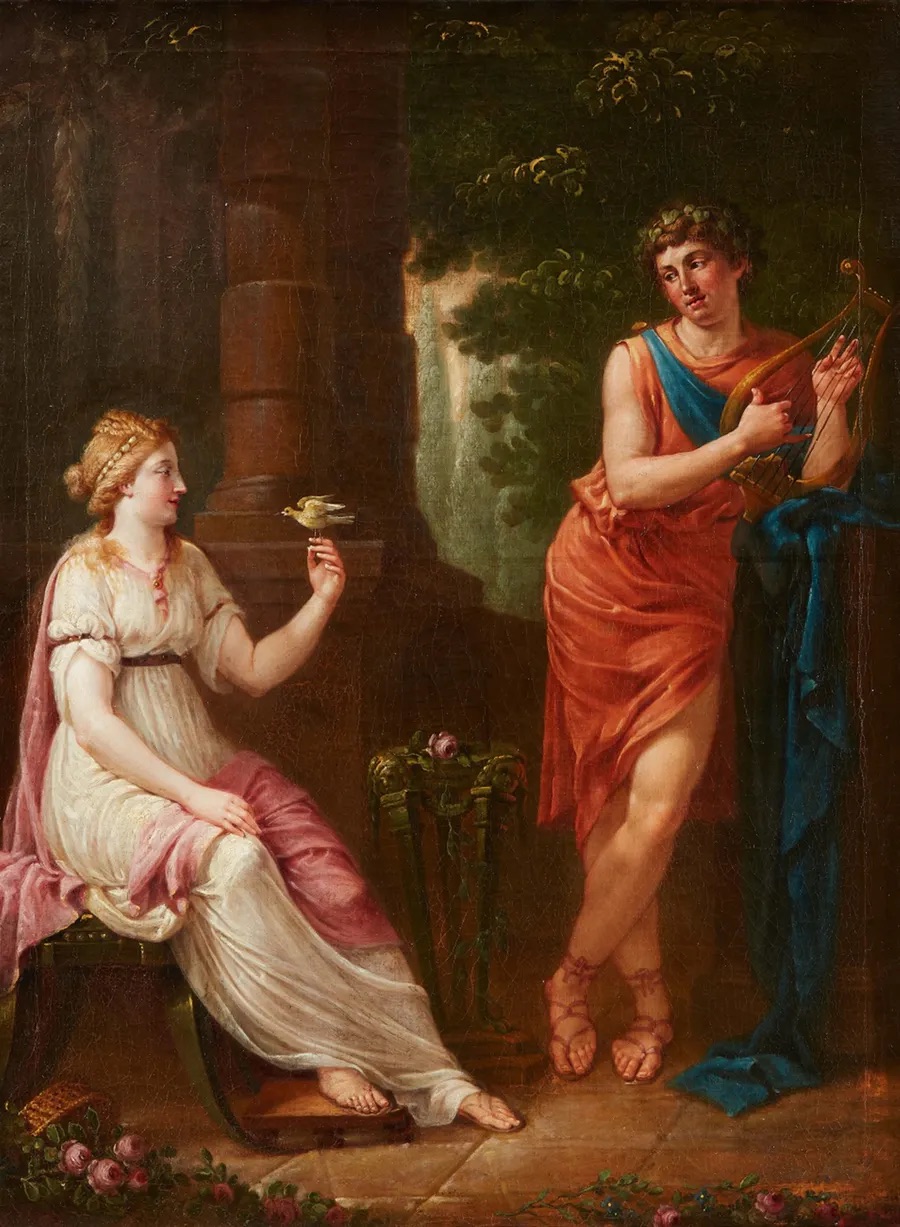 ▪️Once upon a time there was a primeval Teacher in the civilised parts of Europe — a primeval Teacher who in this sense was a primeval Bard, the pioneer of all the ancient Bards and minstrels. He taught on the physical plane by means of music, and he taught in such a way that something was thereby communicated to the sentient-soul, which was like the rising and shining of a sun.
▪️What tradition has retained concerning this great Teacher was later on gathered together by the Greeks — who were still influenced by him from the West as they were influenced in a different way from the East.
▪️This was embodied in their conception of Apollo, who was a Sun-God and at the same time the God of music. This figure of Apollo dates back, however, to that great Teacher of primeval times, who put into the human soul the faculty which appears to-day as the power of clear thinking.
The Greeks also tell of a pupil of this Great Teacher of humanity — of one who became a pupil in a very special way. How could anyone become the “pupil” of this Being?
In those bygone times, when this Being was to work in the manner just described, he was not, of course, encompassed in the physical organisation; he transcended that which walks the earth as physical man.
A man with an ordinary sentient-soul might have been receptive to the effects of the music, but he could not have aroused them in others.
A higher Individuality had come down and was like the radiance of what lived in the cosmos outside. It became necessary, however, that in the fourth Post-Atlantean epoch of civilisation, in the Graeco-Latin period, he should descend again — that he should descend to the human stage and make use of all the faculties that are in man.
Yet, although he made use, so to speak, of all the human faculties, he could not quite descend. For, in order to bring about what I have described, he required faculties transcending those possessed by a human organisation in the fourth post-Atlantean period.
The effects of this music even then included what was to be found in the spiritual soul [consciousness soul]; and it could not at that time have lived in an individuality organised only for the intellectual soul.
Hence, although incarnated in such a form, he still had to hold something back. His incarnation in the fourth epoch was such, that although he completely filled the whole human form, yet he as man, dwelling within that form, had, as it were, something within him that extended far beyond it; he knew something of a spiritual world, but he could not make use of this knowledge.
▪️He had a soul which extended beyond his body. Humanly speaking, there was something tragic in the fact that the Individuality who had acted as a great Teacher in the third epoch of civilisation, should have had to incarnate again in a form in which his soul was to a great extent outside it — and yet that he could not make any use of this superior and unusual faculty of soul. This kind of incarnation was called a “Son of Apollo”, because that, which had dwelt on earth before, was reincarnated in a very complicated and not in a direct way.
▪️A Son of Apollo bore within him as soul what Mysticism designates by the symbol of the ‘feminine’ element; he could not bear all of it within him, because it was in another world. His own feminine soul element was itself in another world to which he had no access but for which he longed, because a part of himself was there.
▪️This marvellous inner tragedy of the reincarnated Teacher of former times has been wonderfully preserved in Greek Mythology under the name of ‘Orpheus’ — the name given to the reincarnated Apollo, or “Son of Apollo.”
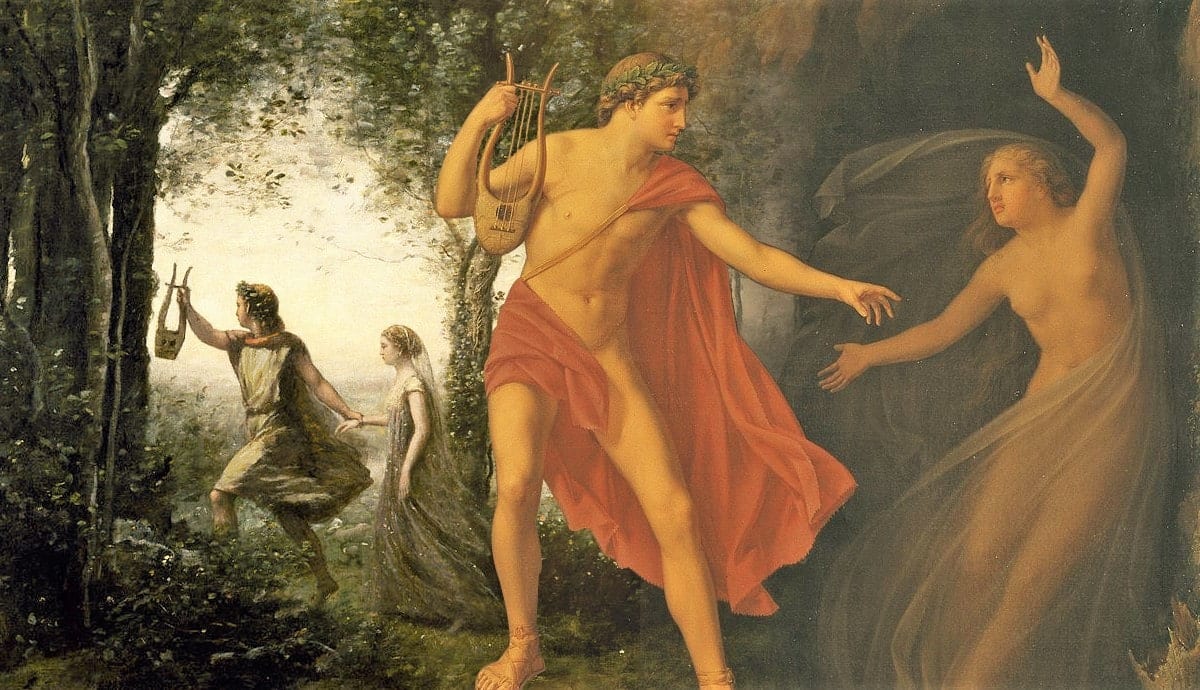
▪️This tragedy of the soul is represented in a marvellous way in the figures of ‘Orpheus and Eurydice’. Eurydice was soon torn from Orpheus. She dwelt in another world; but Orpheus still had the power, through his music, of teaching the beings of the nether world. He obtained permission from them to take Eurydice back with him. But he must not look around him; for that would mean inner death; — at all events it would bring about a loss of what he formerly was and which he cannot now take into himself.
Thus in this incarnation of Apollo as Orpheus, we have again a sort of descent of a Bodhisattva — if we may use this Eastern term — to Buddha-hood. We might quote a number of such Beings who stand out from age to age as the great Teachers of humanity and who always had a very special experience at the time of their deepest descent. The Buddha experiences the bliss of inspiring the whole of humanity.
▪️That Bodhisattva, whose memory is preserved externally under the name of ‘Apollo,’ had an individual experience: he was to prepare the individuality, the quality of the Ego. He experiences the tragedy of the Ego; he experiences the fact that this ego is, in the present state of man as regards this attribute of his, not entirely with him. Man is struggling up to the higher ego. That was foreshadowed for the Greeks by the Buddha or Bodhisattva in Orpheus.
Do not kill the lust for existence, but purify it, because originally it was a good thing. ~Paul
Here’s one of Steiner’s descriptions of Paul and his background in Moses, taken from “Christ and the Spiritual World - The Search for the Holy Grail,” one of the most interesting books of Steiner on the Holy Spirit, another name for the Grail, that or who contained Christ. This includes a piece on Apollo as he is central for the understanding.
The following is from the Christ and the Spiritual World: The Search for the Holy Grail - Second Lecture:
And if we ask why this has not happened, and who has brought it about that the force so apparent in the Sibyls has gradually declined, then we must answer: the Christ, who through the Mystery of Golgotha infused the Earth's aura with His Being; thus He destroyed the Sibylline force in the souls of men and has driven it away. ...
We must pierce the veil that shows us the spreading of Christianity on the physical plane. We must look behind the physical plane at the spiritual conflict whereby the souls of men were freed from that chaotic element which would otherwise have gone on from strength to strength.
And this fact is seen in a false light by anyone who fails to comprehend that through this supra-physical deed something of endless value was accomplished for mankind by the Christ.
But who were they who achieved at least something, indeed much, towards this comprehension? They were the writers of the Gospels, and Paul, who were endowed with a certain inspiration or revelation from the spiritual world. ...
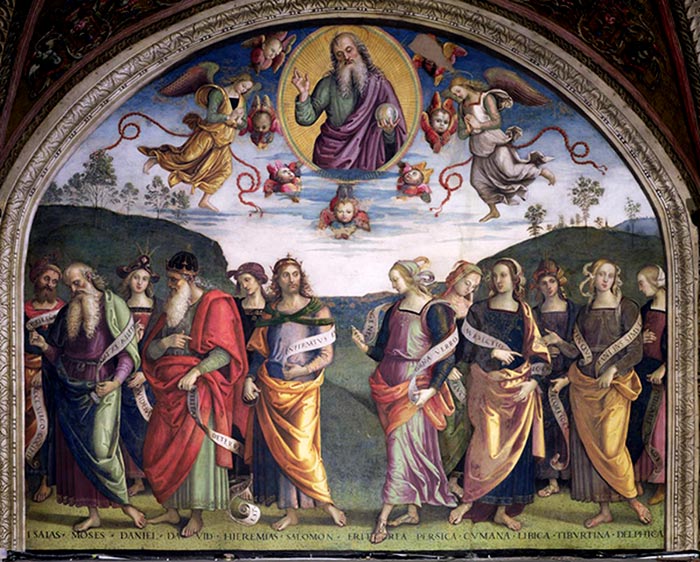
See Sibyls, the Voice of good or evil spirits
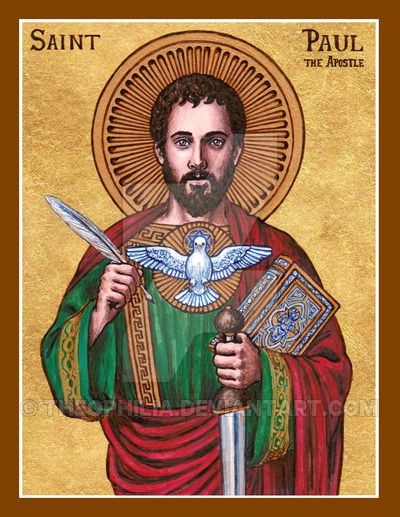
With Paul it always seems that there is much more between his words than one gets from simply reading them. It is as though the Damascus vision had come to expression through him; as though there penetrated into humanity through him a note which was opposed to the prophetic note of the Sibyls; as though through him there rang out again the note of the old Prophets [Moses] whom Michelangelo has represented so beautifully in his paintings....
But if one wants to grasp what it was that lived spiritually in Paul, in and between his words, and why one feels through his words something akin to the prophecies of the Sibyls, but with him proceeding from a good element in Earth evolution, then one comes to the phenomenon which answers the question: How far does Paul's world extend? What are its boundaries? And the remarkable answer we receive is: Paul is great throughout the world where the olive tree [a gift of the goddess Athena, the transformed Luciferic powers, Manas, or Zipporah, wife of Moses] is cultivated....
Geographically, too, the world is full of secrets. And the region of the Earth where the olive tree flourishes is different from the regions where flourish the oak or the ash. Man as a physically embodied being has a relationship with the elemental spirits.
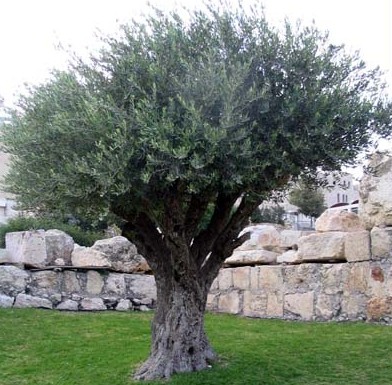
... And if we want to grasp the connection of the Earth-nature with human beings, we need to pay attention to such peculiar facts as this — the fact that Paul carries his message just as far over the Earth as the domain of the olive tree extends. The world of Paul is the world of the olive tree [the world of Athena].
The good element comes from Manas. The Sibyls are the chaotic Luciferic powers working with the elemental world, where the good element is Zipporah, the transformed luciferic or astral, Manas. Paul work through her, through Manas, without which he couldn’t have handled the Sibyls. She makes him a Manas bearer, the Manu.
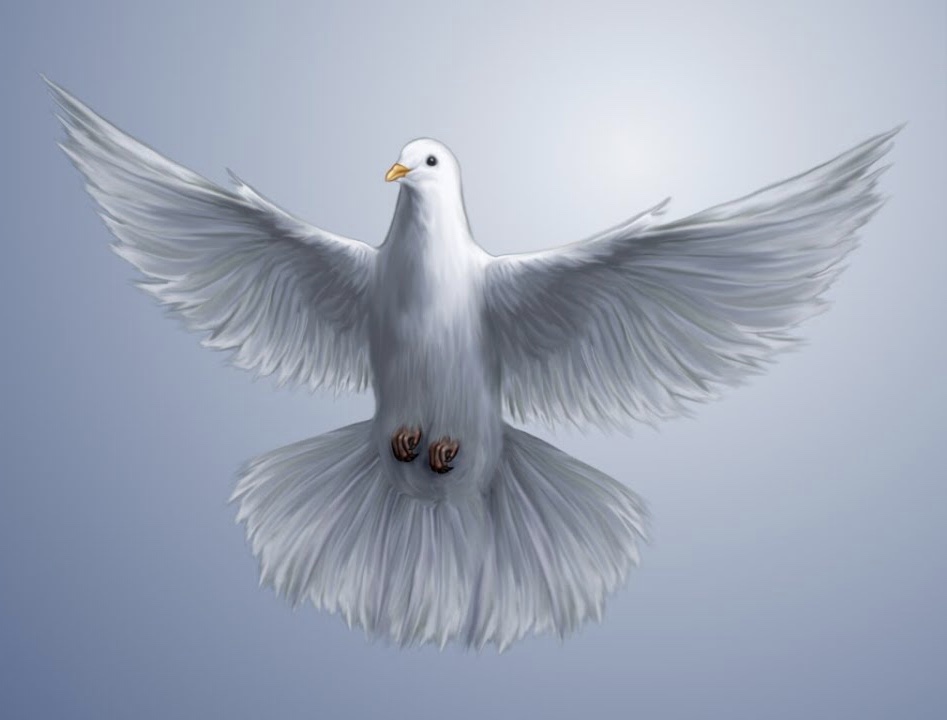
Zipporah means bird, and Manas, the Astral, Lucifer, and the Holy Spirit is connected to birds.
The following is from the Christ and the Spiritual World: The Search for the Holy Grail - Third Lecture:
Today I would like to say something about the Christ Being as such. We shall then see how in Paul the Christ Being is reflected in a certain definite way.
...in the Christ Being we have to do with a high spiritual Being — that is the term we will use for the present — for whose own evolution the Old Sun period was especially important....
We must now consider a little this Nathan Jesus child. I have already drawn your attention to the fact that in this child we have not to do with a human being, like other human beings, in the strict sense of the term.
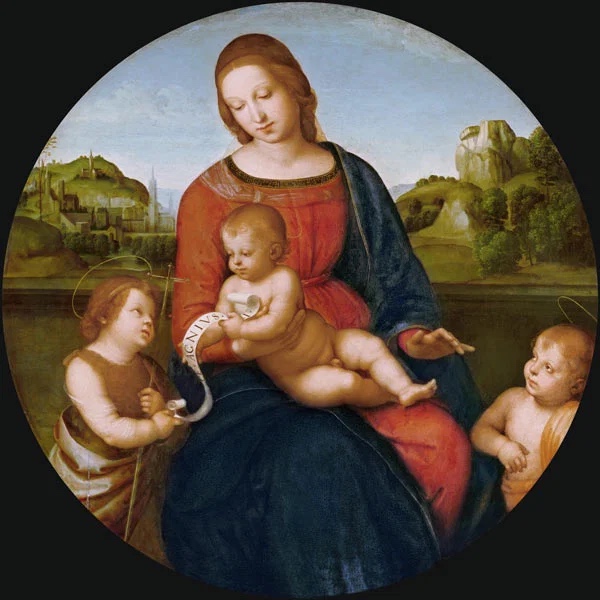
We cannot say of this Being that he had previously been incarnated on Earth in this or that individual.
We have always emphasised that of the soul-element which has come forth from spiritual worlds in order to live in single individuals on Earth, something as it were remained behind; and that what had thus remained behind appeared in the Nathan Jesus-child [the Abel being].
Hence of this child we cannot say that in him there lived an ordinary human ego which had developed in a certain way through earlier incarnations.... We must look for him not in the history of the physical Earth, but in pre-earthly spiritual realms....
The angelic Being who was permeated with the Christ had to accomplish the deed of vanquishing and driving out from the human soul that which had to be driven out if thinking, feeling and willing were to be harmonised.
And so there arises the picture — let us bring it vividly before our souls — of an angelic Being, dwelling still in the spiritual worlds, who later became the Nathan Jesus-child: he appears to us ensouled by the Christ and thereby rendered capable of special deeds — able to drive out from thinking, feeling and willing the element which would have raged within them as a dragon and brought them into chaos....
This was a significant deed, made possible only with the help of Christ in the Being of Jesus, at that time an angelic Being.
For this angelic Being had actually to connect himself with the Dragon-nature; to take on as it were the form of the Dragon in order to hold off the Dragon from the soul of man.
He had to work from within the Dragon, so that the Dragon was ennobled and brought out of chaos into a kind of harmony. The training, the taming of the Dragon — that is the further task of this Being....
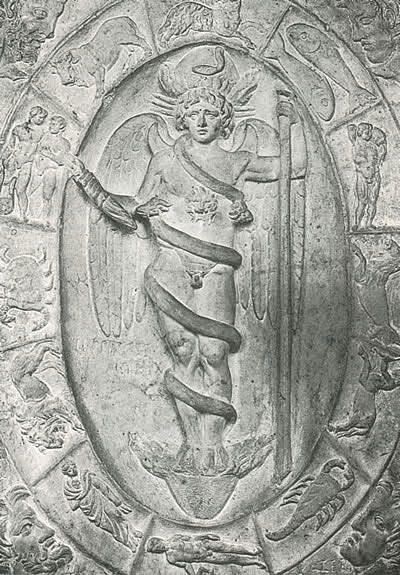
Moses worked from within the dragon, and the Manas of Zipporah made it possible to ennoble the astral dragon.
It is remarkable how for the Greek mind one particular divine figure emerged from the others. The Greeks, we know, reverenced a variety of gods. These gods were the reflections or projections of the Beings who originated from the journey round the planets of the Being, permeated by the Christ, who later became the Nathan Jesus-child....
But from these pictures of the various figures of the gods there emerged one figure — the figure of Apollo. The figure of Apollo emerged in a distinctive way: what did these Greeks see in him?
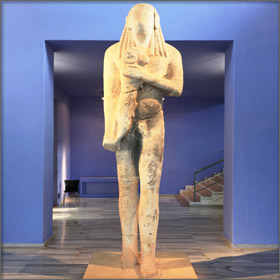
We come to know Apollo if we look at Parnassus and the Castalian spring. To the west of it there was a cleft in the earth, and over this the Greeks built a temple — why? Vapours used to rise up out of the cleft, and when the air-currents were right the vapours crept up the Mountainside like the coils of a snake, like a dragon.
And the Greeks imagined Apollo as shooting his arrows at the dragon, as it rose from the cleft in the form of turbulent vapours.
Everywhere we see a god fighting the dragon or the serpent we should think of Michael, the Archangel of the Sun, the Face of God. Examples are Krishna/Arjuna, Yahve/Moses, Thor/Tjálfi, Indra, Horus, and here Apollo. Claudius Aelianus wrote that Egyptians called the god Apollo "Horus" in their own language. See Thor and Sif.
Here, in the Greek Apollo, we see an earthly reflection of St. George [before Michael raises to Archangel,] shooting his arrows at the dragon. And when Apollo had overcome the dragon, the Python, a temple was built, and instead of the dragon we see how the vapours entered into the soul of the Pythia, and how the Greeks imagined that Apollo lived in these swirling dragon-vapours and prophesied to them through the oracle, through the lips of the Pythia....
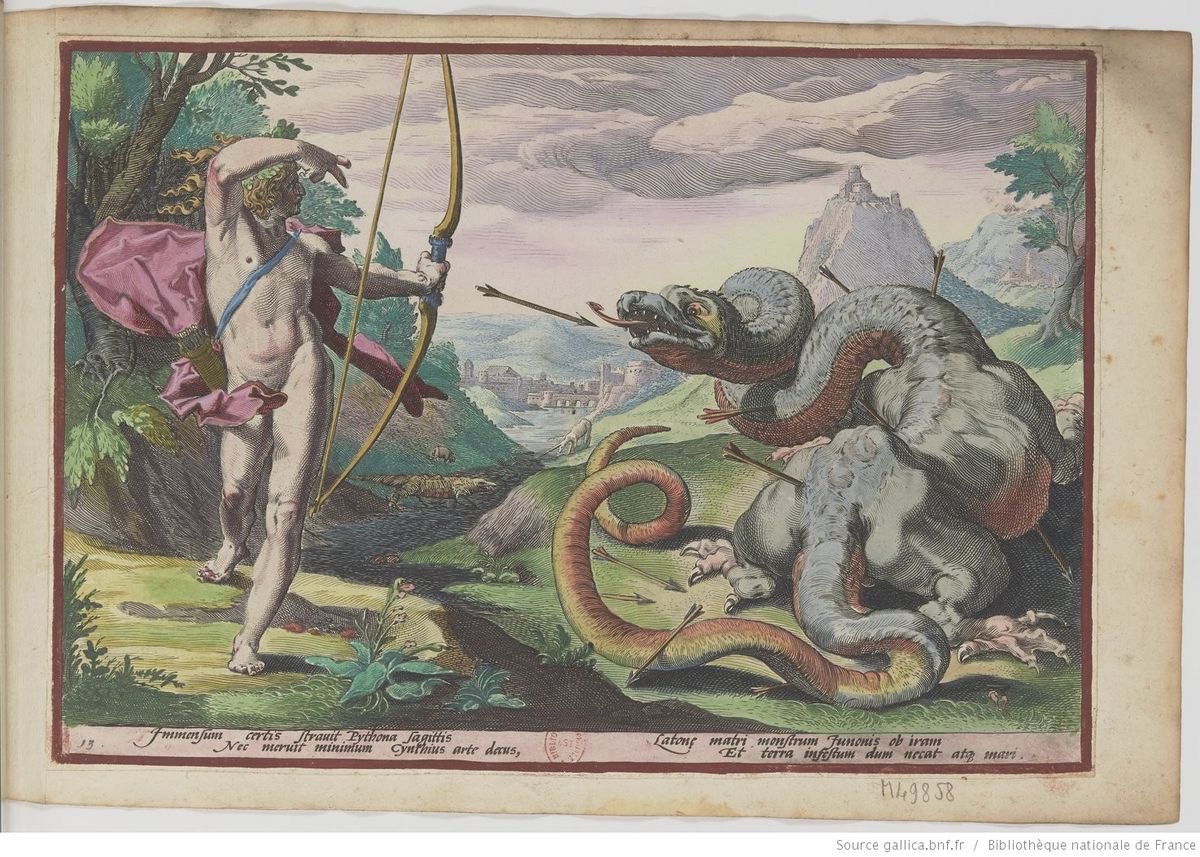
It meant that Apollo lived in the dragon’s blood and filled men with wisdom from the Castalian spring. And the place became a meeting-place for the most sacred plays and festivals.
Why was Apollo able to do this — who was he? It was only from spring to autumn that he caused wisdom to flow up from the dragon's blood.
Towards autumn he went away to his ancient home in the north, in the Hyperborean land. Farewell festivals were held at the time of his departure, and his return was welcomed in the spring. [This may connect to Thor!]
A deep wisdom resides in this idea of Apollo going north. The physical sun withdraws towards the south; in a spiritual sense it is always the opposite.
The story shows that Apollo has to do with the sun. Apollo is the angelic Being of whom we have spoken; he was a reflection, projected into the Greek mind, of the angelic Being who had in fact worked at the end of the Atlantean time and who had been permeated by the Christ.
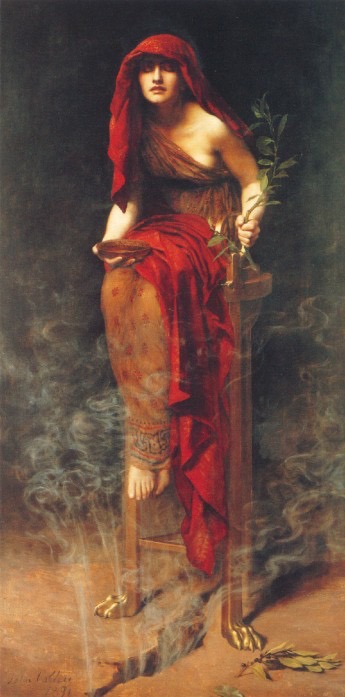
This reflection was the Apollo who spoke wisdom to the Greeks through the mouth of the Pythia. And what was the content for the Greeks of this Apollo wisdom? We might say it was everything that led them, on the most important occasions, to take this or that decision....
And Asklepios, the Healer, is for the Greeks the son of Apollo, the healing god. The weakened form of the Angel in whom Christ once dwelt is a healer on Earth, or for the Earth. For Apollo was never physically embodied, but he worked through the Earth-elements. [What connects to Yahve.]
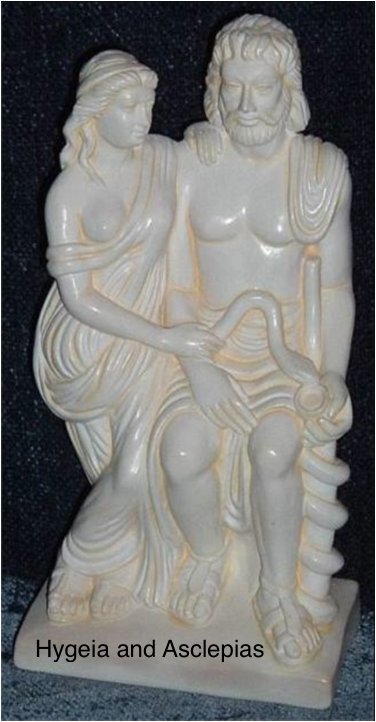
And the god of the Muses, above all the god of song and the art of music, is Apollo. Why is this? Because through the power of song and string-music he brings thinking, feeling and willing into harmony. [And this again connects to one of Yahves emanations, King David, who ended the descending period of Moses, and his wife Bathsheba led on to their son, King Salomon, and the descending period of Salomon.] ...
We see how the Greeks revered in the god they called, Apollo the Being of whom we have spoken; and we might say that in the Being who truly corresponded to Apollo at the end of the Atlantean time, the Christ was ensouled. Who then was Apollo — not the reflection revered by the Greeks, but Apollo himself?...
A celestial Being who from the higher worlds poured out healing forces for the soul, paralysing the Luciferic and Ahrimanic powers. ... The Healer, the celestial Healer, is Apollo.
We have seen this Being pass through three stages of evolution, and then the Healer, whom Apollo reflected, was born on Earth and men called him Jesus, which in our language means “He who heals through God”. He is the Nathan Jesus-child, the one who heals through God, Jehoschua-Jesus....
You have the connections between the Being who was born as the Nathan Jesus-child and the Christ Being, and the way in which this was prepared.
It is now possible, through that which it is permissible to reveal in true Anthroposophy, to understand this kind of growing together, belonging together, of the Christ Being and the human nature of Jesus....
The following is from the Christ and the Spiritual World: The Search for the Holy Grail - Fourth Lecture:
From the point of view relevant here I should like to associate the Zarathustrian world-picture with “Chronology”. It looks beyond the two Beings, Ahura Mazdao and Ahriman, to the workings of Time — Zervan Akarana.
Not, however, the abstract Time we think of today, but Time viewed as a living, super-personal Being. From this Being proceed the rulers of Time; first of all the Amshaspands, the spiritual Beings who are symbolised in cosmic space by the signs of the Zodiac. ...
...because the Zarathustrian outlook sees in “Time” something living and super-personal — so, while spiritualising the term, we may call this world-picture “Chronology”, whereby we are led to think at once of the god Kronos, the Regent of Time....
Then we come to the third post-Atlantean epoch.... In the courses of the stars, in the signature of their movements in cosmic space, men could now perceive how harmony and melody in cosmic happenings are brought about.
This picture of the world I would like to call Astrology. So Chronology is followed by Astrology. And everything that was disclosed by the true, authentic Chronology of Zarathustrianism, and by the true, authentic Astrology of the Egyptian and Chaldean Mysteries — all this was activated by the secret influence which had come into the world though the threefold Christ-event before the Atlantean catastrophe....
The sun works in the first place through air and water and water-vapour, and so through the vapours which (as we have seen) rise from the site of the Castalian spring and coil round the neighbouring hillsides like a dragon — the dragon killed by the Greek St. George. The sun works in all the elements, and after it has worked into them, inoculated them, its activity plays out from them on to human beings, through the servants whom we call elemental spirits. In the elements the Sun- Spirit is actively alive, and this is the activity the Greeks saw in their Apollo.
Thus for the Greeks Apollo was a sun god, but not the Helios who drove the chariot of the sun across the heavens and to some extent regulated the times of the day.

In Apollo the Greeks saw the sun's activity in the atmosphere, and this activity they addressed as Apollo when they addressed it spiritually. And so it was with many gods and spiritual beings whom we find in the West. I could mention many, but we need point only to Wotan with his wild host, rushing through the storm.
What form then did the world-picture — still echoing the threefold Christ-event — take in the fourth post-Atlantean epoch? Again I must make use of a pedantic, dried out word. Astrology was followed by Meteorology. Chronology, Astrology, Meteorology! We have only to bring the “logy” into relation with the Logos.
But while all this was breaking in over the Western world, something else streamed into the whole post-Atlantean civilisation. This too was an after-echo of the threefold Christ- event, but it came from quite another side.
And this fourth element, running as though parallel to the Meteorology of the fourth post-Atlantean epoch, is something I must again designate with a dry, pedantic word: Geology — but I beg you once more to relate the “logy” to the Logos. Geology, then — where do we encounter it?
The development of the ancient Hebrew civilisation will never reveal its particular secrets unless it is studied as Geology, in our sense of the term.
How do we first come upon the ranks of the Elohim, or upon the Jahve-god? We meet him first when he wishes to form into man something taken from the Earth itself.
He wishes to clothe with a new covering, an Earth-vesture, the part of man that has come down from earlier times, from Saturn, Sun, Moon.
Jahve is precisely the god who forms man out of the Earth — that is, out of the forces and elements of the Earth.
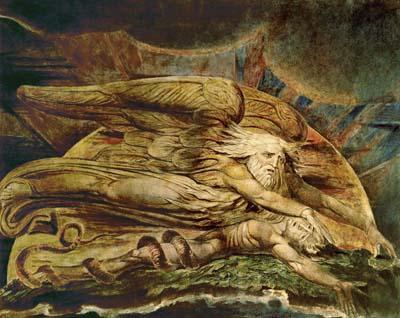
Therefore the ancient Hebrew wisdom, since it professed the Jahve-god, had to become Geology. And this teaching about man, that he is formed out of the forces of the Earth, is Geology.
Is not the geological character of the ancient Hebrew teaching shown to us at once in the name of the first man, Adam — he who was formed out of earth!
That is the significant point that we must keep before us: among other peoples — the peoples with a meteorological world-picture, let us say — the creation of man is spoken of quite differently, with the emphasis on his soul.
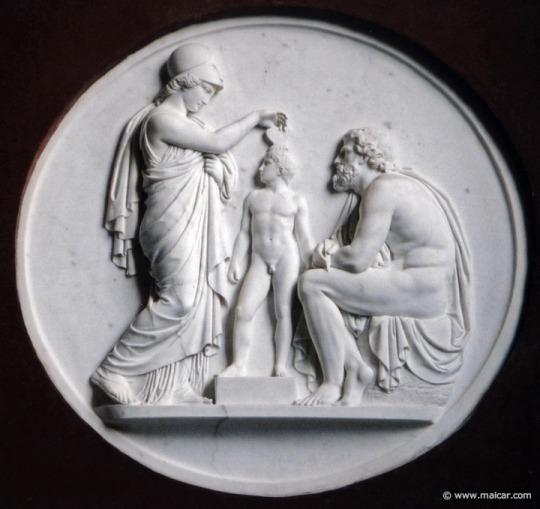
In the Greek tradition, for example, we see Prometheus engaged in the forming of man. Athene lends her aid and causes a spark from spiritual heights to be united with man. Prometheus forms the soul in the symbolic likeness of a butterfly.
The Jahve-god forms man out of earth; and he, the Jahve-god, having become in the course of his evolution the Ruler of Earth, breathes out of his own substance a living soul into man.
So Jahve unites himself through his breath with what he has formed out of earth. And he wishes to dwell in his offspring, in his living breath, in Adam and his descendants; those beings whom Jahve considered it his task to clothe in earth.
And now to carry this further, let us try to call up before our souls everything we find handed down by the Bible from Hebrew antiquity itself.
We know, and have emphasised, that the Earth develops certain forces. Goethe and Giordano Bruno, among others, compare these forces to those of in-breathing and out- breathing in human beings.
The Earth does have forces of in-breathing and out-breathing which bring about ebb and flow, the swelling and sinking of the waters; they are inner Earth-forces, but the same as those which guide the Moon round the Earth.
In water-effects we encounter a manifestation of these Earth-forces. In this realm the Bible shows us the Deluge as another important event after the creation of Adam, the ‘man of earth’.
And now let us pass on to the time of Moses! If we look at the doings of Moses in the right light, we find them constantly related to activities of the Earth.
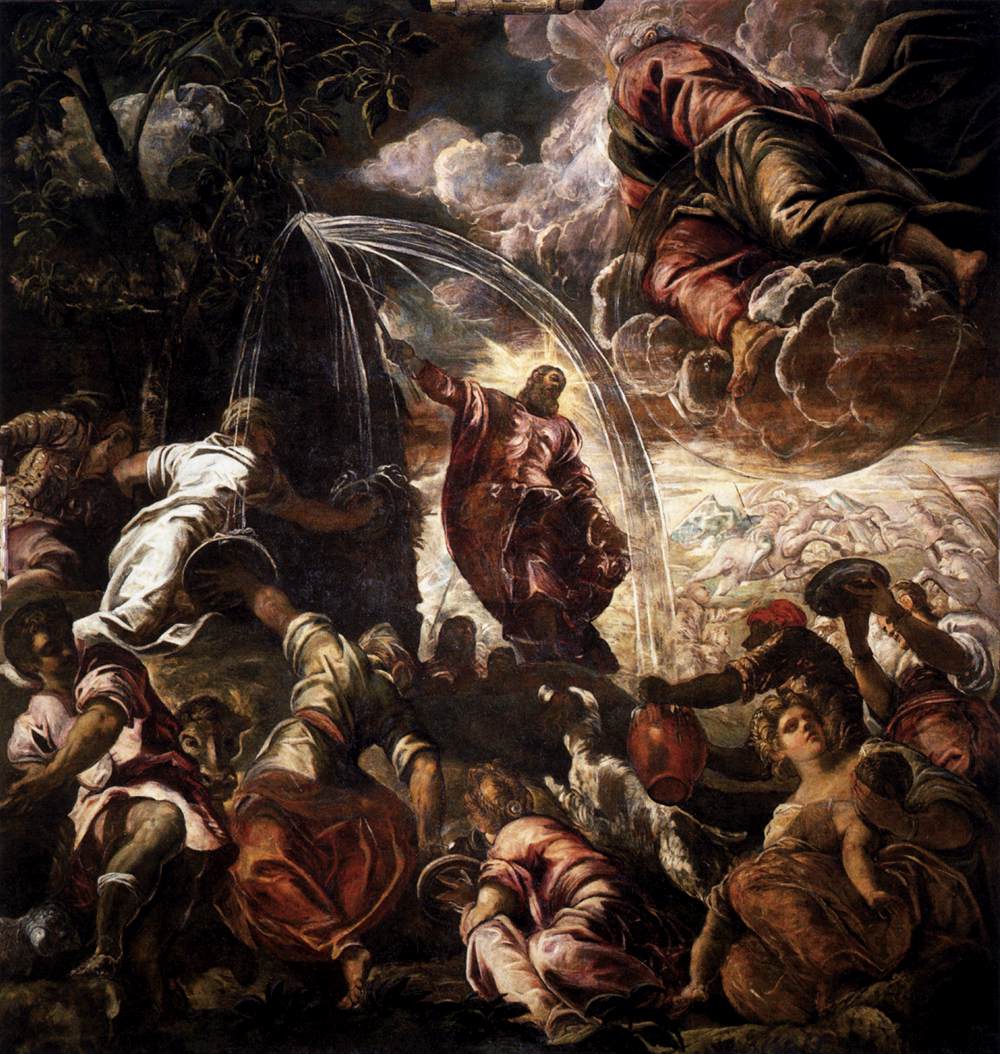
Moses goes to the rocks with his rod and makes water gush out.
Moses goes up the mountain. Above and below, the mountain is connected with Earth activity. For we must think of this mountain as a volcano, or at least as volcanic. It is not the Sinai generally imagined; the Earth is active in it.
The column of fire in which Moses stands is akin to what happens when we bum a piece of paper in the sulphur hills of Italy and smoke comes out. So does fiery smoke, telluric activity, come out of the mountain....
We could go deeply into details and everywhere we should find that the spirit of Earth prevails in all that Moses gives out as a revelation of the Jahve-god. What Moses proclaims is Geology!...
Paul knew well that this consciousness of a connection with the Earth-spirit is a result of the pre-earthly Christ-event, for he indicates that it was the Christ who led the Jews through the desert and caused water to flow from the rock.
And if we were to go on from the Bible to some of the significant Hebrew legends, we should find them permeated with Geology, in the sense meant here.
Thus we are told how Jahve, when he was forming man out of earth, sent forth an angel to gather earths of different colours from all parts of the Earth, so that everything belonging to the Earth should be mingled in Adam’s bodily vesture....
For the Chaldeans, the Egyptians, the Zoroastrians, the Greeks, the Romans and the European peoples of central and northern Europe, the most important part of man was the part that came from the spiritual world.
For the Jews, the most important element in man was connected with the Earth and its forces. Jahve felt himself as the god whose spiritual rulership prevailed throughout the Earth.
Thus we can regard as the most important event in the fourth post- Atlantean epoch the emergence of Geology side by side with Meteorology. And a wonderful spiritual reflection of this comes to expression in ancient Hebrew prophecy....
Apollo changed the Sibylline impulse of the Pythia by sinking himself into it [the gift of Lucifer] and speaking through her.
The Prophets wanted to suppress everything Pythian in their souls and to cultivate solely that which works in the clear force of the ‘I’ [the gift of Christ]; the ‘I’ which is bound up with the Earth and belongs to it; the ‘I’ which is the spiritual counterpart of the geological element.
How the Eternal reveals itself in the ‘I’ through calm repose, when the Sibylline elements are silent, when all inner turmoil ceases, when only calm prevails and gazes into the grounds of the Eternal — that is what the Jewish Prophets wished to manifest, so that their proclamations could spring from a temper of soul which corresponds in the highest degree with Geology.
The relations of all other peoples to their gods were different from those of the Jews to their Jahve.
The other relations were predetermined: they reflected the outcome of the relations of men to the spirits of the higher Hierarchies during the Saturn, Sun and Moon periods.
The Jewish people had the task of developing a relationship which belonged specially to the Earth period.
The commandments that arise when the ‘I’ stands directly over against God and receives from God the rule, the precept, that the ‘I’ must follow out of its own inner will — this kind of commandment is met with first among the Jewish people.
And it is here, too, that we first find God entering into a covenant with his people....
For example, Elijah was one of the Prophets — but in what sense is he a Prophet? He is a servant of the God Jahve, but in his soul an echo of the threefold Christ-event lives on. In his soul is the knowledge: “As a prophet of Jahve I must above all things proclaim that in Jahve there lives the Christ who will later on fulfil the Mystery of Golgotha; the Christ who poured His enduring influence into the cosmos through His third experience at the end of the Atlantean time.”
Elijah proclaimed the Christ-filled Jahve. For the Christ was indeed living in Jahve, the Jahve-god, but as a reflection of Himself. As the moon reflects the sunlight, so did Jahve reflect the Being who then lived as Christ. Christ caused his Being to be reflected from Jahve or the Jahve-god.
But a messenger such as Elijah worked in the after-effects of the threefold Christ-event; we might say that Elijah went ahead [the Father] of the Nathan Jesus-being, who was passing spiritually from West to East in order to find his way into the course of civilisation and then to be born as one of the Jesus-children.
And now the Geology of the Jews was to be permeated by the spiritual Being whom we have learnt to see as having a particular activity in relation to the Earth. Geology was to be Christened (durchchristet).
The spirit of the Earth was to be experienced in a new way by men; they had to be enabled to free this spirit, in a certain sense, from the Earth.
But this was possible only if there came a power which could free the spirit of the Earth from the forces of the Earth.
This happened when the Earth's aura was permeated by the power of the Christ and in consequence a change came over the Earth itself.
The Christ entered into the forces which the Jahve-god had released and gave them a different character.
From all this, if we look back over it, we can understand why the laurel became a visible symbol of Apollo. For those who bring something of Spiritual Science to the study of the plant kingdom, the laurel has a strong connection with meteorological conditions. It is shaped and built out of Meteorology.
Another plant is much more closely bound up with the Earth; is so to speak an expression of Geology. If one really feels how the oil penetrates the olive tree, so that in one's own soul the elemental forces are stirred by the way in which the tree allows a new sprout to be grafted on to it and to flourish there — then one can feel how the olive tree is inwardly penetrated with the oil of Earth. One can feel the earthly element pulsing through the oil.
And now you will remember something I touched on in the second lecture — that Paul was called to build a bridge between Hebrew antiquity [Moses] and Christianity, between Geology and Christology.
As we said, Paul’s activity extends through the realm of the olive tree. And if we understand Apollo in the vapours rising from the mountain chasms, and how through the vapours he inspires the Pythia and speaks oracular words concerning human fate, then we can also feel how the elemental forces stream from the olive tree into its environment, and these are forces familiar to the soul of Paul.
We can feel it in his words. He immerses himself, as it were, in Geology in order to feel the elemental forces in the aura of the olive tree and to let its aura inspire him in that geographical realm where his work lay....