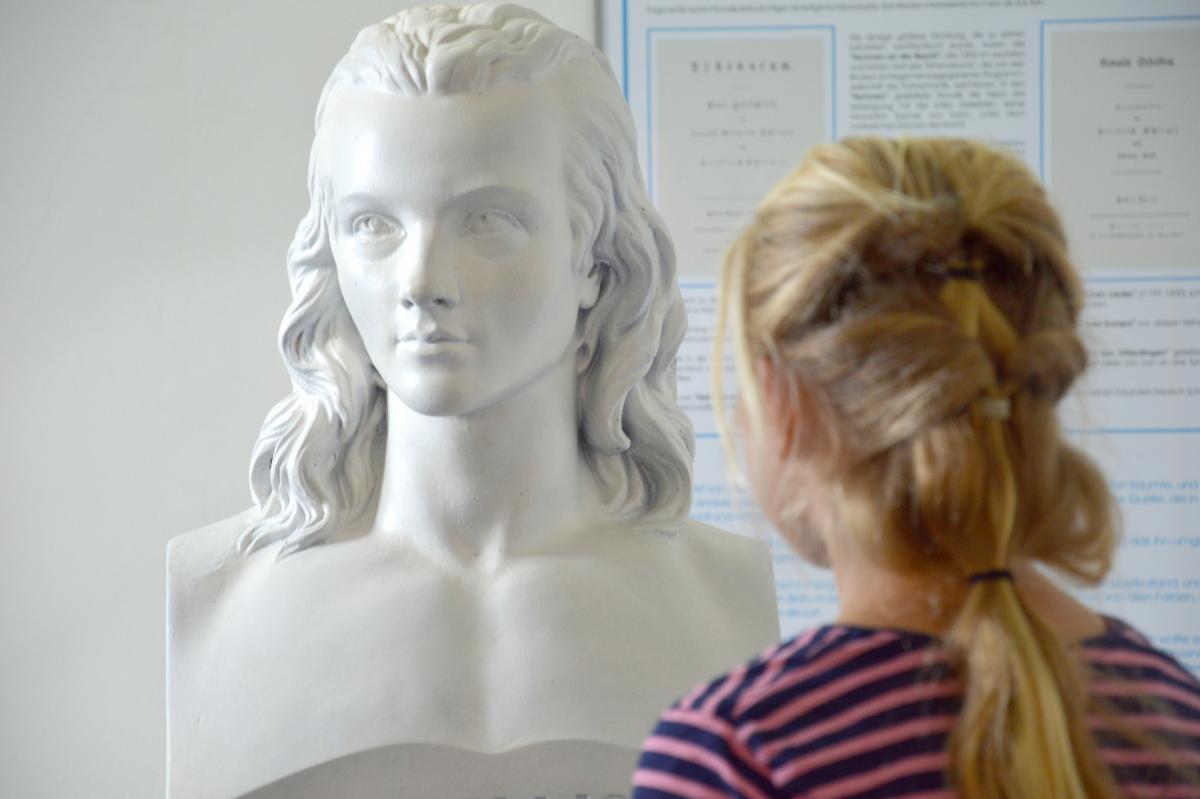
By Kim Munch Michelsen.
Novalis was the pen name of Friedrich von Hardenberg (1772-1802); he was a philosopher and scientist as well as a poet. Following Steiner was he the reincarnated old Adam soul, who we also know as Elijah and John the Baptist. He is a raised angelic being, and it means that he can not incarnate on earth fully. His fiancé Sophie von Kühn is also a raised being and they are both not of a strong condition and dies young. I believe that they as raised beings are part of each other but on earth they have to be born as two. With her death they become one in him. Steiner mentions that in both of the incarnations of the Baptist not all could enter into the body.
Lecture by Rudolf Steiner in Berlin, “Matinee” 26 October 1908
Not even reaching thirty years of age was Novalis, and we hope that through the lecture of his “Hymns to the Night” an awareness will be able to develop, which speaks out of these Hymns — so complete, as it was only possible in the last three decades of the eighteenth century — in an all encompassing manner, the precise knowledge of these spiritual scientific truths. ... Out of a highly respected aristocratic family, Friedrich von Hardenberg, called Novalis, was born on 2 May 1772.
Novalis was a contemporary of Goethe. One should not place the kind of spirituality within Novalis, on the same level as what Goethe had. Goethe came to it through a regulated, out of a Higher World directed course towards an initiation, up to a particular stage. Novalis, by contrast, lived a life which one can best describe by saying: This young man, who left the physical plane at the age of twenty nine and who gave the German intellectuals more than a hundred thousand others could give, he lived a life which was actually a memory of a previous one. Through a quite specific event the spiritual experiences of earlier incarnations appeared, presented themselves to his soul and flowed in gentle, rhythmically woven poems from his soul.
…
What enabled his memories of an earlier incarnation to appear? How did it happen that the experiences of the occult world, which we can reveal today in occult knowledge, rose so uniquely in him? His life unloosened him from the soul in whose knowledge slumbered earlier incarnations. One must take the result, which these spiritual experiences lifted out of this soul, back into the light of a spiritual observation, if one wants to understand it. Only childlike folly could place these experiences on the same footing as Goethe's meeting and Friederikes zu Sesenheim. This would be a coarsely unrefined comparison.
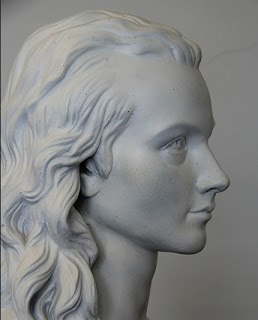
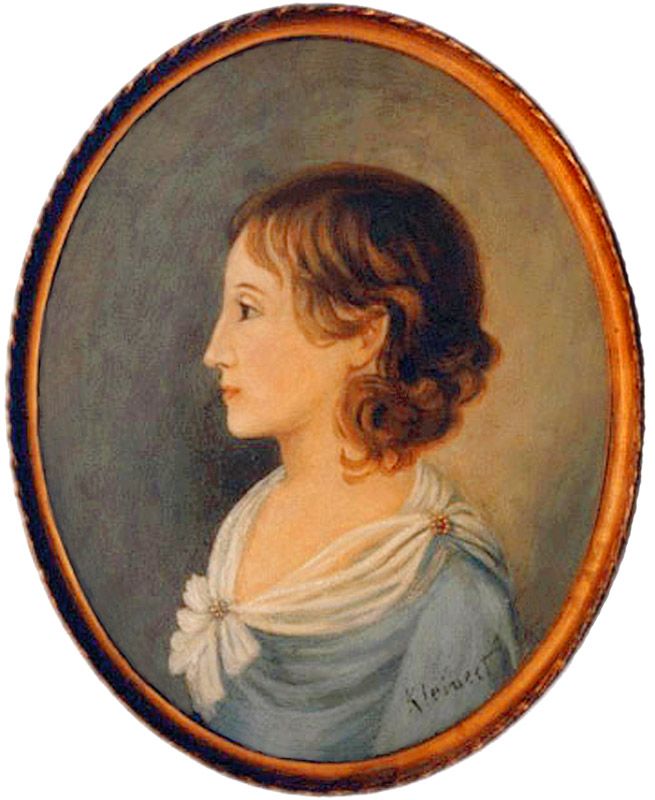 During his stay in Grüningen he became acquainted with a thirteen year old girl. Soul secrets played here which one could never, without abandoning the gentleness of a soul, call this a love relationship. Basically there was in Sophie von Kühn — that was her name — something like the lives of various beings. She became ill and soon died. The moment her spirit loosened from Sophie von Kühn, it wrestled with Novalis' inner life, awakening inner spiritual abilities.
…
In Jena, where she spent the last years, she also encountered Goethe — and made a deep impression on Goethe! Whoever can't comprehend that these unique words of Goethe are more valuable than documents which can be dug up — because all documents can lie — whoever wants to come with proof to show something, will not consider producing counter evidence, it will not help him, despite all his science.
What was the result for Novalis? Sophie von Kühn passed away and Novalis lived within a mood of: “I will emulate her in death” (Ich sterbe ihr nach!). Nevermore was he separated from her soul. Pouring out of the deceased soul of Sophie von Kühn came a force which he had in his own soul experienced as a mediator in the night, and within him rose enormous experiences which he depicted in his poetry.
Once again another feminine individual crossed his path: Julie von harpentier. To him however, she was only the earthly symbol of Sophie von Kühn's deceased soul. Dissolved out of his soul were the elements of wisdom which he poured into the “Hymns to the Night”, through this first soul bond.
…
This happened to Novalis' soul when he united his eternity to Sophie's soul by emulating her in death. In this emulation his spirit flourished. He experienced “die to live” and in him rose what he called his “magical idealism”.
From Meeting a Descendant of Novalis by Susan Koppersmith
Novalis kept a diary between April 18 and July 6, 1797. He, himself, made deliberate efforts to remember Sophie in vivid detail; in his diary he recorded:
I held quite sharply an image of “Soffchen” before me — in profile, next to me on the sofa — in the green scarf — in characteristic situations does she appear to me most readily. In the evening I thought of her generally quite ardently.
Novalis believed he could be united with Sophie even though she had crossed the threshold. In the third Hymn to the Night, after visiting her grave, he writes:
the hillock became a cloud of dust, and through the cloud I saw the glorified face of my Beloved. In her eyes eternity reposed. I laid hold of her hands, and the tears became a sparkling bond that could not be broken. In to the distance swept by, like a tempest, thousands of years. On her neck I welcomed the new life with ecstatic tears. Never was such another dream; then first and ever since I hold fast an eternal, unchangeable faith in the heaven of the Night and its Light, the Beloved.(tans. George MacDonald)
From The Life of Novalis - Sophie - 3, A Biographical Sketch by Walter Hedderich
Right at the beginning of his stay in Tennstedt Novalis made the acquaintance of Sophie von Kühn, which was to be of great influence on his further life and literary works. On an official journey on Monday the 17th of November 1794 he entered the house of von Rockenthien in Grüningen, accompanied by a friend, and met the stepdaughter, Sophie.
He immediately fell in love with her, in his own words: "a quarter of an hour decided my life."
Her family presented Sophie as fourteen years old, but she was actually twelve and a half. Novalis payed frequent visits to Grüningen and half a year later, two days before her thirteenth birthday,
Sophie told him that she wanted to be his.
...
An interesting occurence: in a fictitious marriage announcement sent to a friend the date of marriage was given as the 19th, the day of its announcement as the 25th of March; the first date turned out later to be the date of Sophie's death, the second date was Novalis's death date.